You can fall into the kitchen in pickle ball when the ball bounces there, but not after a volley; touching it after a volley is a fault.
I’ve played and coached pickleball for years, so I know the rules, momentum quirks, and common mistakes around the non-volley zone. This article explains exactly when can you fall into the kitchen in pickle ball, breaks down the official rule logic, gives real examples from matches, and offers clear drills and tips to keep you legal and safe on court. Read on to master the kitchen rules and stop losing points to simple mistakes.
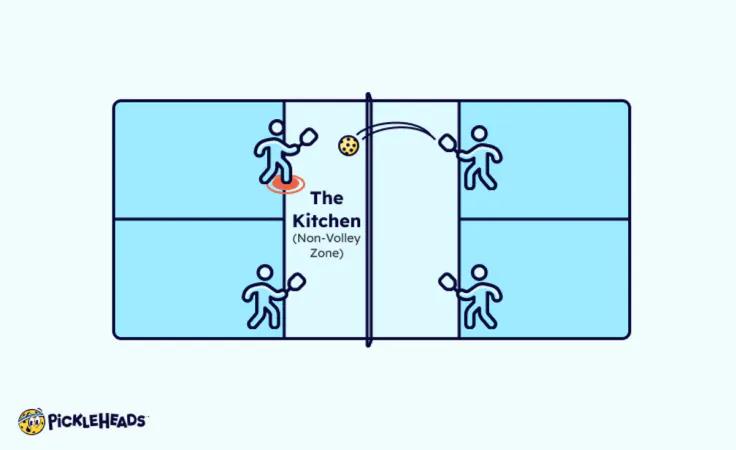
Understanding the kitchen in pickle ball
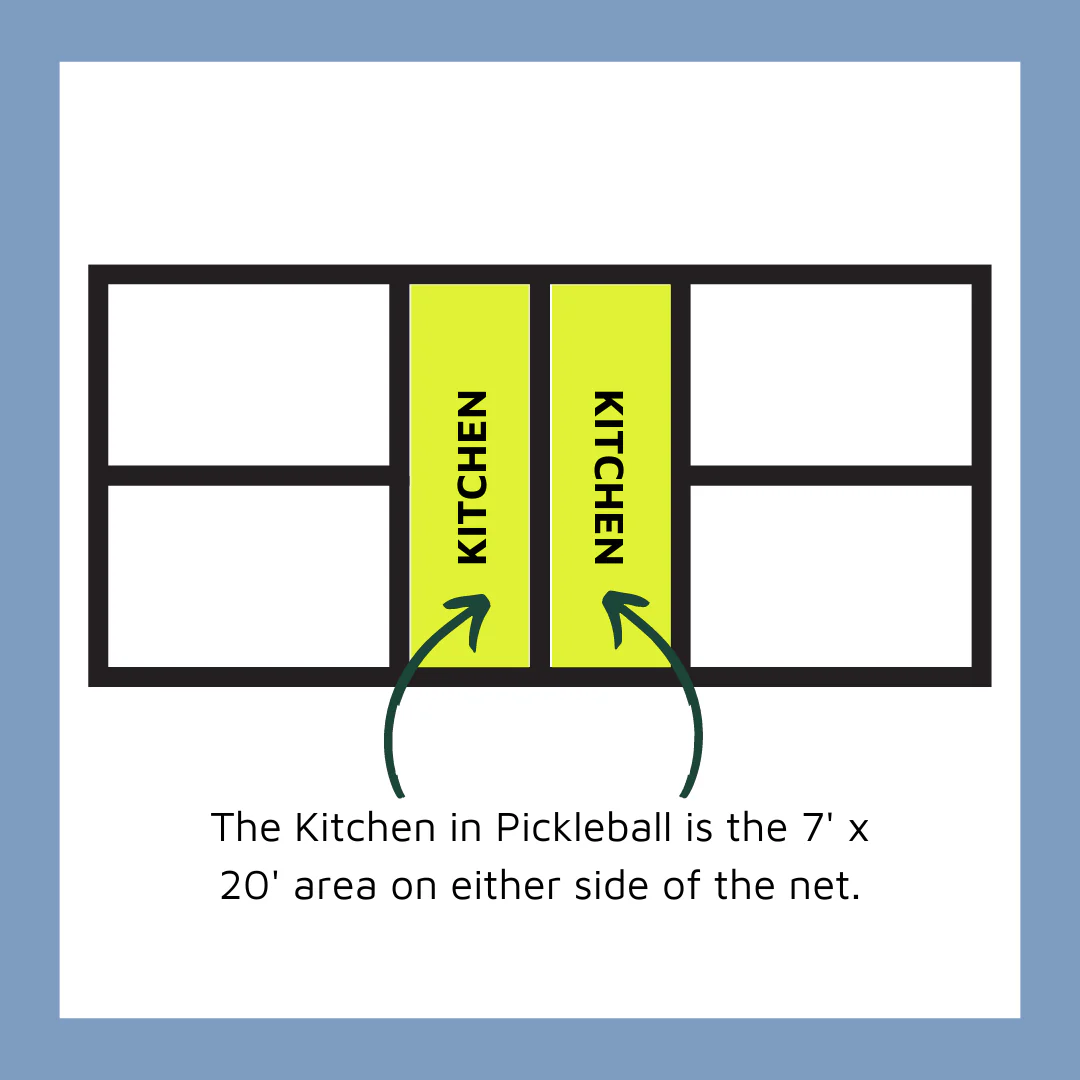
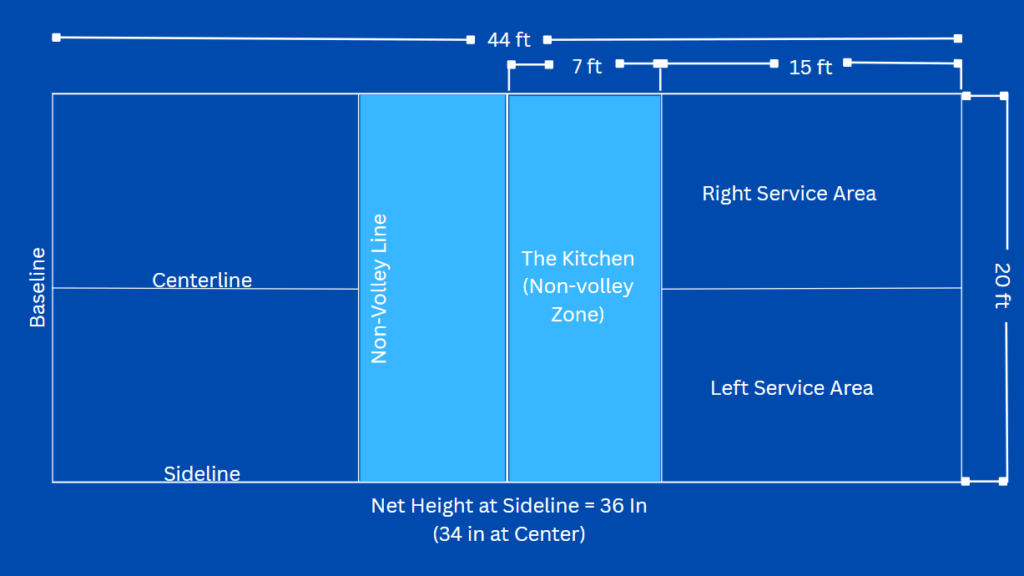
The “kitchen” is the non-volley zone (NVZ) that runs 7 feet from the net on both sides. You may step into the kitchen to play a ball that has bounced there. You may not volley (hit the ball in the air) while your foot or anything you wear touches the kitchen or its line.
Knowing when can you fall into the kitchen in pickle ball starts with knowing these two facts. If the ball bounces in the kitchen, you can enter and even fall while playing it. If you volleyed the ball in the air, any contact with the kitchen before, during, or after the hit can be a fault due to momentum rules.
Common situations: when can you fall into the kitchen in pickle ball
- Playing a dink that bounces in the NVZ. If the ball bounces inside the kitchen, you can move in and even fall while returning that shot.
- Recovering after a bounce. You can step or fall into the kitchen after the ball has bounced there and you are making a legal groundstroke.
- After a legal volley but before touching the kitchen. If you volleyed outside the NVZ and then momentum carries you into the kitchen, this is normally a fault. So falling into the kitchen after a volley is usually illegal.
- Diving or falling while chasing a ball that already bounced in the kitchen. That is allowed, provided you did not volley it in the air while touching the NVZ.
These scenarios highlight the difference between a volley and a ball that bounces. When can you fall into the kitchen in pickle ball depends entirely on whether the shot was a volley or a bounce play.

How the rules apply to falling into the kitchen
Rule principle 1: No volley while contacting the kitchen. If your foot, knee, or paddle touches the kitchen or its line while volleying, it’s a fault. This applies even if the touch happens only after the hit and momentum carried you in.
Rule principle 2: Bounce equals permission. If the ball bounces in the kitchen or on the kitchen line, you may step into the kitchen and play the ball. Falling after that play is allowed.
Rule principle 3: Airborne momentum. If you are airborne when you hit a volley and you land in the kitchen, most rulebooks treat that as a fault because your momentum carried you into the NVZ following the volley. Officials look at whether your movement began before or after the shot.
Practical example 1: You stand just behind the kitchen line and volley a ball that is above your head. If you land with any part of your body touching the kitchen after the volley, it’s a fault.
Practical example 2: You run forward, the ball bounces once in the NVZ and you slide and fall into the kitchen while returning it. That’s legal.
Practical tips to avoid faults and still play aggressively
- Step back before volleying. Create a small buffer zone to avoid being carried by momentum into the kitchen.
- Use soft wrists on volleys. Less force means less forward momentum after the hit.
- Learn to slide-stop near the kitchen line. Controlled footwork reduces accidental falls.
- Communicate with partners. Call who will take the dink or NVZ shots to prevent last-second lunges.
- Practice recovery steps. After every offensive shot, rehearse a safe step back to avoid landing in the NVZ.
When can you fall into the kitchen in pickle ball is often decided by speed and control. Slow down a fraction and you’ll save points.

Training drills to practice NVZ control
- Shadow step-and-stop drill. Stand at the NVZ line, simulate volley footwork, step forward and stop without crossing; repeat 20 times.
- Dink-and-fall simulator. Partner softly dinks to the kitchen, you step in and intentionally drop to a knee to simulate safe falls and recover quickly.
- Momentum rollback drill. Volley from midcourt and practice landing behind the NVZ line by jogging backward immediately after each hit.
- Video review. Record practice volleys and watch whether your momentum crosses the NVZ. Small corrections are easy to spot.
These drills help you internalize when can you fall into the kitchen in pickle ball and reduce match-time errors.

Safety and etiquette around falling into the kitchen
- Prioritize safety. If you must dive or fall to save a point, protect your head and wrist. It’s better to lose a point than a wrist injury.
- Respect opponents. Avoid aggressive runs into the kitchen that could collide with other players.
- Own your fault. If you touch the kitchen after a volley, call it immediately. Good sportsmanship prevents disputes.
- Dress smart. Wear shoes with good grip to avoid slips when approaching the NVZ.
When can you fall into the kitchen in pickle ball has a safety element. Playing smart and fair keeps everyone in the game.
Frequently Asked Questions of when can you fall into the kitchen in pickle ball
When exactly is it legal to step into the kitchen?
You can step into the kitchen to play a ball that has bounced there. Entering to hit a bounced ball or recover after a bounce is legal.
Is it ever legal to land in the kitchen after a volley?
Landing in the kitchen after a volley is generally a fault because momentum carried you into the NVZ. The exception rarely applies if the rules allow follow-through that does not result from forward momentum.
What if my paddle crosses the kitchen line but my feet do not?
If your paddle contacts a volley while any part of you or your paddle is touching the kitchen line or NVZ, it can be ruled a fault. Officials judge paddle contact and body position together.
Can I dive into the kitchen to reach a ball that bounced there?
Yes. Diving into the kitchen to reach a ball that bounced there is legal. Always keep safety in mind and clear with your partner to avoid collisions.
How do referees judge momentum into the kitchen?
Referees consider whether your forward movement began before or after the volley and whether contact with the NVZ was caused by momentum. They look for a clear sequence and apply the rules consistently.
Conclusion
Understanding when can you fall into the kitchen in pickle ball comes down to two clear ideas: bounced balls allow entry, volleys do not allow contact with the NVZ before, during, or after the hit. Practice the footwork, use the drills above, and play with controlled aggression to avoid costly faults and injuries. Try the step-and-stop and momentum rollback drills this week, track your progress, and share your experience in the comments or sign up for more tips to improve your pickleball game.