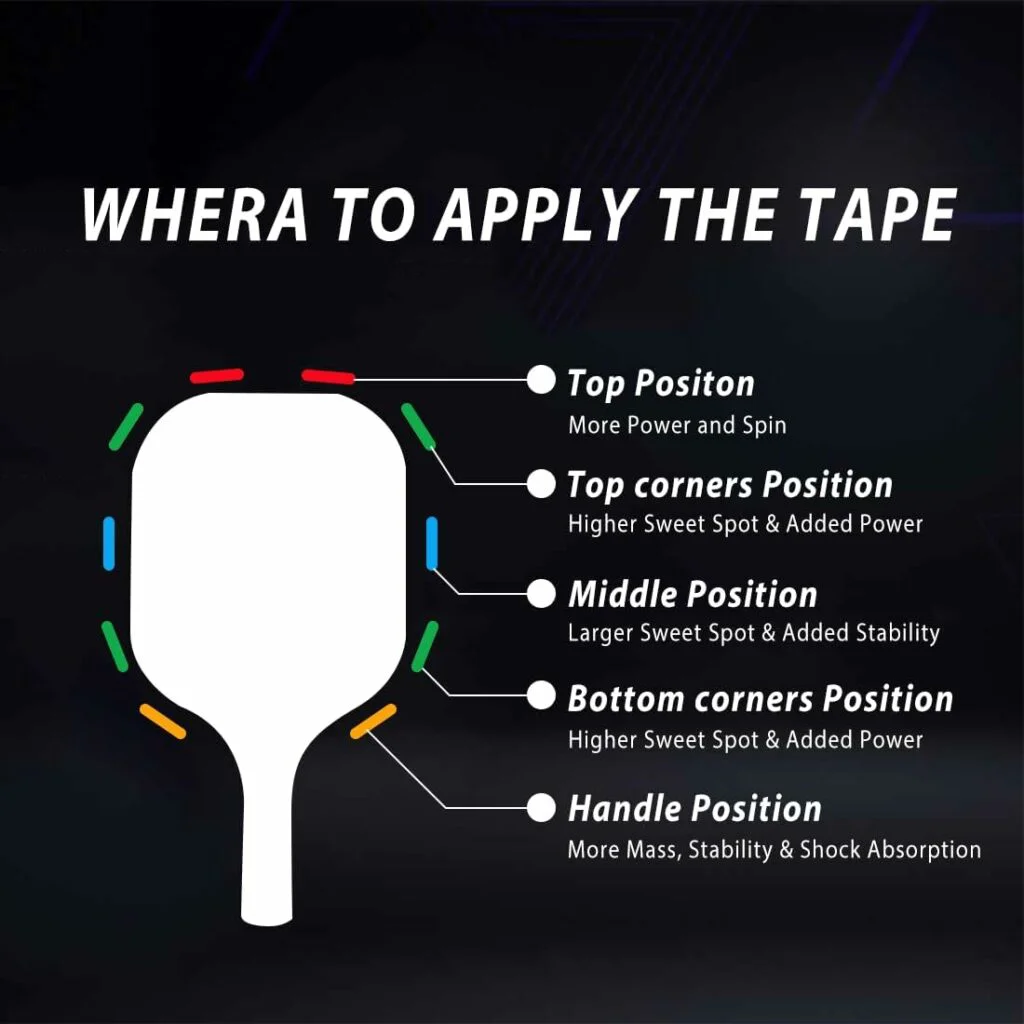
Place lead tape on the sides, top, or throat of your paddle to customize its power, stability, and sweet spot.
Have you ever hit a shot that felt just a little off? Maybe you wanted more power on your drives or wished your paddle felt more stable during a fast kitchen exchange. As a long-time pickleball player and enthusiast, I’ve spent countless hours tweaking my gear to gain that slight edge. The secret weapon for many players, from recreational to pro, isn't a new paddle but a simple roll of lead tape. Understanding exactly where to put lead tape on a pickleball paddle can transform your game, and this guide will show you how to do it right.

Why Use Lead Tape on Your Pickleball Paddle?
Adding lead tape to your paddle might seem like a small change, but it can have a huge impact on your performance. It’s all about customizing your equipment to match your specific playing style. Think of it like tuning a musical instrument; a small adjustment can create the perfect sound. For your paddle, this "tuning" helps you achieve the perfect feel.
The primary reasons players use lead tape are to increase weight, alter the balance, and enhance stability. A slightly heavier paddle can generate more power with less effort from your arm, letting the paddle do more of the work. It can also create a larger, more forgiving sweet spot, which means fewer mishits and more consistent shots. Finally, added weight improves the paddle's stability, reducing the amount it twists in your hand when you hit the ball off-center. This is a game-changer for blocking hard drives and resetting shots.
Understanding the Basics: How Weight Placement Affects Your Paddle
Before you start sticking tape everywhere, it’s crucial to understand a few basic principles. Where you put lead tape on a pickleball paddle is a science of balance and physics. The three key factors you’ll be influencing are swing weight, balance point, and twist weight.
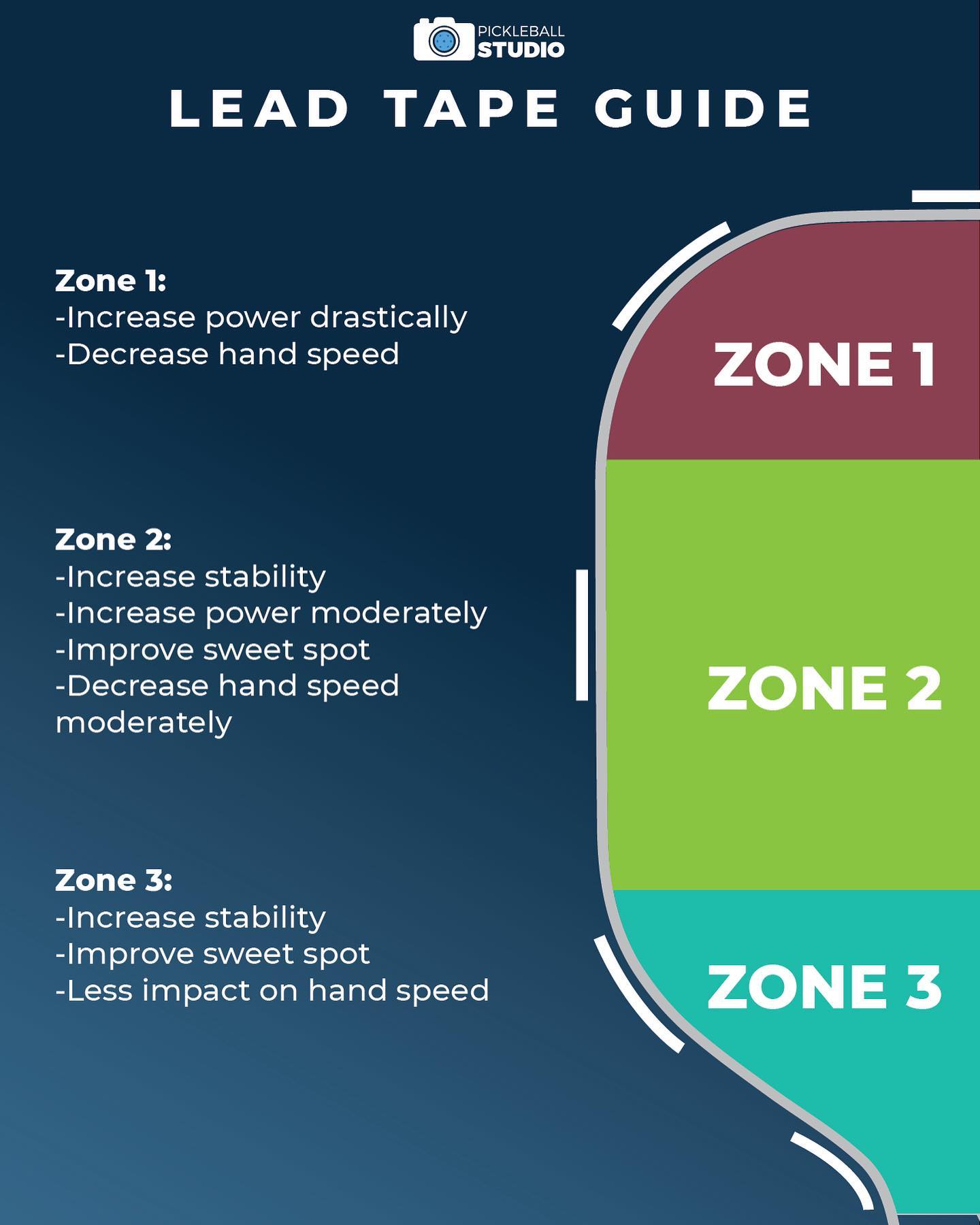
- Swing Weight: This is how heavy the paddle feels when you swing it. Adding weight toward the top of the paddle increases the swing weight significantly, making it feel heavier and providing more power.
- Balance Point: This is the point where the paddle would balance if you placed it on your finger. A paddle can be head-heavy, head-light, or evenly balanced. Adding tape to the top makes it more head-heavy, while adding it near the handle makes it more head-light.
- Twist Weight: This refers to the paddle's resistance to twisting on off-center hits. By adding weight to the sides of the paddle, you increase its twist weight, making it more stable and forgiving.
I learned this the hard way. My first experiment involved adding way too much tape to the top. I had incredible power, but the paddle felt like a hammer, and my soft game at the net completely disappeared. It’s all about starting small and making incremental adjustments to find what works for you.

Strategic Placement: Where to Put Lead Tape for Specific Results
Now for the main event. Deciding where to put lead tape on your pickleball paddle depends entirely on what you want to achieve. Let’s break down the most common placement strategies and the results you can expect.
For More Power: The Top of the Paddle
If you’re looking to add more pop to your serves, drives, and overheads, the top of the paddle is the place to be. Placing tape at the 10 o’clock and 2 o’clock positions makes the paddle more head-heavy.
This added mass at the tip increases the momentum of your swing, transferring more energy to the ball. Be mindful, though; this will also make the paddle less maneuverable and can slow down your hand speed at the net. Start with a small amount, like 2-3 grams, and see how it feels before adding more.
For Increased Stability and a Larger Sweet Spot: The Sides
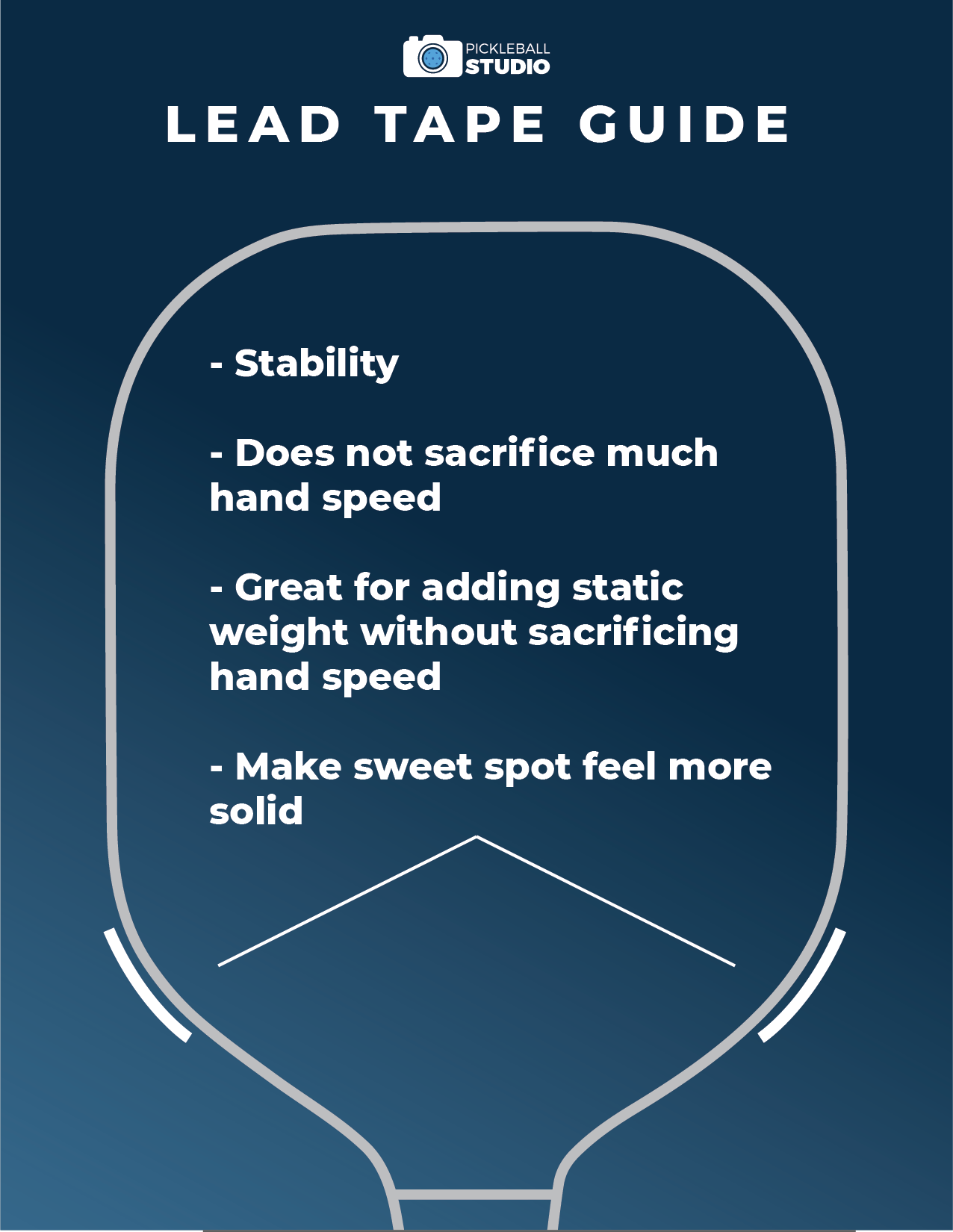
This is the most popular placement for a reason. Adding tape at the 3 o’clock and 9 o’clock positions on the edges of your paddle is the best way to increase stability. It acts like stabilizers on a canoe, preventing the paddle from twisting when you don't hit the ball perfectly in the center.
This placement widens the sweet spot horizontally, making the paddle feel much more forgiving. I personally use this setup on my paddle because it gives me confidence during fast volleys and helps me successfully block powerful shots. It’s the perfect solution if you feel your paddle fluttering on impact. Knowing where to put lead tape on a pickleball paddle for stability can make a massive difference in your defensive game.
To Make the Paddle More Head-Light: The Throat or Handle
Sometimes, the goal isn't to make the paddle feel heavier but to change its balance. If you want to increase hand speed and maneuverability for quick kitchen exchanges, adding weight lower down is the answer.
Placing tape on the throat of the paddle (where the head meets the handle) or wrapping it under your grip adds static weight without significantly increasing the swing weight. This makes the paddle more head-light, allowing you to whip it into position faster. This is a great option for players who love the dink game and want maximum control and quickness at the non-volley zone.

A Step-by-Step Guide to Applying Lead Tape
Ready to start customizing? Applying the tape is simple. Follow these steps to ensure you do it correctly and safely.
- Clean the Paddle Surface: Use a cloth with a little rubbing alcohol to clean the edge guard where you plan to apply the tape. This ensures the adhesive will stick properly.
- Measure and Cut the Tape: Lead tape often comes in rolls, with the weight specified (e.g., 1/4 inch tape is about 1 gram per 4 inches). Use a small scale to measure the exact weight you want to add. Start with a small amount, like 3-6 grams total.
- Apply the Tape Symmetrically: It is crucial to apply the tape evenly on both sides of the paddle. If you add 2 grams to the 3 o’clock position, you must add 2 grams to the 9 o’clock position to keep the paddle balanced.
- Press Firmly: Press the tape down firmly to ensure it is secure. You can use a smooth object, like the side of a pen, to rub over it and remove any air bubbles.
- Protect with Electrical Tape: To make sure the lead tape stays in place and to protect it, I always recommend covering it with a layer of electrical tape. It adds negligible weight and keeps everything secure.
- Test and Adjust: Go out and play! Pay attention to how the paddle feels. Does it give you the desired effect? If not, don’t be afraid to remove the tape and try a different placement or amount. Experimentation is key to finding your perfect setup.
Frequently Asked Questions of where to put lead tape on pickleball paddle
How much lead tape should I start with?
It's best to start with a small amount, around 3 to 6 grams total. You can always add more later, but starting small allows you to feel the subtle changes and avoid making your paddle too cumbersome.
Will lead tape damage my pickleball paddle?
No, lead tape will not damage your paddle. When applied to the edge guard, its adhesive is strong enough to stick but can be removed without leaving residue or causing any harm to the paddle's structure.
Is adding lead tape to a paddle legal in tournaments?
Yes, adding lead tape to your paddle is completely legal under official USA Pickleball rules. As long as it doesn’t create an unsafe surface or drastically alter the paddle's fundamental shape, you are free to customize its weight and balance.
What type of tape should I use for my pickleball paddle?
You should use lead or tungsten tape specifically designed for sports equipment like tennis rackets or golf clubs. This tape comes in thin, adhesive strips that are easy to cut and apply to your paddle's edge guard.
How do I know if I've added too much weight?
You'll know you've added too much weight if the paddle feels sluggish, your arm gets tired quickly, or your control over soft shots diminishes. If your timing feels off or your hands feel slow at the net, it's a good sign to reduce the amount of tape.
Conclusion
Finding the perfect spot for where to put lead tape on a pickleball paddle is a journey of personal discovery. It’s an easy and effective way to fine-tune your equipment to complement your strengths and improve your weaknesses. Whether you need more power, enhanced stability, or quicker hands, a few strategically placed grams of tape can make all the difference.
Don't be afraid to experiment. Start with a small amount of tape, test it on the court, and adjust until you find the setup that feels just right. Your perfect paddle balance is out there waiting for you.
Now that you have the knowledge, grab a roll of tape and start customizing! We'd love to hear about your experience, so feel free to share your results in the comments below.