
A standard pickleball court requires a total space of at least 30 by 60 feet.
As a long-time pickleball enthusiast who has played on everything from makeshift driveway courts to professional tournament surfaces, I can tell you that understanding the space requirements is about so much more than just the court lines. Knowing exactly how much space is needed for a pickleball court is the first, and most crucial, step in creating a safe, fun, and functional playing environment. Whether you're planning a championship-level facility or a simple backyard court for family fun, this guide will walk you through every dimension, recommendation, and practical tip you need to get it right.

Understanding the Official Pickleball Court Dimensions
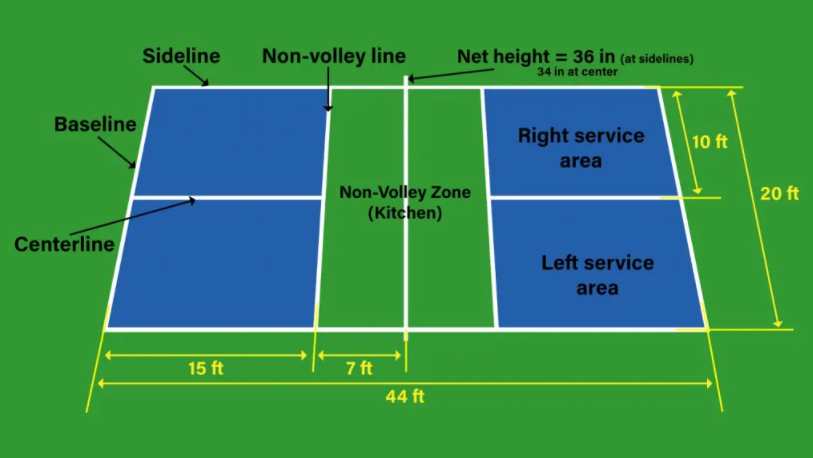
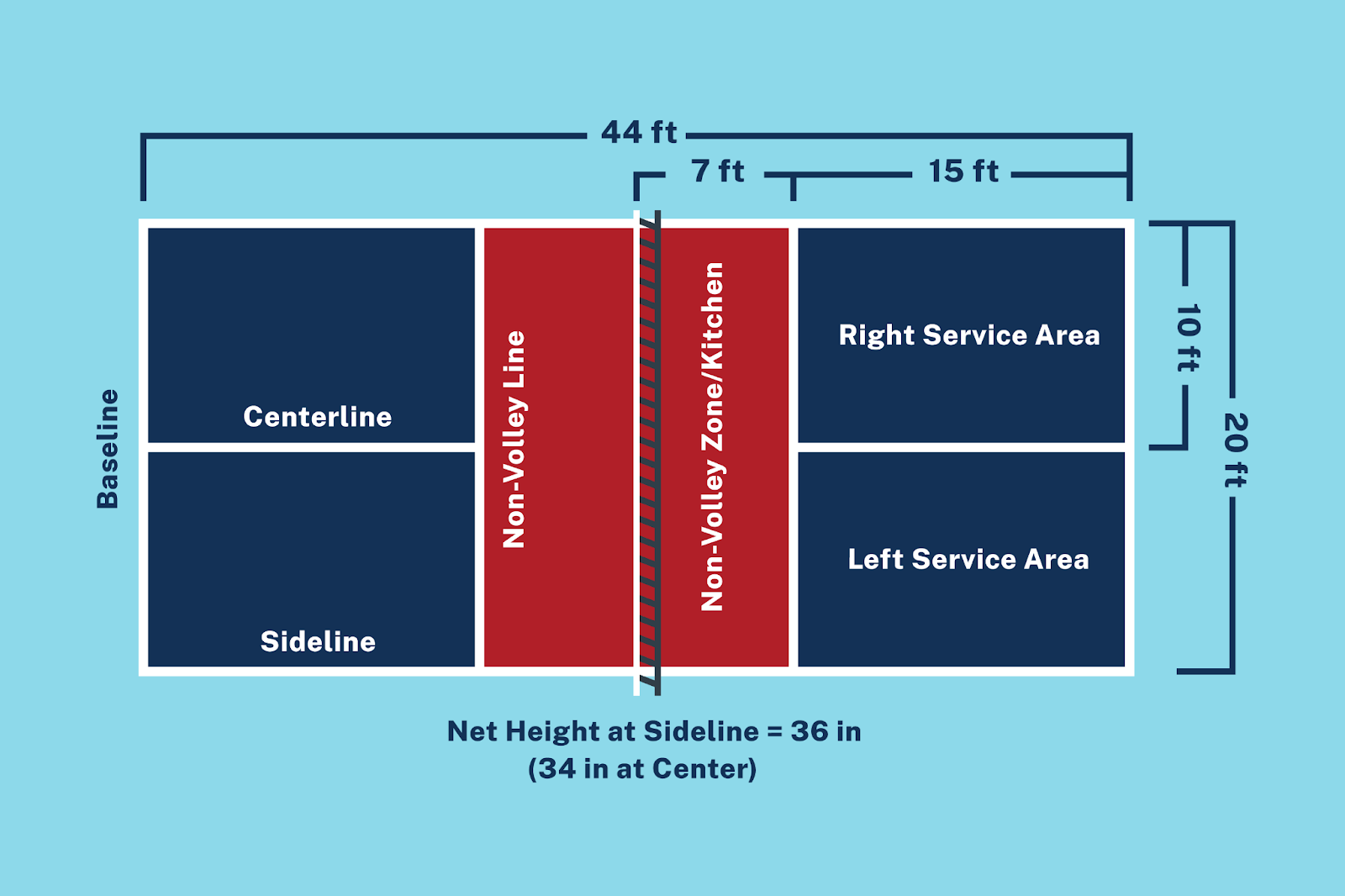
Before we talk about the total footprint, let's start with the heart of the matter: the court itself. The official playing lines of a pickleball court create a rectangle that is 20 feet wide and 44 feet long. This size is standard for both singles and doubles play, which makes things nice and simple.
This 20 by 44-foot area is divided into specific zones that are critical to the game:
- The Non-Volley Zone (The "Kitchen"): This is a 7-foot area on each side of the net. You cannot hit a volley (hitting the ball out of the air) while your feet are in this zone.
- Service Courts: Behind the kitchen, the court is split into two equal service courts on each side, each measuring 10 feet wide by 15 feet deep.
These dimensions are the non-negotiable part of the court. Every other measurement we discuss builds upon this foundation. Think of the 20×44 rectangle as your starting block.
The "Why" Behind the Extra Space: The Total Playing Area
Here’s where many first-time court planners get tripped up. The 20×44 court is just the playing surface; it doesn't account for the area you need to actually play the game. You need room to swing your paddle, chase down a wide-angle dink, and run back for a deep lob without crashing into a fence or a wall. This surrounding area is often called the "out-of-bounds" or "run-off" area.
For a comfortable and safe game, the recommended total playing area is 30 feet wide by 60 feet long. This gives you 5 feet of space on each sideline and 8 feet of space behind each baseline. I've played on courts with less, and it can feel cramped and even dangerous. A stray shot can have you running right into a fence if that extra room isn't there.
For more competitive or tournament-level play, the recommendation increases to 34 feet by 64 feet, or even larger. This larger buffer zone allows for more athletic plays and ensures player safety at a higher speed of play. If you're figuring out how much space is needed for a pickleball court for a community or club, aiming for this larger size is always a good idea.
Planning Your Backyard Pickleball Court
Bringing pickleball to your own backyard is an amazing goal. Before you break ground, a little planning goes a long way. First, measure the available space carefully. You’re looking for a relatively flat rectangle of at least 30 by 60 feet.
Think about the court’s orientation. The ideal setup is a north-south orientation. This prevents you and your opponent from having the rising or setting sun directly in your eyes during a game. I once played on an east-west court in the late afternoon, and it felt like one side was playing completely blind for half the match.
Also, consider any potential obstructions. Are there low-hanging tree branches, a slope in the yard, or a nearby garden shed? These can impact your layout. Fencing is another key consideration. While not strictly necessary for a casual court, a 10-foot high fence is recommended to contain stray balls, saving you a lot of time chasing them down the street. Ensure your total space accounts for the fence posts and the fence itself.
Multi-Court Layouts: How Much Space Do You Need?
If you have enough room for more than one court, planning the layout correctly is essential for a good playing experience. When placing courts side-by-side, you need adequate space between them to prevent players from running into each other's courts.
The minimum recommended distance between the sidelines of two adjacent courts is 10 feet. This allows players on both courts to have their 5 feet of out-of-bounds space without interfering with one another. If you have the luxury of more space, 12 feet is even better. This also creates a natural walkway for players to get to and from the courts without disrupting a game in progress. Knowing how much space is needed for a pickleball court layout becomes even more important when you are building a social hub for players.
Indoor vs. Outdoor Space Requirements
The horizontal space requirements for an indoor pickleball court are the same as for an outdoor one—you still want that 30×60 foot minimum total area. However, with an indoor court, you have a new dimension to worry about: vertical space. Ceiling height is critical.
A high, arching lob is a common and effective shot in pickleball. If the ceiling is too low, it can interfere with play and limit the types of shots players can make. The recommended minimum ceiling height for a pickleball court is 18 to 20 feet. Anything lower than that can feel restrictive and might not be suitable for competitive games. If you are converting a space like a warehouse or gymnasium, be sure to measure from the floor to the lowest hanging object, like a beam or a light fixture.

Frequently Asked Questions
What is the official size of a pickleball court itself?
The playing area of a pickleball court, inside the lines, is 20 feet wide by 44 feet long. This size is the same for both singles and doubles play.
Can I fit a pickleball court on a standard tennis court?
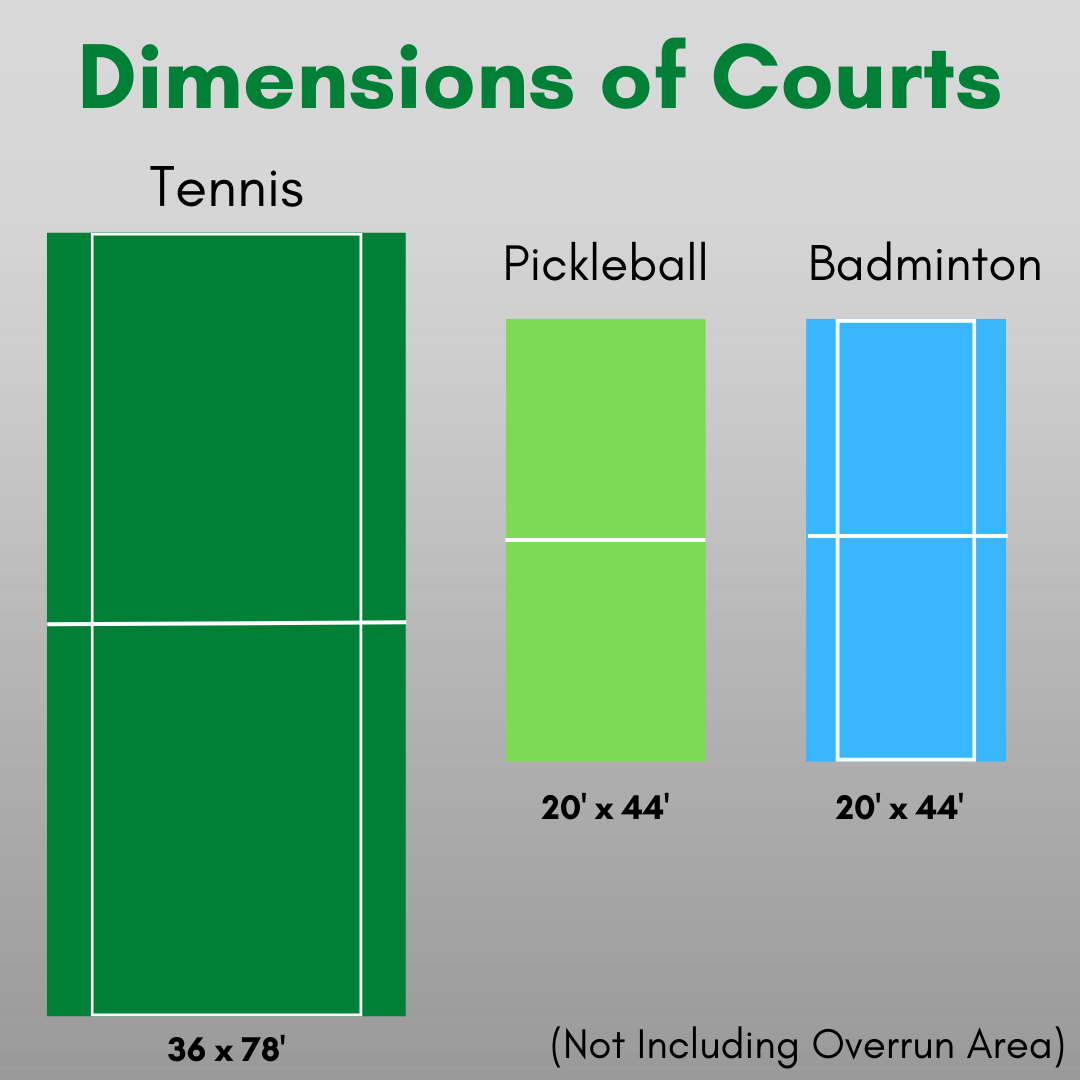
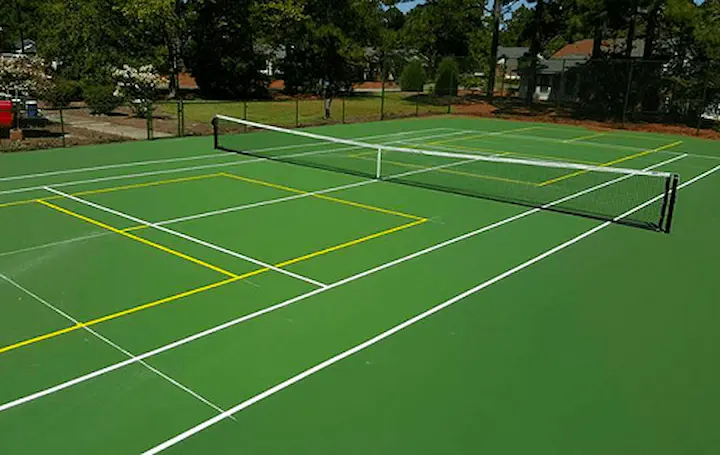
Yes, you can. A standard tennis court is 60 feet by 120 feet, which provides more than enough room. In fact, you can often fit up to four pickleball courts within the space of one tennis court.
What is the absolute minimum space for a very casual court?
For a very casual, non-regulation game where safety is still a priority, you could get by with a total area of 24 feet by 54 feet. This is tight, however, and not recommended for regular or aggressive play.
How high should the fence be around a pickleball court?
A 10-foot high fence is standard for most pickleball courts. This height is effective at containing most shots, including lobs, and keeps the game flowing without constantly chasing balls.
Does the court surface affect how much space is needed for a pickleball court?
No, the court surface material, whether it's concrete, asphalt, or a modular tile system, does not change the required dimensions. The 20×44 foot court and the 30×60 foot total playing area recommendations remain the same.
Conclusion
Determining how much space is needed for a pickleball court comes down to two key numbers: the 20×44 foot playing area and the recommended 30×60 foot total area. Understanding the difference between the court and the necessary space around it is the foundation for a safe and enjoyable pickleball experience. From there, considering factors like orientation, fencing, and ceiling height for indoor courts will help you perfect your plan.
Now that you're armed with the right dimensions and practical knowledge, you’re ready to take the next step. Go measure that space in your backyard or community park and start planning the pickleball court you’ve been dreaming of.
Have you built your own court or have a question we didn't cover? Share your experiences and thoughts in the comments below