
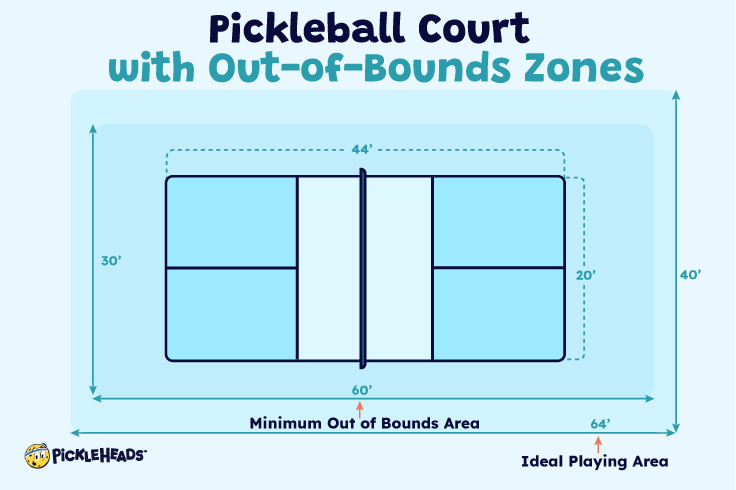
A regulation pickleball court needs 20×44 feet inside a 30×60 feet area.
If you are planning a new court or squeezing one into a yard, gym, or tennis pad, you need more than the painted lines. In this guide, I break down the space needed for pickleball court builds, from the standard footprint to smart layouts, indoor ceiling heights, fencing, lighting, and real-world tips from projects I’ve helped plan. By the end, you will know exactly how much room you need and how to make every foot count.

Regulation court size and the total space needed
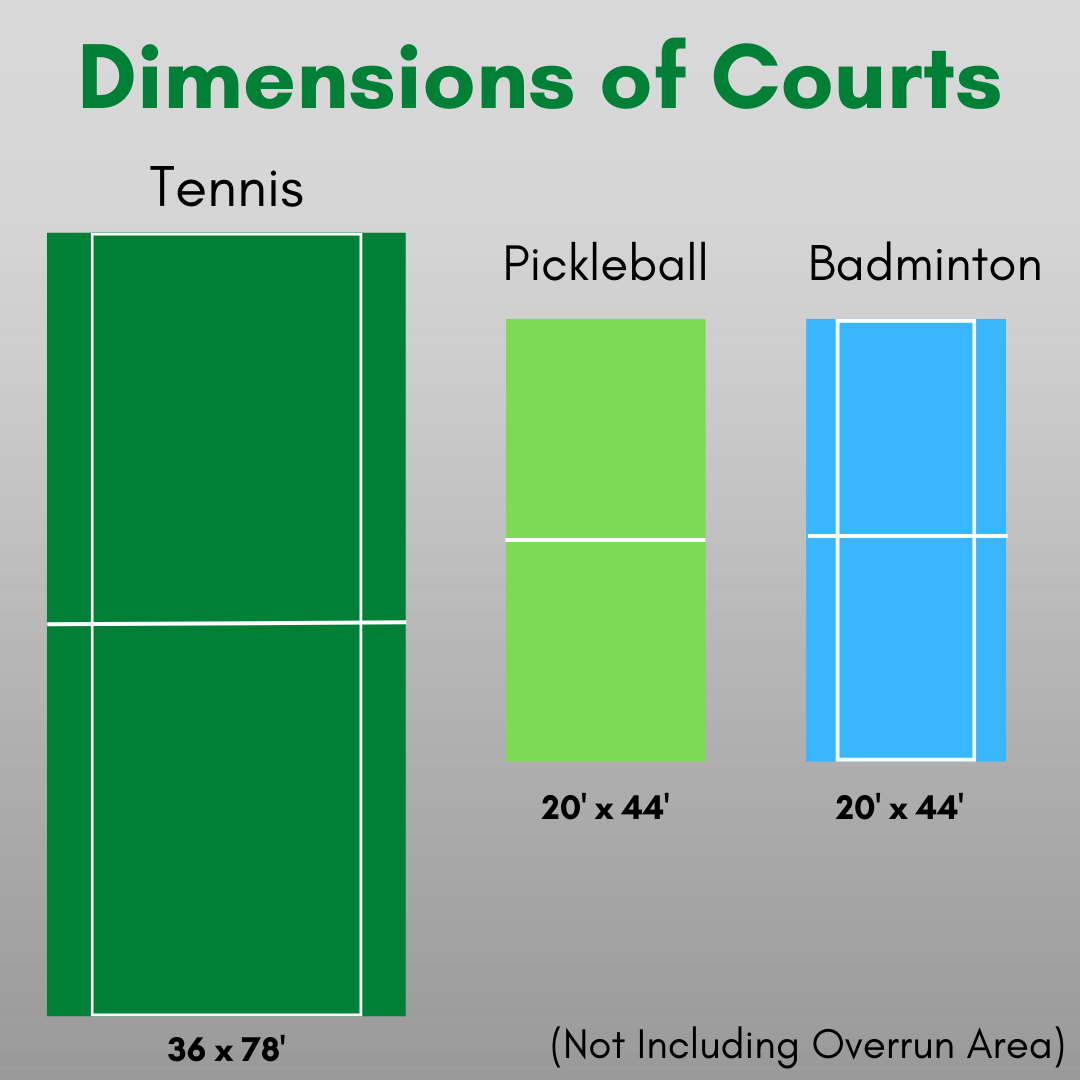
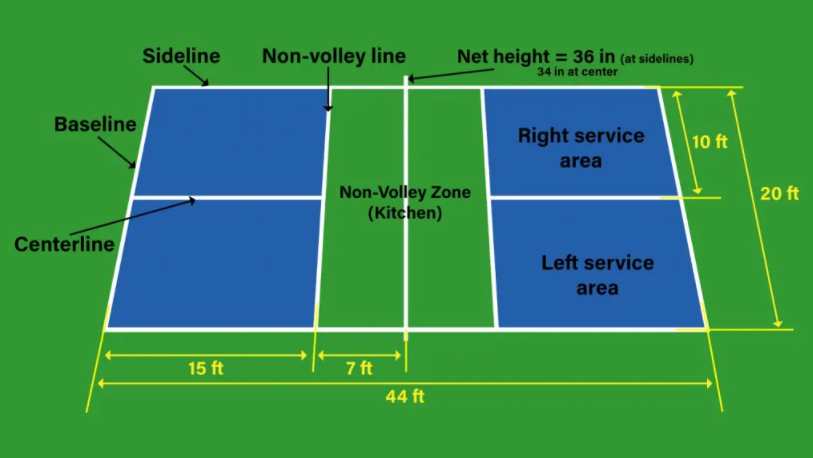
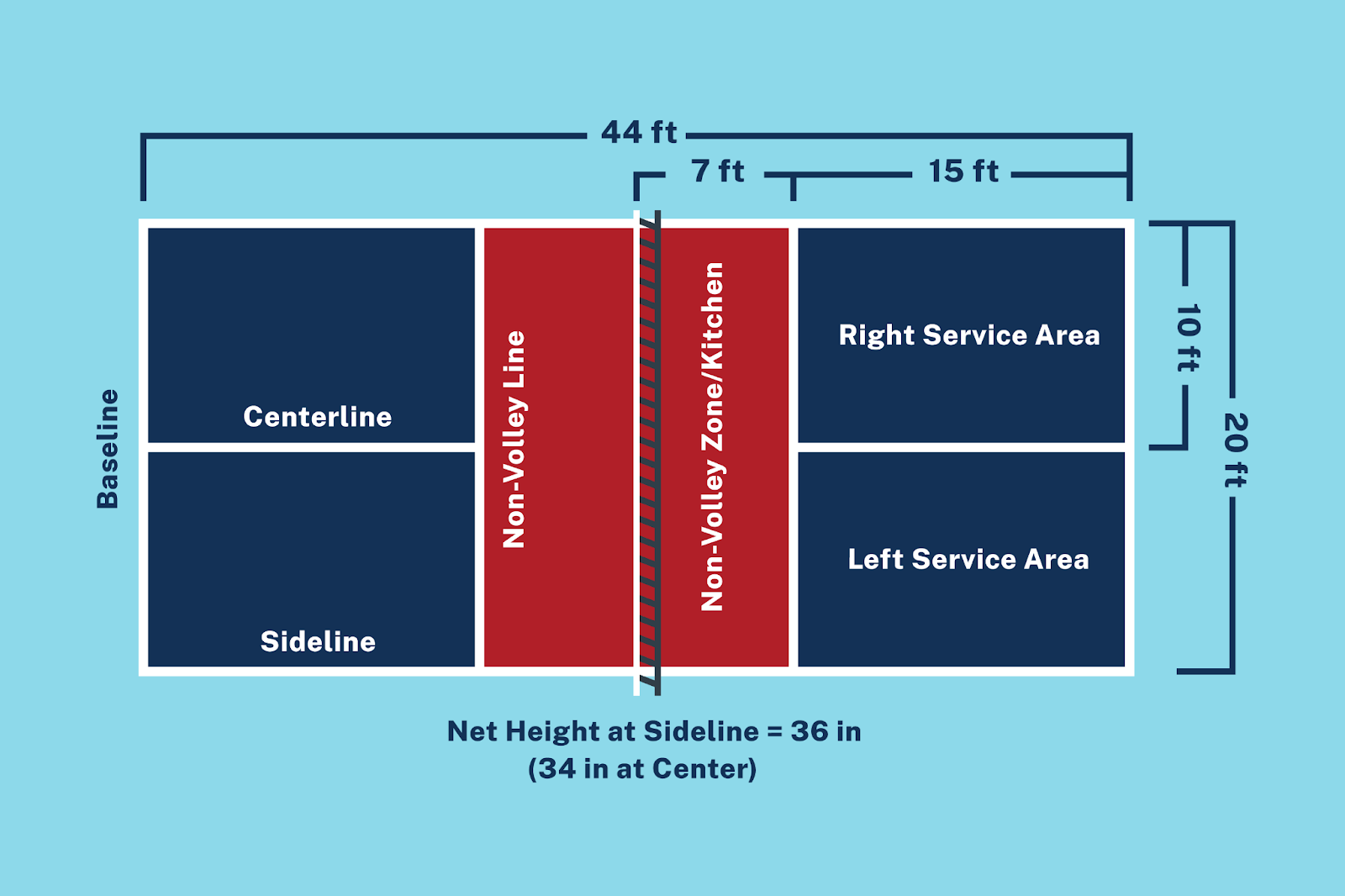
A pickleball court is 20 feet wide by 44 feet long. That is the playing area for both singles and doubles. But you also need run-off room for safety and comfort.
The space needed for pickleball court layouts starts at 30×60 feet. That minimum gives about 5 feet clear on each side and 10 feet behind each baseline. Most players feel better with the recommended 34×64 feet, which adds more side space for wide balls and safer stops. These standards follow the current court specs used by top venues.
Quick reference sizes
- Court lines: 20×44 feet
- Minimum playing area: 30×60 feet
- Recommended playing area: 34×64 feet
- Tournament or premium comfort: more space where possible, especially on the sides
Why the extra space matters
- Safer deceleration on hard stops
- Room to chase lobs and angles
- Space for ball carts, benches, and gates
Indoor vs. outdoor: how much space you really need
Outdoor courts follow the same footprints. Indoors, you also plan for height, walls, airflow, and lights. The space needed for pickleball court builds indoors includes free height and clear walls.
Aim for at least 18 feet of clear ceiling height. Twenty feet feels far better, especially for lobs. Try to keep walls and columns outside the 30×60 or 34×64 footprint. Good lighting makes a huge difference. Even light at about 30 to 50 foot-candles over the court helps players see the ball with less strain.

Indoor planning tips
- Keep 3 to 5 feet of clear wall space beyond the playing area
- Use non-glare lights with even spread
- Control airflow to avoid ball drift and cold spots
Outdoor planning tips
- Face courts north–south to reduce sun glare
- Add wind screens on fences in gusty areas
- Plan drainage so water runs away from the court
Multi-court layouts and tennis court conversions
A 60×120 foot tennis court is a great host. The space needed for pickleball court conversions lets you fit two or four courts with safe walkways.
Most parks fit four pickleball courts on one tennis pad. Each court uses about 30×60 feet. Leave center aisles so people can pass without crossing play. If you only need two courts, you can give each more breathing room and add a seating lane.

Common multi-court options
- Four courts on one tennis pad with interior walkways
- Two courts with wider baselines and side space
- One show court with extra room for spectators
Spacing reminders
- Keep at least 8 to 10 feet between back-to-back baselines
- Use 4 to 6 feet between side-by-side courts inside a complex
– Place benches and gates outside play lanes
Backyard and driveway planning
Not every home has a full pad. The space needed for pickleball court setups at home still follows 30×60 feet for a full court, but you can adapt for practice.
If you have 30×60 feet, you can build a standard recreational court. With less room, try a half-court for drilling or skinny singles at 10×44 feet. A portable net and temporary lines let you test layouts before you commit to paint or post sleeves.
Backyard tips from builds I’ve done
- Test hitting lanes with chalk lines for a week first
- Protect windows with nets or polycarbonate panels
- Choose a quiet surface or paddles if neighbors are close
Driveway ideas
- Use court tape over clean concrete for temporary lines
- Set the net across the driveway’s width, not down its slope
- Add rubber edge guards to protect paddles and balls near curbs
Surface, safety zones, fencing, and lighting
Great play needs a safe shell. The space needed for pickleball court design includes more than paint. Think surface, fencing, gates, and light poles.
Acrylic over asphalt or post-tensioned concrete is the norm. Fencing around a complex is often 10 feet high on the outside and 4 to 6 feet between interior courts. Place light poles outside the 34×64 area when possible, and keep them out of the main sight lines.
Safety and comfort checklist
- Surface friction: consistent grip in wet and dry
- Fencing set back from sidelines and baselines
- Gates swing out, away from play lanes
- Benches and gear off the court, not behind players’ heels
Lighting quick guide
- Recreation: about 30 foot-candles
- Competition: up to 50 foot-candles
- Even coverage with minimal glare or shadows
Step-by-step planning and measuring guide
Use this simple process to dial in the space needed for pickleball court projects at any site.
Steps
- Measure your site. Capture total length, width, slope, and any obstacles.
- Choose your footprint. Start with 34×64 feet if you can; 30×60 feet if tight.
- Mark corners with stakes. Run string lines to see sight lines and flow.
- Walk the run-offs. You should move freely behind baselines and along sides.
- Check height, power, drainage, and access. Plan for lights, water flow, and storage.
- Place seating, gates, and paths. Keep them outside play lanes.
- Test with a portable net. Rally on the marked area before you paint or pour.
Costs, permits, and site constraints
Space drives costs. More area means more grading, surfacing, fencing, and lights. The space needed for pickleball court builds may also trigger local permits.
Expect to budget more when you move from 30×60 to 34×64 feet, especially with fencing and lights. Talk with your city about setbacks, stormwater rules, and noise. If you are in a shared HOA, check rules on hours, lighting, and color.

Money savers I’ve seen work
- Convert an existing tennis pad when possible
- Share lighting poles across two courts
- Start with one court, stub in conduits for future add-ons
Common mistakes and pro tips
I’ve seen courts play small on day one because key details got squeezed. The space needed for pickleball court plans should not shrink mid-project.
Mistakes to avoid
- Forgetting extra side space for wide balls
- Setting lights or benches inside the run-off zone
- Ignoring ceiling height for indoor lobs
- Painting lines before testing with a portable net
Pro tips for better play
- Choose 34×64 feet when you can for safer stops
- Keep a clear 3 to 5 foot buffer to walls indoors
- Face courts north–south to cut sun glare
- Use contrasting line colors for clarity
Frequently Asked Questions of space needed for pickleball court
What is the standard pickleball court size?
A regulation court is 20 feet by 44 feet. That is the same for singles and doubles.
What is the minimum space needed for pickleball court builds?
Plan for at least 30×60 feet. This gives safe room outside the lines for play.
What is the recommended space for better play?
Most players prefer 34×64 feet. The extra side room helps on wide balls and quick stops.
How high should an indoor ceiling be?
Aim for 18 feet clear at minimum. Twenty feet feels better for lobs and lighting.
Can I fit four pickleball courts on one tennis court?
Yes, a 60×120 foot tennis court can host four courts. Use safe walkways between courts and behind baselines.
Can I build in my backyard if I do not have 30×60 feet?
You can still practice with a half-court or skinny singles at 10×44 feet. A portable net and tape lines work well.
Do I need permits for a backyard court?
Rules vary by city and HOA. Check setbacks, drainage, lighting, and noise before you start.
What fencing height works best?
Use 10 feet on the outside of a complex. Inside dividers can be 4 to 6 feet with wind screen.
How much lighting do I need?
Use about 30 foot-candles for recreation and up to 50 for competition. Keep light even and low-glare.
How many times should I repeat the phrase space needed for pickleball court for SEO?
Use it naturally several times in your article or plan. Focus on clarity first and avoid stuffing.
Conclusion
You now know the space needed for pickleball court planning: 20×44 feet inside 30×60 feet at minimum, with 34×64 feet as the sweet spot. Give yourself safe run-offs, smart fencing, and the right height and lights, and your court will play great for years.
Ready to move from sketch to serve? Measure your site, mark a test court with a portable net, and start rallying. Want more guides like this? Subscribe for updates, or drop a question in the comments so I can help you plan your perfect court.