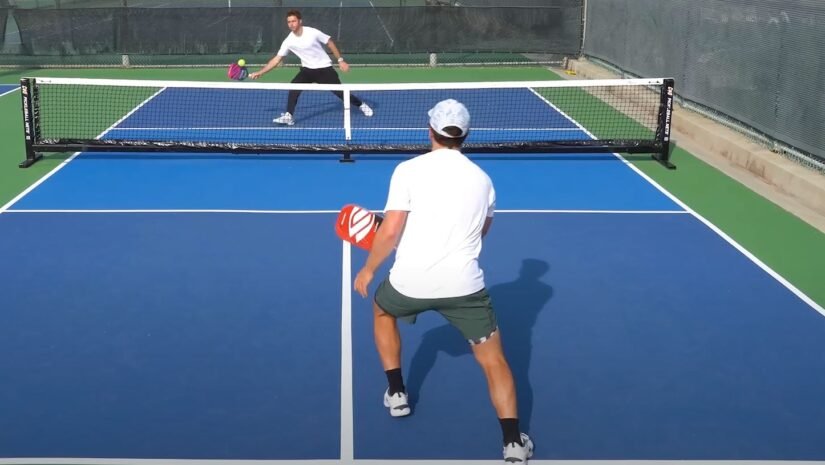
You play pickleball singles by serving diagonally and scoring points only when you serve, covering the entire court yourself.
Ready to dive into the fast-paced, athletic world of one-on-one pickleball? While doubles is often seen as the social, strategic version of the game, singles is where your true grit, stamina, and court sense are put to the test. It's a fantastic workout and a deeply satisfying challenge. If you're wondering exactly how do you play pickleball singles, you've come to the right place. This guide will break down everything from the fundamental rules and scoring to the winning strategies that will help you dominate the court, one point at a time.

Understanding the Basics: The Court and Equipment
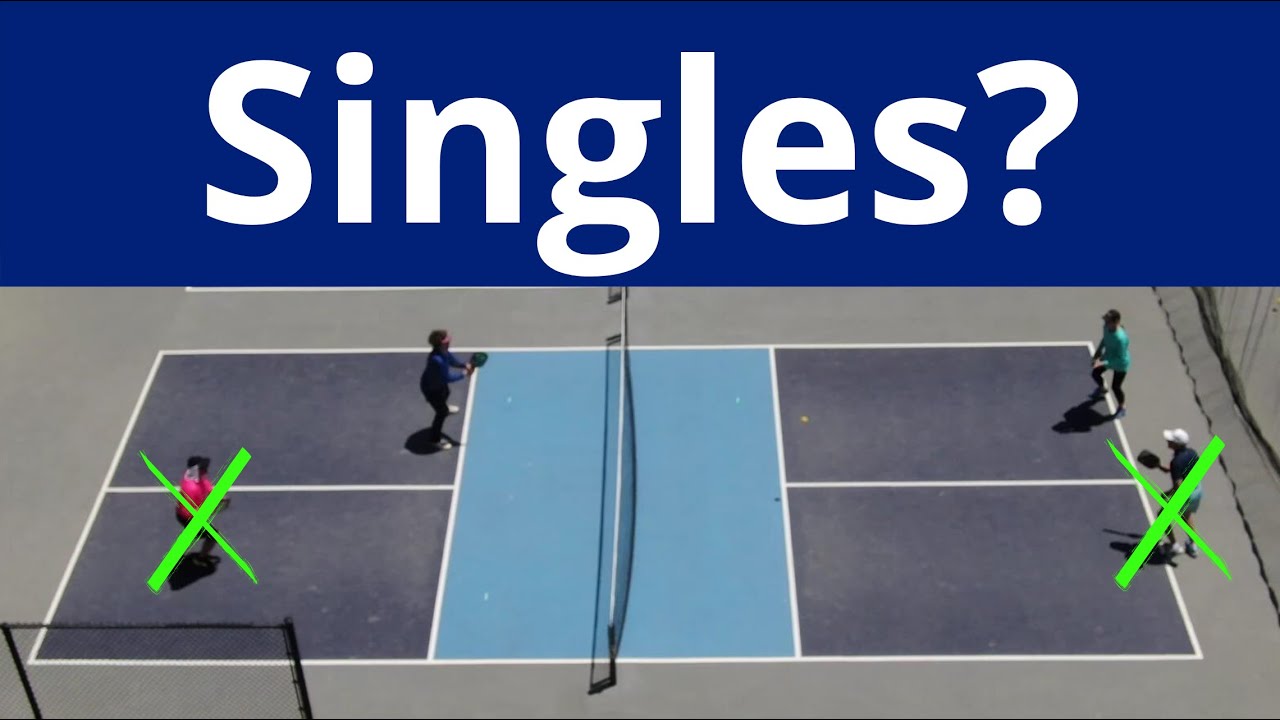
Before we get into the nitty-gritty of how do you play pickleball singles, let's start with the fundamentals. The court and equipment are the same as in doubles, but how you use them changes dramatically. The pickleball court is 44 feet long and 20 feet wide, with a seven-foot non-volley zone (affectionately called the "kitchen") on each side of the net.
In singles, that 20-foot width is all yours to cover. This is the biggest mental and physical adjustment from doubles. You are responsible for every inch of your side of the court, from sideline to sideline. Your paddle and the perforated plastic pickleball remain your trusty tools, but the game becomes less about teamwork and more about individual endurance and tactical placement.

The Rules of Pickleball Singles: Serving, Scoring, and Gameplay
Understanding the rules is the first step to confidently answering, "how do you play pickleball singles?" While many rules overlap with doubles, there are key differences in serving and scoring that you need to master.
The Serve: Where It All Begins
The serve initiates every point and is your first opportunity to gain an advantage. Here’s what you need to know:
- The serve must be hit underhand, with the paddle making contact below your waist.
- You must serve diagonally across the court into the service box opposite you.
- When you serve, at least one foot must be behind the baseline, and you cannot step on or over the line until after you’ve made contact with the ball.
- Your serving position depends on your score. If your score is an even number (0, 2, 4, etc.), you serve from the right side of the court. If your score is an odd number (1, 3, 5, etc.), you serve from the left side.
Scoring Explained: Keeping Track in Singles
Scoring in singles is much simpler than in doubles. You only need to keep track of two numbers: your score and your opponent's score. The server always calls out their score first, followed by the receiver's score. For example, if you are serving and the score is 3 to 1, you would announce "3-1" before you serve.
The most important rule is that you can only score a point when you are serving. If you win the rally as the server, you get a point and continue serving, switching sides of the court. If you lose the rally as the server, you don't get a point. This is called a "side out," and the serve goes to your opponent.
The Flow of the Game: Rallies and Faults
Once the serve is in play, the rally begins. The core rules of gameplay are straightforward:
- The Two-Bounce Rule: After the serve, the receiving team must let the ball bounce once before returning it. Then, the serving team must also let the return bounce once before hitting it. After these first two bounces, players are allowed to hit the ball out of the air (a volley).
- The Non-Volley Zone (NVZ): You cannot hit a volley while your feet are inside the kitchen or touching the kitchen line. If the ball bounces in the kitchen first, you are free to step in and hit it.
- Faults: A rally is lost if a player commits a fault. Common faults include hitting the ball into the net, hitting the ball out of bounds, or volleying from within the non-volley zone. Learning how do you play pickleball singles means learning to minimize these unforced errors.
Key Strategies for Winning at Pickleball Singles
Knowing the rules is one thing, but winning requires strategy. Pickleball singles is a game of chess, not checkers. It's about outmaneuvering your opponent, managing your energy, and hitting smart shots.
The Serve and Return: Your First Offense and Defense
Your serve and return are the foundation of every point. A deep, powerful serve can immediately put your opponent on the defensive, pushing them back from the baseline. Similarly, a deep return of serve is crucial. I learned this the hard way; my early returns were often short, allowing my opponent to rush the net and control the point. Aim your returns deep and toward the center of the court to force them to move and give yourself time to get into position.
Court Positioning and Movement
In singles, your home base should be near the center of the baseline, often called the "center T." After every shot, your primary goal is to recover back to this position. This spot minimizes the distance you have to travel to reach your opponent's next shot, whether it's hit to your forehand or backhand. Constant movement is key. Singles will test your footwork and conditioning far more than doubles ever will.
Shot Selection: Playing Smarter, Not Harder
You don’t need to hit a blistering winner on every shot. The key to how do you play pickleball singles effectively is shot selection.
- The Drop Shot: A soft shot that lands just over the net in your opponent’s kitchen. This is a deadly weapon in singles, as it forces your opponent to run forward, often tiring them out and setting you up for an easy passing shot.
- The Drive: A hard, low shot hit from the baseline. Use this to pass an opponent who is at the net or to keep them pinned to the baseline.
- The Dink: A soft shot used when both players are at the non-volley zone line. It requires patience and precision, forcing your opponent into making a mistake.
Mastering the Mental Game
Singles is as much a mental battle as a physical one. You have to stay patient during long rallies and avoid getting frustrated. Analyze your opponent. Do they have a weak backhand? Are they slow to move forward? Once you identify a weakness, exploit it. The mental fortitude to stick to your game plan, even when you're tired, is what separates good players from great ones.

Common Mistakes to Avoid in Singles Pickleball
As you learn how do you play pickleball singles, you're bound to make a few mistakes. Here are some of the most common pitfalls and how to steer clear of them:
- Going for Too Much: Avoid the temptation to hit a perfect, unreturnable winner on every ball. Focus on consistency and making your opponent hit one more shot. Most points are won on errors, not winners.
- Staying at the Baseline: Don't get stuck at the baseline after your return. Your goal should always be to work your way up to the non-volley zone line, where you can control the point.
- Neglecting the Drop Shot: Many new singles players rely solely on power. A well-placed drop shot is a far more effective tool for wearing down your opponent and winning points.
- Forgetting to Recover: After hitting a shot that pulls you wide, your immediate priority is to get back to the center of the court. Failing to do so leaves you vulnerable to an easy shot into the open court. I can't count how many points I've lost by admiring a good shot instead of immediately recovering.

Frequently Asked Questions of how do you play pickleball singles
What is the main difference between pickleball singles and doubles?
The biggest difference is court coverage. In singles, you are responsible for the entire court, making it a much more physically demanding game that relies on stamina and one-on-one strategy.
How does the scoring work in pickleball singles?
You only score points when you are serving. The score is called with the server's score first, then the receiver's (e.g., "4-2"). There is no third number like in doubles.
Where should I stand when serving in singles?
Your position depends on your score. If your score is even (0, 2, 4), you serve from the right side of the court. If your score is odd (1, 3, 5), you serve from the left side.
Is pickleball singles a good workout?
Absolutely! Pickleball singles is an incredible cardiovascular workout. The constant side-to-side and forward-and-back movement will get your heart rate up and test your endurance.
Can I play in the kitchen in pickleball singles?
Yes, you can enter the kitchen at any time, but you cannot hit a volley (a ball out of the air) while standing in it. You must let the ball bounce first before hitting it from inside the kitchen.
Conclusion
Mastering how do you play pickleball singles is a journey of skill, strategy, and sweat. It combines the physical challenge of a great workout with the mental puzzle of outthinking an opponent. By understanding the core rules, focusing on smart court positioning, developing a versatile shot selection, and learning from common mistakes, you can transform your game.
Now that you have the knowledge, it's time for action. Grab your paddle, find an open court, and put these principles into practice. Don't be afraid to experiment, have fun, and embrace the challenge of the one-on-one battle. Let us know in the comments how your first singles match goes