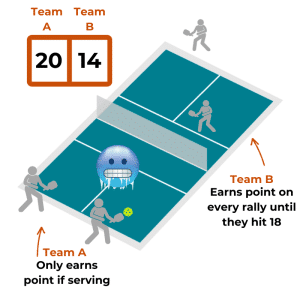
Rally scoring awards a point on every rally, regardless of which team serves.
I’ve worked with players and coaches who saw games change overnight when rally scoring became standard. In this article I’ll explain rally scoring in clear terms, show how it shifts strategy, share real coaching tips, and give practical examples you can use right away. You’ll learn the rules, common variations, training methods, and how to measure success under rally scoring so you can play and coach with confidence.
What is rally scoring?
Rally scoring is a point system where each rally ends with a point for one team. Unlike older systems, the serving team does not need to win the rally to score. This method speeds up games and keeps every play meaningful.
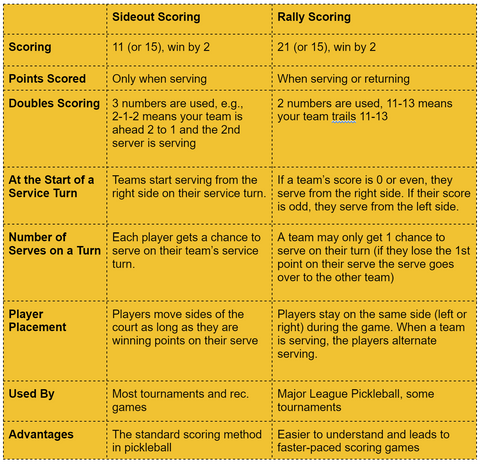
Rally scoring is most common in volleyball and other net sports. It replaces side-out scoring, where only the serving team could earn points. Under rally scoring, matches usually have fixed point targets and require a two-point margin to win.

How rally scoring works: rules and common formats
The basic rules of rally scoring are simple and predictable.
- Each rally ends with one point awarded to one side. The rally scoring point goes to the winner of the rally.
- Sets have fixed point targets. A common format is first to 25 points with a two-point lead required.
- The deciding set often uses a shorter target, for example first to 15 points with a two-point margin.
- Serve rotation and substitutions follow regular sport rules; rally scoring does not change rotation rules, only scoring.
- When a rally ends in an error or a successful attack, the rally scoring point is added immediately.
Examples:
- If Team A serves and Team B wins the rally, Team B gains one point and the next serve goes to Team B.
- In a 25-point set, if score reaches 24-24, play continues until a two-point lead appears, such as 26-24.
Rally scoring can be adapted: youth leagues may play to lower targets or allow tie-break variations. The consistency of rally scoring makes match time more predictable.
Why organizations adopted rally scoring
Rally scoring became widely used to make matches fairer and more viewer-friendly.
- Shorter and more predictable matches help scheduling and TV broadcasts.
- Every rally carries value, which increases intensity and makes matches exciting.
- Rally scoring reduces long service-only scoring swings that slowed games under side-out rules.
- It promotes balanced skills: serve, receive, attack, and defense all directly affect the score.
From experience, leagues that switched to rally scoring saw fewer drawn-out matches and better spectator engagement. Teams had to adjust training to emphasize consistency and serve-receive under pressure.

Strategic changes under rally scoring
Rally scoring changes how teams approach each play. Focus and consistency matter more than ever.
- Prioritize serve-receive: Poor receive often gives immediate points to the opponent under rally scoring.
- Play higher percentage serves: Aggressive jump serves can win points, but risky serves give direct returns and points to the other team.
- Improve transition: Quick transition from defense to attack secures points fast under rally scoring.
- Value error reduction: Unforced errors cost points on every rally, so teaching controlled aggression is key.
- Conditioning and mental training: Fatigue and pressure lead to mistakes that the rally scoring system punishes.
I coached a team that moved from conservative serving to smart serving drills. After eight weeks, our serve error rate fell and match wins rose. The team learned that rally scoring rewards steady play more than occasional brilliance.
Training drills and practice plans for rally scoring
Practical drills help players adapt to the demands of rally scoring. Here are focused drills that produce quick results.
- Serve-receive pressure drill: Two teams play short sets to 15. Every poor pass leads to a point for the other side. Emphasize accurate first contact.
- Controlled serving ladder: Players progress through serving zones. Each successful in-zone serve earns a point; out-of-zone is a lost point. This reduces risky serves.
- Quick transition drill: Defender passes to setter within two contacts; offense must attack within three seconds. Points for clean transitions.
- Error-awareness scrimmage: Full scrimmage with rally scoring and a rule that penalizes unforced errors with immediate points. Review video and correct patterns.
Set measurable goals: reduce serve errors by 30% in four weeks, or increase successful first attacks by 20%. Short, focused sessions work best for rally scoring skill gains.

Common mistakes teams make with rally scoring and how to fix them
Teams often underestimate how much rally scoring magnifies simple mistakes. Avoid these common pitfalls.
- Mistake: Overly aggressive serving that leads to many service errors.
- Fix: Practice controlled serving zones and reward consistency.
- Mistake: Neglecting serve-receive under pressure.
- Fix: Add stress elements to drills, like score pressure and timed rotations.
- Mistake: Not training for short, decisive runbacks.
- Fix: Work on conditioning and fast-set timing for quick point swings.
- Mistake: Ignoring mental skills for late-game points.
- Fix: Use visualization and routine training to calm players in tight rallies.
From my coaching notes, the best teams under rally scoring are the calmest and most consistent. Train routines and focus on process, not panic.
How to track and measure success in a rally scoring system
Tracking simple metrics lets you see progress under rally scoring quickly.
- Serve error rate: Count service faults per set. Aim to lower this weekly.
- First-pass quality: Track passes that allow full offense. Measure percentage per game.
- Points won on serve: Monitor points scored directly from serve and target gradual improvement.
- Transition points: Track how many points come from successful defensive-to-offense plays.
- Clutch performance: Log points won in the final five rallies of close sets to assess mental toughness.
Use short spreadsheets or apps to record these stats after matches. Small, consistent gains in these areas lead to more wins under rally scoring.

Real-world examples and personal lessons
I once coached a club that struggled after their league switched to rally scoring. We were used to grinding out points on serve. After the switch, matches felt faster and more punishing. I changed practice structure to short, high-intensity drills focused on serve-receive and error reduction.
Key lessons:
- Adapt quickly: change practice priorities within a week of rule shifts.
- Communicate: players must understand why each rally now matters more.
- Measure small wins: Celebrate fewer errors and better passes, not only final scores.
These small steps turned the team’s play around in one season. Rally scoring rewards disciplined habits more than flash plays.
%20(1).jpg)
Advanced variations and when to use them
Leagues and clubs sometimes tweak rally scoring to suit goals.
- Short sets for youth: Use first to 15 to keep games quick and fun.
- Cumulative rally scoring: Add total points over multiple mini-sets to determine winners in training.
- Timed rally scoring: Play by time rather than points for fitness-focused sessions.
- Hybrid formats: Combine rally scoring with special rules for development, such as unlimited substitutions.
Choose the variation that matches player age, goals, and event logistics. The core principle stays the same: every rally matters.
Frequently Asked Questions of rally scoring
What exactly does rally scoring mean?
Rally scoring means one point is awarded after every rally, to whoever wins the rally. The serving team does not need to win to earn a point.
How many points are typical in a rally scoring set?
A common format is first to 25 points with a two-point lead needed to win. The deciding set is often first to 15 with a two-point margin.
Does rally scoring change player rotation rules?
No. Rally scoring changes how points are awarded, not how teams rotate. Rotation and substitution rules stay the same as in the sport’s standard rules.
Why is rally scoring better than side-out scoring?
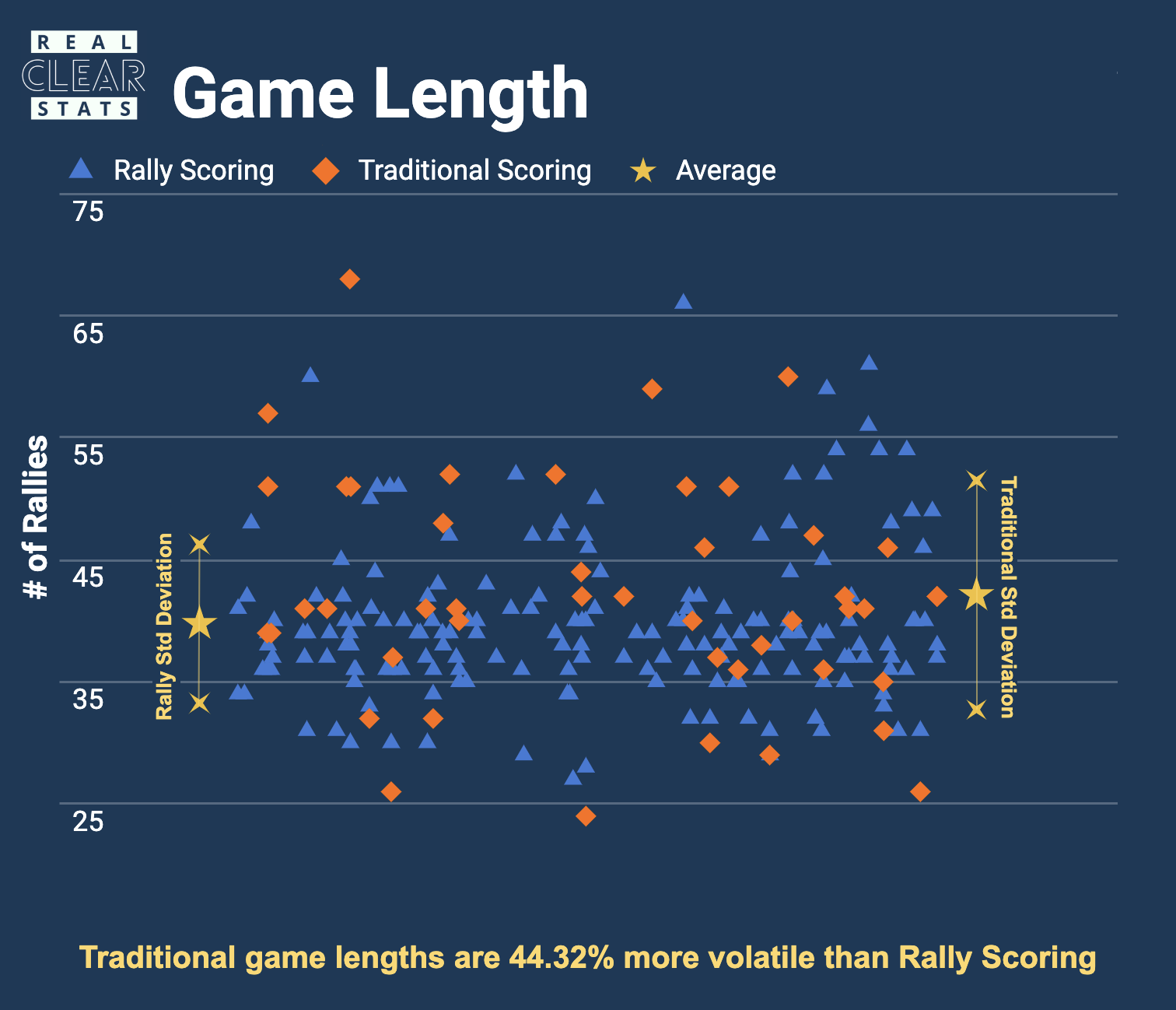
Rally scoring shortens and evens match lengths, keeps each rally meaningful, and reduces long scoring droughts. It also improves predictability for schedules and broadcasts.
How should training change for rally scoring?
Focus on serve-receive, reduce unforced errors, and practice quick transitions. Add pressure drills and track simple stats like serve error rate and first-pass quality.
Conclusion
Rally scoring changes the game by making every rally count. It rewards consistency, quick transitions, and calm decision-making. Use focused drills, track simple stats, and shift practice priorities to serve-receive and error reduction. Start small: pick one metric to improve this week and build from there. Try the drills above, compare results after a month, and share your experience in the comments or subscribe for more coaching tips.