You can stand in the kitchen anytime, but you cannot hit a volley while inside it.
The "kitchen" is one of the most misunderstood areas on the pickleball court. As a player and coach, I've seen countless points lost simply because of confusion around this seven-foot zone. It’s the source of a lot of debate and can feel intimidating for new players. This guide will clear up all the confusion and break down exactly when and why you can play in the kitchen when playing pickleball. By the end, you'll be able to approach the net with complete confidence, knowing the rules inside and out.
What is the Kitchen in Pickleball?
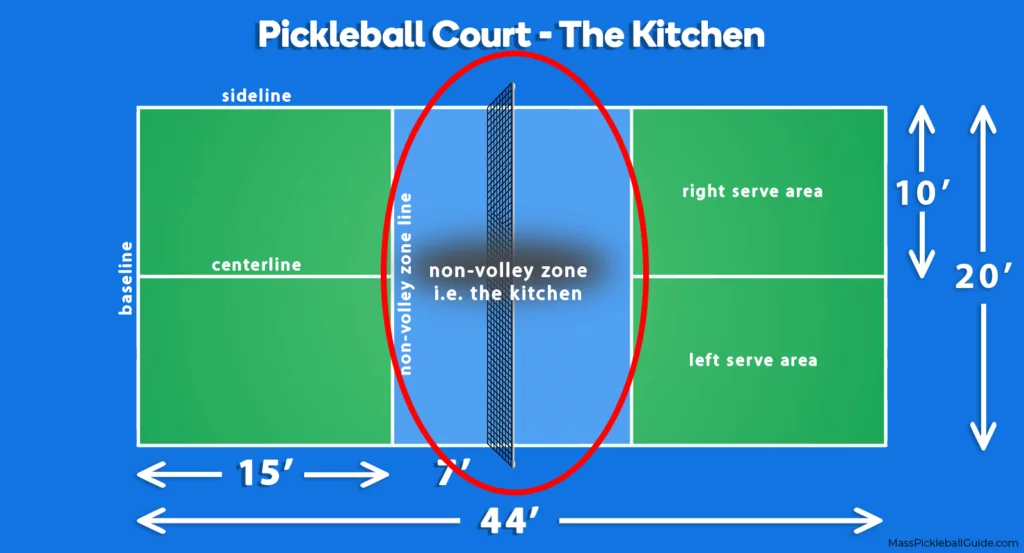
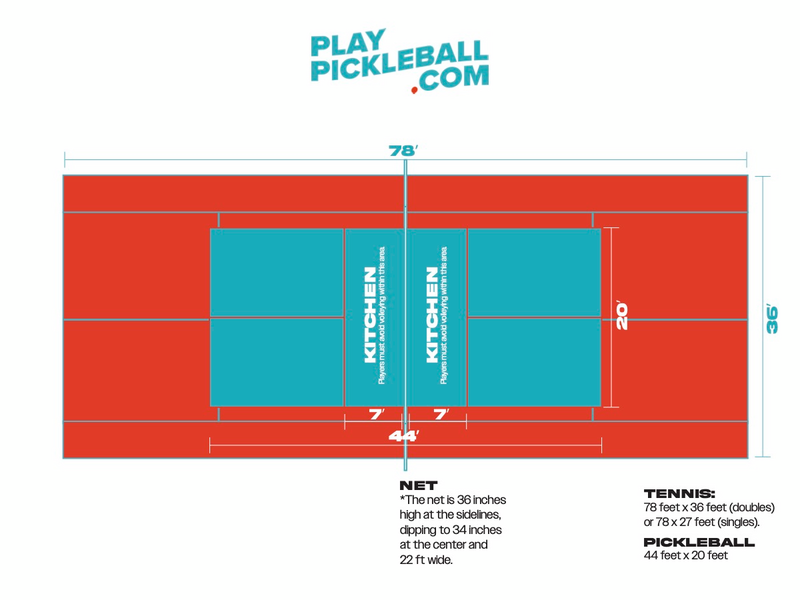
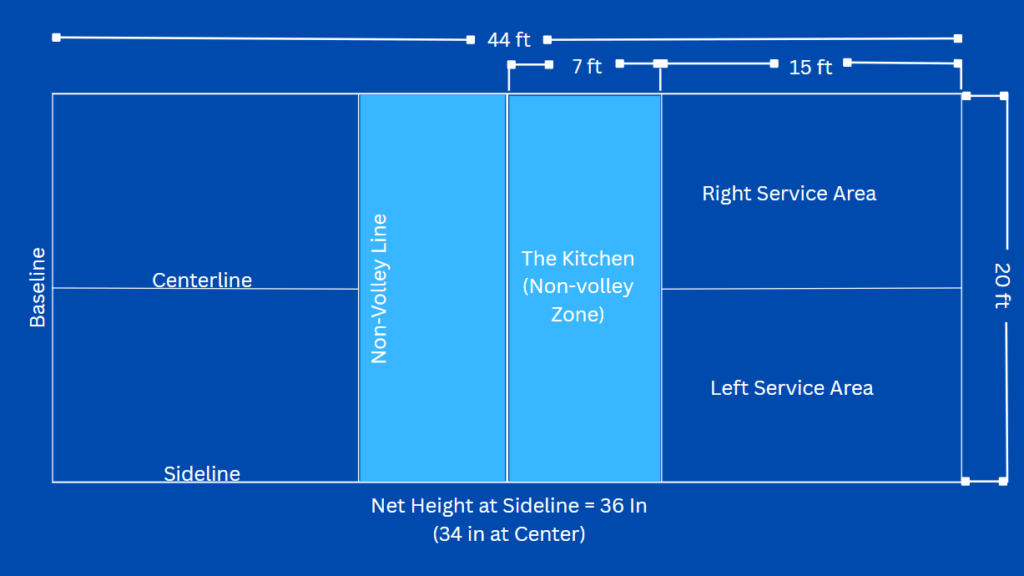
First things first, let's define our terms. The area officially known as the Non-Volley Zone (or NVZ) is affectionately called "the kitchen" by players. This zone is the rectangular area on each side of the court that extends seven feet from the net. The lines marking this zone are considered part of the kitchen.
The main purpose of the kitchen is to prevent players from standing right at the net and smashing the ball. It promotes a more strategic game of dinks, drops, and careful shot placement rather than just raw power. Understanding how to navigate this area is fundamental to becoming a skilled pickleball player.
The Golden Rule: The Volley Rule Explained
The most important rule regarding the kitchen is simple: you cannot hit a volley while standing in it. A volley is any shot where you hit the pickleball out of the air before it has a chance to bounce. This rule is what gives the Non-Volley Zone its name.
Think of the kitchen line as a kind of electric fence that only activates when you're about to hit a volley. If you touch the line or step inside the kitchen while making contact with the ball on a volley, it's a fault. This rule also applies to your momentum. If you hit a legal volley from outside the kitchen but your momentum carries you into the zone, it's still a fault. Even your paddle or hat falling into the kitchen after a volley counts as a fault.
So, When Can You Play in the Kitchen When Playing Pickleball?
This is the big question, and the answer is more straightforward than you might think. While the volley rule is strict, there are specific times when you absolutely can and should enter the kitchen. Knowing the difference is key to controlling the game at the net.
Here are the situations where you are allowed inside the kitchen:
- To hit a ball that has bounced. If your opponent hits a soft dink that bounces in your kitchen, you are encouraged to step inside the zone to return it. This is a fundamental part of the short game in pickleball.
- When you are not hitting the ball. You can stand inside the kitchen at any time as long as you are not returning a volley. While it's not a common strategy, it is perfectly legal to be in the kitchen waiting for the next shot.
- After hitting a groundstroke. If you hit a ball that has already bounced (a groundstroke), your momentum can legally carry you into the kitchen. This is different from a volley, where momentum carrying you in would be a fault.
I remember a crucial match where my partner hit a beautiful dink that bounced in our opponents' kitchen. The opponent, being new, hesitated to step in, thinking it was illegal. That slight delay caused them to miss the shot, and we won the point. It was a perfect example of why understanding if you can play in the kitchen when playing pickleball is so critical.
Common Kitchen Rule Misconceptions
The kitchen rules often lead to some common myths on the court. Let's clear up a few of them so you can play with certainty and even help correct others when a friendly debate arises.
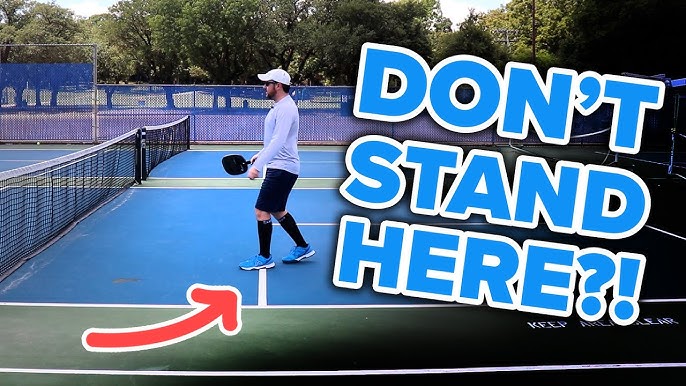
- Myth: You can never step into the kitchen. This is the biggest misconception. You can and should enter the kitchen to hit any ball that has bounced. The kitchen is only a no-volley zone, not a no-player zone.
- Myth: Your paddle cannot cross the kitchen line. Your paddle can cross the plane of the kitchen line to hit a ball, even on a volley. The fault occurs only if your feet touch the line or enter the kitchen during the volley motion.
- Myth: You can jump over the kitchen to smash the ball. Some players try to perform a jump-volley, or "Erne," but it's tricky. You can legally jump from outside the kitchen, hit a volley, and land outside the kitchen. However, if you land inside the kitchen, it's a fault.
- Myth: If your partner is in the kitchen, you can't hit a volley. Your partner's position has no bearing on your shot. As long as you are positioned legally outside the kitchen, you can hit a volley regardless of where your partner is standing.

Frequently Asked Questions of can you play in the kitchen when playing pickleball
Can your momentum carry you into the kitchen?
Yes, but only after hitting a groundstroke (a ball that has bounced). If you hit a volley, your momentum cannot carry you into the kitchen or onto the kitchen line, or it will be a fault.
What happens if you volley from the kitchen?
If you hit a volley while any part of your body is in the kitchen or touching the kitchen line, you commit a fault. This results in a loss of the rally for your team.
Can you stand in the kitchen between shots?
Yes, it is perfectly legal to stand inside the kitchen at any point during a rally. You just can't execute a volley while you are in there.
Does the kitchen rule apply to serves?
The kitchen rule doesn't directly apply to the serve itself, as serves must land past the kitchen line. However, the receiver must let the serve bounce before returning it, so they cannot volley the serve from any position.
Can your paddle touch the kitchen floor?
Yes, your paddle can touch the kitchen floor. The fault is related to your body being in the kitchen during a volley, not where your equipment touches.
Conclusion
Mastering the kitchen rules is a game-changer. The key takeaway is simple: you can absolutely play in the kitchen, but only to hit a ball that has already bounced. The Non-Volley Zone is designed to reward strategy over power, making the dink an essential shot for every player. By understanding these rules, you can move with confidence and control the flow of the game at the net.
Now that you're armed with this knowledge, get out on the court and practice your net game. Pay attention to your footwork and be mindful of where you are when you make contact with the ball. If you have any more questions about the kitchen, feel free to drop them in the comments below