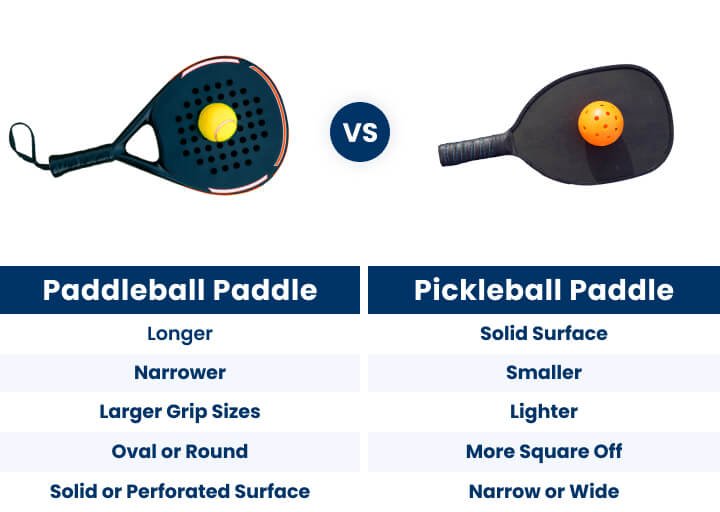
Paddleball uses a solid paddle with a small rubber ball; pickle ball uses a paddle with a perforated plastic ball.
As a longtime court-sport player and writer, I’ve broken down the difference between paddleball and pickle ball so you can decide which game fits your play style. This guide explains rules, equipment, tactics, and real-world tips from my experience, so whether you’re picking a new hobby or sharpening skills, you’ll get clear, usable answers about the difference between paddleball and pickle ball.

Quick overview: what each sport is and why they matter
Paddleball and pickle ball are paddle sports that share racket-like tools and net play. When exploring the difference between paddleball and pickle ball, you’ll see they diverge in equipment, court size, and typical pace. Understanding those differences helps players choose the sport that matches their fitness level, age, and social goals.

Equipment differences
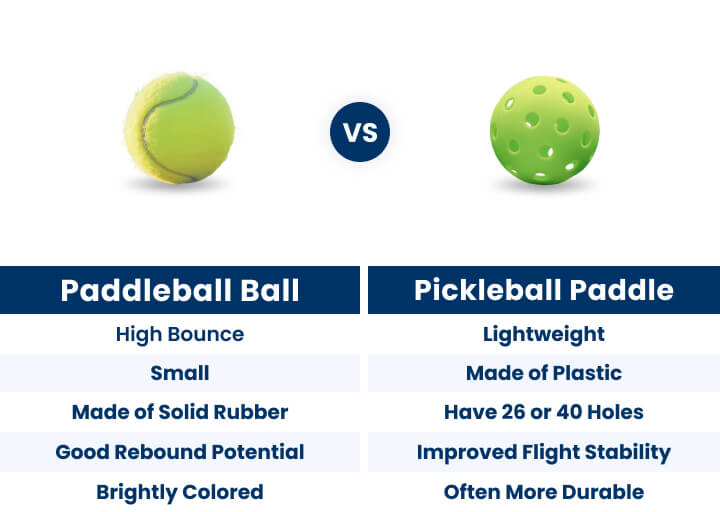
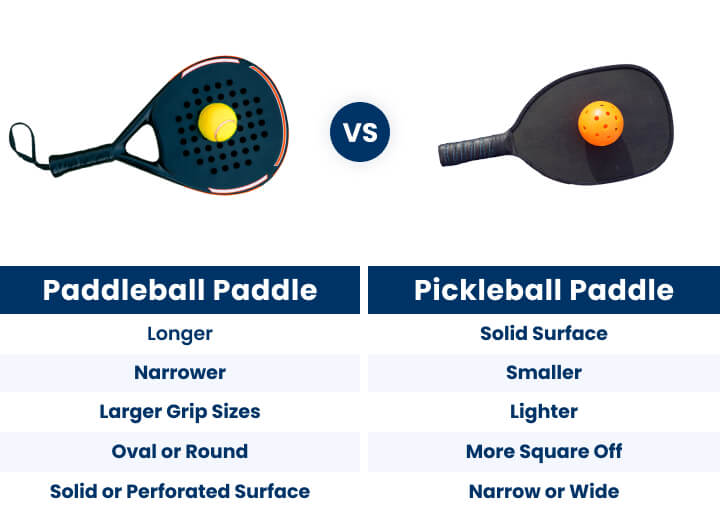
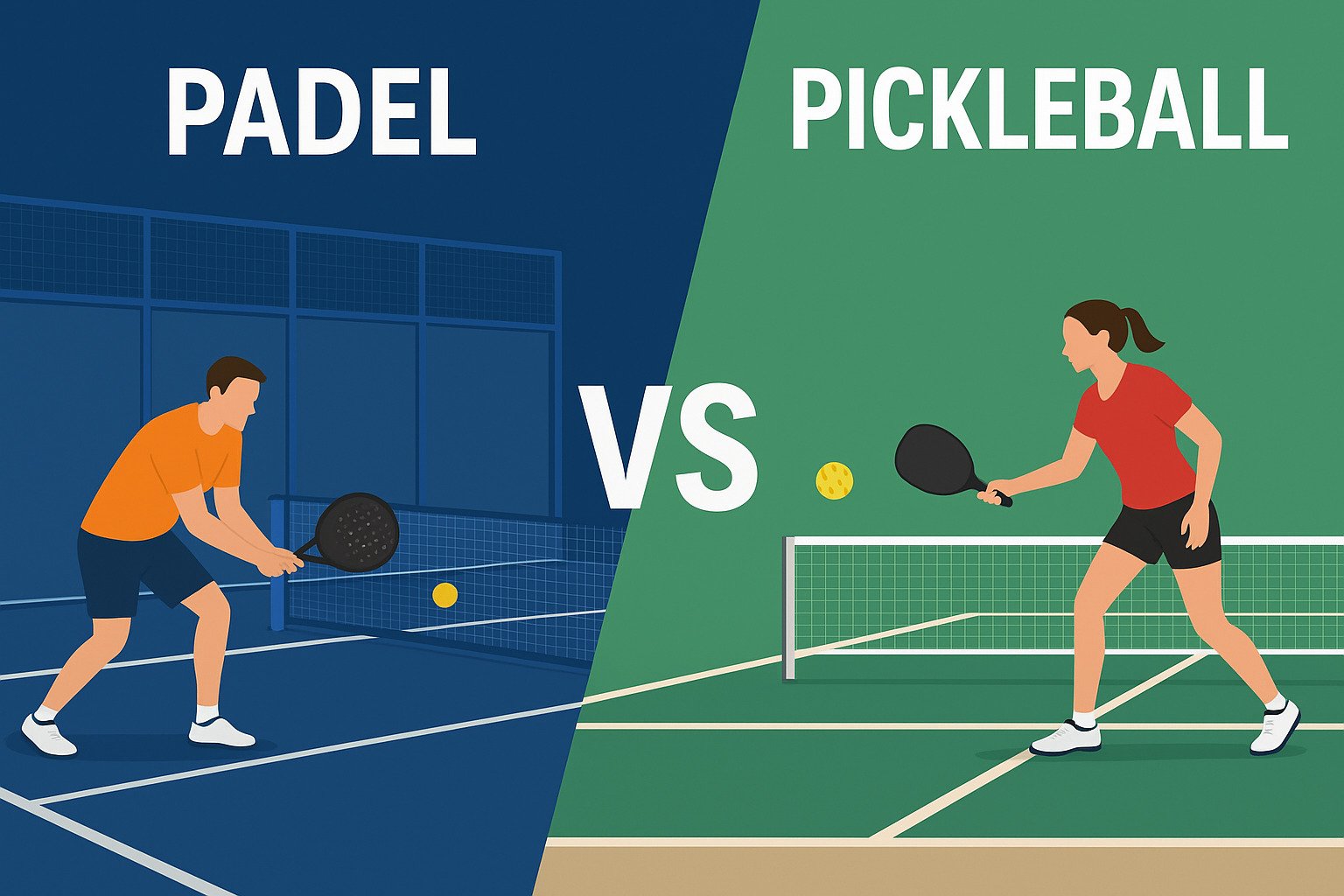
The paddles and balls are the most visible difference between paddleball and pickle ball.
Paddleball uses a solid paddle often made from wood or composite and pairs it with a small rubber ball. Pickle ball uses a larger paddle made of composite or graphite and a hollow, perforated plastic ball that changes bounce and speed.
Choosing the right gear affects control and feel, and the difference between paddleball and pickle ball equipment explains much of how each game plays.

Court and dimensions
Court size and net height shape how players move and what strategies work best.
Paddleball is often played on smaller courts or private walls for one-wall or four-wall versions, with a variety of court configurations. Pickle ball uses a standardized 20 by 44 foot court and a net set 34 inches high at the center, which creates predictable spacing for singles or doubles play.
Knowing the difference between paddleball and pickle ball court setups helps you plan drills, fitness training, and where to practice.
Rules and scoring
Rules create the rhythm and strategy of each sport.
Paddleball rules vary by style (beach, one-wall, four-wall) with scoring that can be informal or tournament-based, often using rally or side-out scoring. Pickle ball has a fixed rule set with serving rules, a two-bounce rule, and rally scoring to 11 points, win by two, which makes matches fast and easy to follow.
Comparing the difference between paddleball and pickle ball rules helps new players learn faster and avoid common penalties.

Playing style and strategy
Pace, positioning, and shot selection differ between the sports.
Paddleball tends to be fast and reflex-driven, especially in cramped courts or wall play, pushing players to develop quick hands and short swings. Pickle ball rewards placement, patience, and net play, with dinking, soft shots, and strategic lobs shaping points.
Recognizing the difference between paddleball and pickle ball strategies helps players adapt their footwork and shot choices.
Common similarities and sources of confusion
They look similar at a glance, which causes mix-ups among newcomers.
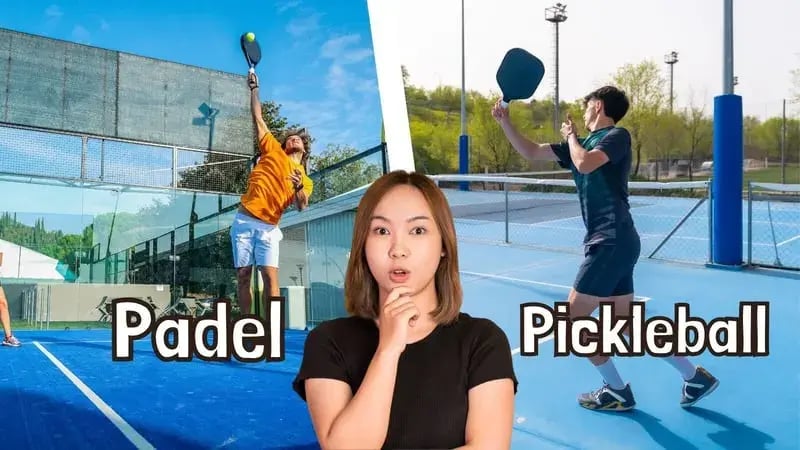
Both use solid paddles, require volley skills, and can be social, low-impact activities. The main confusion stems from the shared paddle element, but the difference between paddleball and pickle ball shows up in ball type, court rules, and how points are won.
 choosing based on goals”
style=”max-width: 100%; height: auto; border: 2px solid black; border-radius: 10px; display: block; margin: 0 auto;”
loading=”lazy”
/>
Who should play which: choosing based on goals
Match the game to your needs, fitness level, and social preferences.
Choose paddleball if you like high-speed rallies, wall play, or varied court types. Choose pickle ball if you prefer clear rules, standardized courts, and a balanced mix of fitness and strategy.
Thinking about the difference between paddleball and pickle ball in these terms will save time and improve long-term enjoyment.
Benefits, fitness, and injury considerations
Both sports build coordination, cardio fitness, and social connection while differing in impact and motion.
Paddleball’s quick reflexes and short strokes can improve hand-eye coordination and explosive speed. Pickle ball’s varied movement and net play provide a steady aerobic workout with lower impact, which many older adults and rehab patients find accessible.
Understanding the difference between paddleball and pickle ball helps you pick the sport that aligns with your body and fitness goals.
Personal experience, lessons, and practical tips
I started with paddleball as a teenager and switched to pickle ball later to reduce joint strain while keeping competition. Here are lessons I learned the hard way:
- Practice footwork first, not power. Good positioning beats raw strength in both games.
- Start with mid-range paddles to build touch before moving to expensive gear.
- Play both singles and doubles to learn different court coverage skills.
Embracing the difference between paddleball and pickle ball eased my transition and improved my court sense faster than simply switching gear.
Resources for learning and improving
Structured practice beats random play when you want rapid improvement.
Join beginner clinics or local leagues to learn rules and etiquette. Use short drills focusing on dinks, serves, wall volleys, and footwork to accelerate learning.
Regular feedback and match play help you appreciate the difference between paddleball and pickle ball more quickly.
Frequently Asked Questions of difference between paddleball and pickle ball
What is the biggest physical difference between paddleball and pickle ball?
The biggest physical difference between paddleball and pickle ball is the ball type and court size, which change how the ball bounces and how players move. Paddleball uses a rubber ball with faster, lower bounces, while pickle ball uses a perforated plastic ball with distinct flight and bounce.
Are paddles interchangeable between paddleball and pickle ball?
Paddles are not ideal to interchange because paddleball paddles and pickle ball paddles differ in weight, size, and surface materials. Using the wrong paddle can reduce control and increase the risk of strain.
Which sport is easier for beginners to pick up?
Pickle ball is often easier for beginners because of standardized courts, clear rules, and slower ball pace. Paddleball can be harder at first due to faster reactions and variable court types.
Can playing one help improve the other?
Yes, playing one sport can improve hand-eye coordination, footwork, and volley skills that transfer to the other. Practicing both highlights different strengths and expands tactical options.
Is one sport better for older adults or people with joint issues?
Pickle ball is generally more joint-friendly due to its lower-impact movements and predictable court layout. Paddleball can be higher impact depending on the version, so individuals should consider pace and court type.
Conclusion
Understanding the difference between paddleball and pickle ball comes down to equipment, court size, rules, and play style. Choose paddleball if you love fast reflex work and wall-driven games; choose pickle ball if you favor structured matches, net play, and lower impact. Try both, join a local clinic, and pick the one that makes you smile after a match—then stick with it to see real improvement. Share your experience in the comments or subscribe for more tips and drills to get better faster.