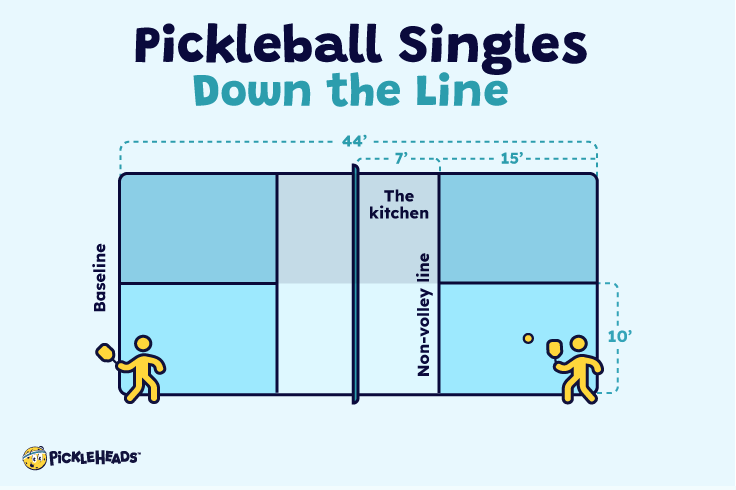
Pickleball singles is a fast-paced game where you cover the entire court, focusing on powerful serves and strategic shot placement.
Many players get their start in doubles, enjoying the social aspect and teamwork. But if you're looking for an incredible workout and a true test of your skills, learning how to play pickleball singles is your next great adventure. As someone who has spent countless hours on the court, I can tell you that singles is a completely different beast. It’s a physical and mental chess match where every shot counts. This guide is your complete roadmap, breaking down everything from the fundamental rules and court positioning to the advanced strategies that will help you dominate your side of the net.

The Big Shift: Understanding Singles vs. Doubles
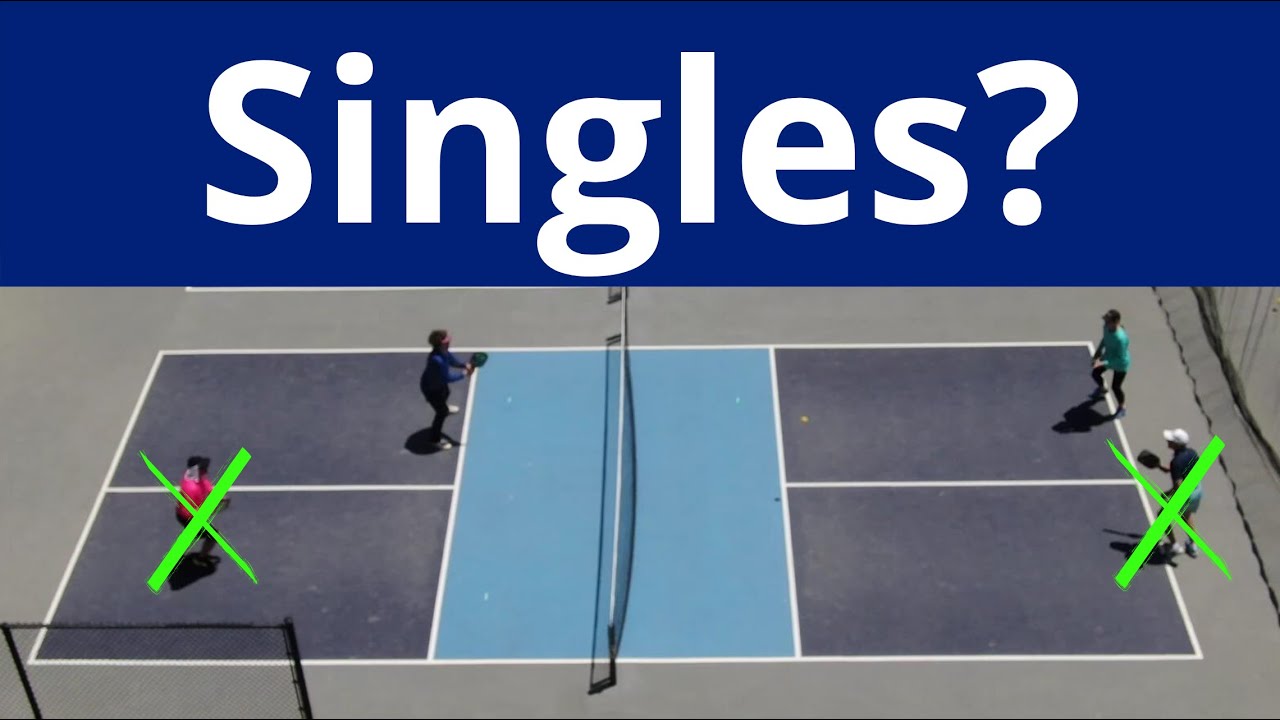
Before we dive into the specifics of how to play pickleball singles, it's crucial to understand how it differs from its doubles counterpart. While the court and the net are the same size, the game feels worlds apart. In doubles, you have a partner to cover half the court, leading to more dinking rallies at the net. Singles is a game of space and movement.
You are responsible for the entire 20-foot width of the court, which means stamina and court coverage are paramount. The rallies are often shorter and more aggressive, with players trying to hit powerful passing shots rather than engaging in long, patient dink battles. Think of doubles as a strategic conversation and singles as an intense, one-on-one debate. My first singles match was a real eye-opener; I was exhausted because I wasn't prepared for the constant movement.
The Ground Rules: How to Play Pickleball Singles
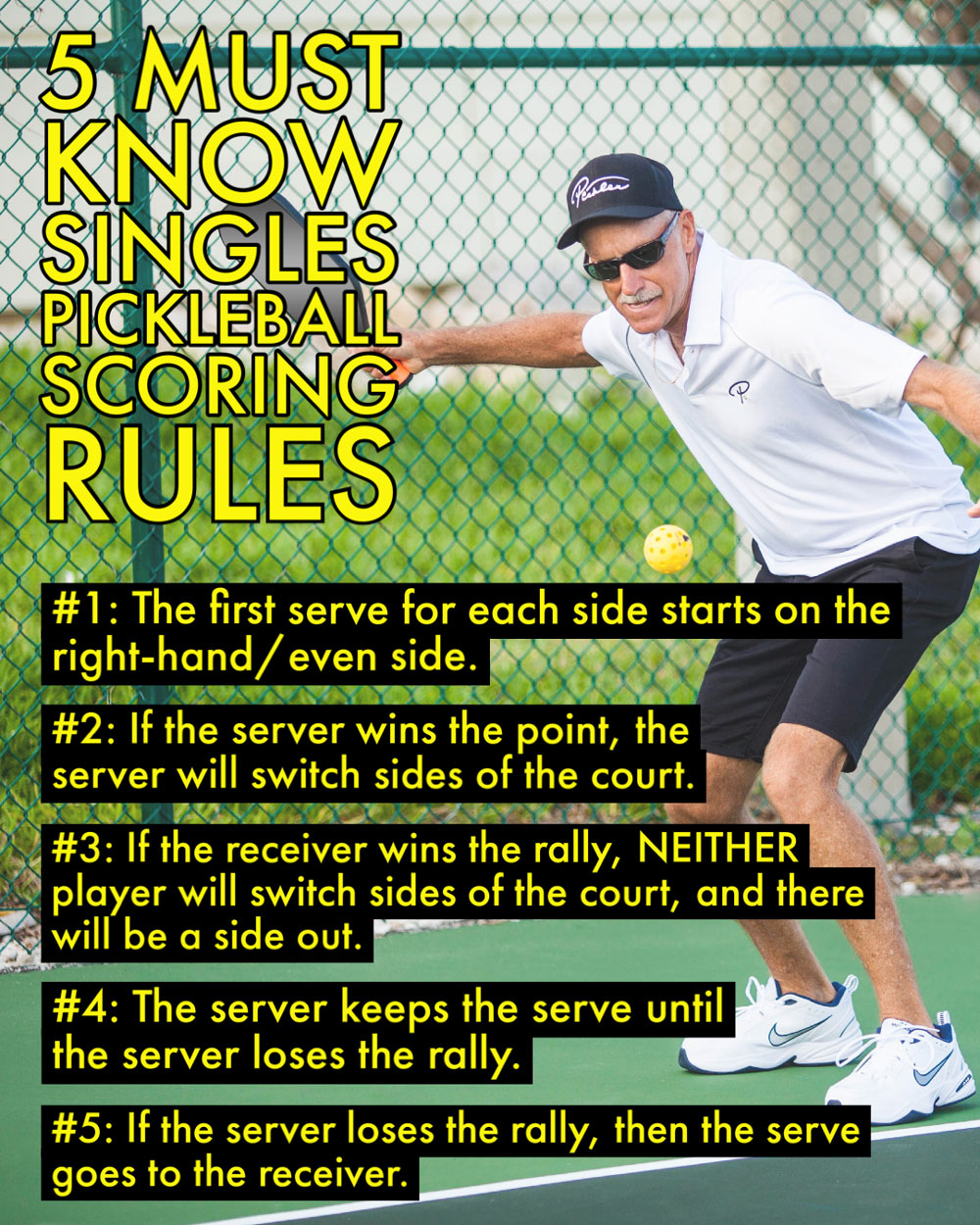
The good news is that most of the rules you know from doubles carry over. The non-volley zone (the "kitchen") rules are identical, and the ball must still bounce once on each side before volleys are allowed. However, the serving and scoring are slightly different and much simpler to track.
Serving and Scoring Explained
Scoring in singles is straightforward. You only score when you are serving, and games are typically played to 11, win by 2. The key difference is your position on the court, which is determined by your score.
- If your score is an even number (0, 2, 4, etc.), you serve from the right side of the court.
- If your score is an odd number (1, 3, 5, etc.), you serve from the left side of the court.
You continue serving, alternating sides after each point you win, until you lose a rally. When you lose the rally, it’s a side-out, and your opponent gets to serve. There's no second server like in doubles, which makes keeping track of the score much easier.
Line Calls and Etiquette
In most recreational and tournament play without referees, you are responsible for making the line calls on your side of the net. The rule is simple: if the ball touches any part of the line, it is in. Always give your opponent the benefit of the doubt. Honest calls are part of what makes the pickleball community so great.
Your Opening Move: The Serve in Singles
In singles, the serve isn't just a way to start the point; it's your first offensive weapon. A weak, short serve gives your opponent an easy return and puts you immediately on the defensive. Your goal should be to hit a deep, challenging serve that pushes your opponent back and makes their return difficult.
I learned early on to target my opponent's backhand. Most players have a weaker backhand, so serving to that side can force a weak return that you can attack. Don’t be afraid to use power, but accuracy is more important. A deep serve that lands just inside the baseline is far more effective than a hard serve that lands mid-court. Varying your serves between hard and deep, soft and angled, will keep your opponent off-balance.

Mastering Your Footwork: Court Positioning is King
If there's one secret to success in pickleball singles, it's court positioning. Because you have to cover so much ground, where you stand between shots is critical. After every single shot you hit—whether it’s a serve, return, or groundstroke—your primary goal should be to recover to the center of the court, just behind the baseline.
Think of this center spot, often called the "T," as your home base. By returning here, you put yourself in the best possible position to reach your opponent's next shot, whether they hit it to your forehand or backhand. It minimizes the distance you have to travel. I often tell new players to imagine there's a string connecting them to the center "T"; after you hit the ball, that string pulls you right back. This single habit will save you energy and help you win more points than almost any other skill.

The Singles Playbook: Winning Strategies and Tactics
Knowing how to play pickleball singles goes beyond just hitting the ball over the net. It's about playing smarter, not just harder. You need a game plan to exploit your opponent's weaknesses and control the flow of the game.
The Power of the Return of Serve
Just like the serve, the return of serve is a crucial offensive shot. Your objective should always be to hit the return deep into your opponent's court. A deep return forces the server to stay back near their baseline, preventing them from rushing the net and taking control of the point. Aiming your return deep and cross-court is a safe, high-percentage play that immediately puts pressure on the server.
Move Your Opponent
The most effective strategy in singles is to make your opponent run. Hitting shots from side to side, from the baseline to the kitchen, will wear them down physically and create openings for you to hit winners. A simple pattern is to hit a shot to their deep backhand corner, and when they return it, hit your next shot to the opposite forehand corner. This forces them to run the full width of the court, and eventually, they will hit a weak shot that you can put away.
Know When to Approach the Net
While singles is often a baseline game, knowing when to come to the net is key to finishing points. You should approach the net after you hit a strong shot that puts your opponent on the defensive. For example, if you hit a deep, powerful forehand that forces your opponent to stretch and hit a weak reply, that is your signal to move forward. Coming to the net allows you to cut off angles and hit winning volleys.

Frequently Asked Questions of how to play pickleball singles
Is pickleball singles harder than doubles?
Yes, most players find singles to be significantly more physically demanding than doubles. You are responsible for covering the entire court, which requires more running, stamina, and overall athleticism.
What is the best serve for pickleball singles?
The best serve is one that is deep and accurate, ideally targeting your opponent's weaker side (usually their backhand). A deep serve pushes your opponent back from the baseline and makes it harder for them to hit an aggressive return.
How do you score in pickleball singles?
You only score points when you are serving. If your score is even, you serve from the right side; if it's odd, you serve from the left. You continue serving until you lose a rally, at which point service goes to your opponent.
Can you play singles on a regular pickleball court?
Absolutely. Pickleball singles is played on the exact same court with the same dimensions as doubles. No modifications are needed to the court, net, or lines.
What are the most common mistakes in singles pickleball?
The most common mistakes are failing to return to the center of the court after hitting a shot and hitting returns too short. Staying in the center is key for court coverage, and a deep return is essential for putting the server on defense.
Conclusion
Learning how to play pickleball singles is a challenging but incredibly rewarding journey. It will push your physical limits, sharpen your mental game, and make you a more well-rounded player. Remember to focus on a deep serve, a deep return, and always recovering to the center of the court. These fundamentals are the foundation of a strong singles game.
Now that you have the playbook, it's time to put it into action. Grab your paddle, find an open court, and embrace the challenge. Don't be discouraged if it feels tough at first; every point is a new opportunity to learn and improve.
What aspect of pickleball singles do you find most challenging? Share your thoughts or questions in the comments below