A pickleball court is typically made of concrete or asphalt with an acrylic, cushioned finish.
I’ve built, resurfaced, and played on many courts, so I know what materials work best. This guide explains what a pickleball court made of different materials looks like, how each surface plays, and what to expect for cost, upkeep, and player comfort. Read on for clear, hands-on advice and practical tips to pick the right surface for your court.
What is a pickleball court made of?
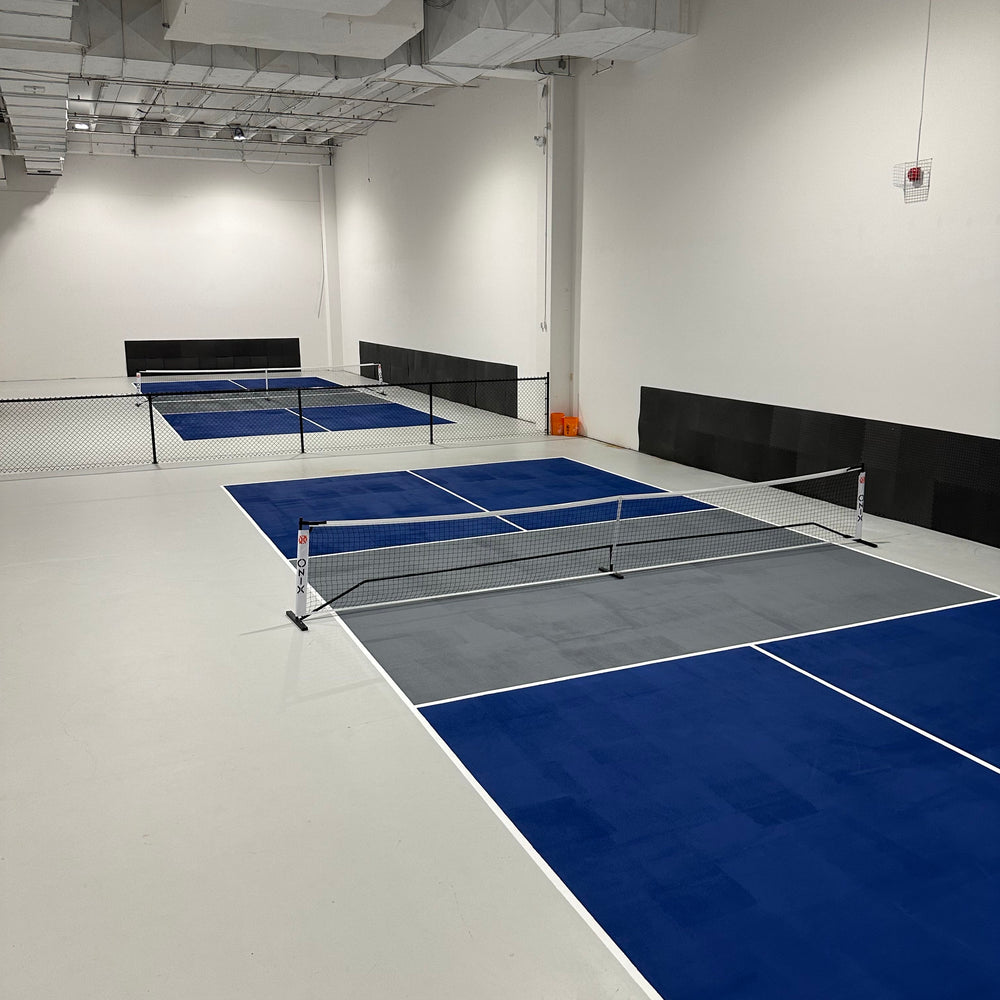
A pickleball court made of starts with a solid base. This base is usually concrete or asphalt. On top of that base sits the playing surface. The finish can be acrylic paint, cushioned acrylic, interlocking tiles, or indoor wood. Lines and net posts complete the court setup.
Why materials matter:
- Surface controls ball bounce.
- Surface affects player speed.
- Surface impacts joint stress and injuries.
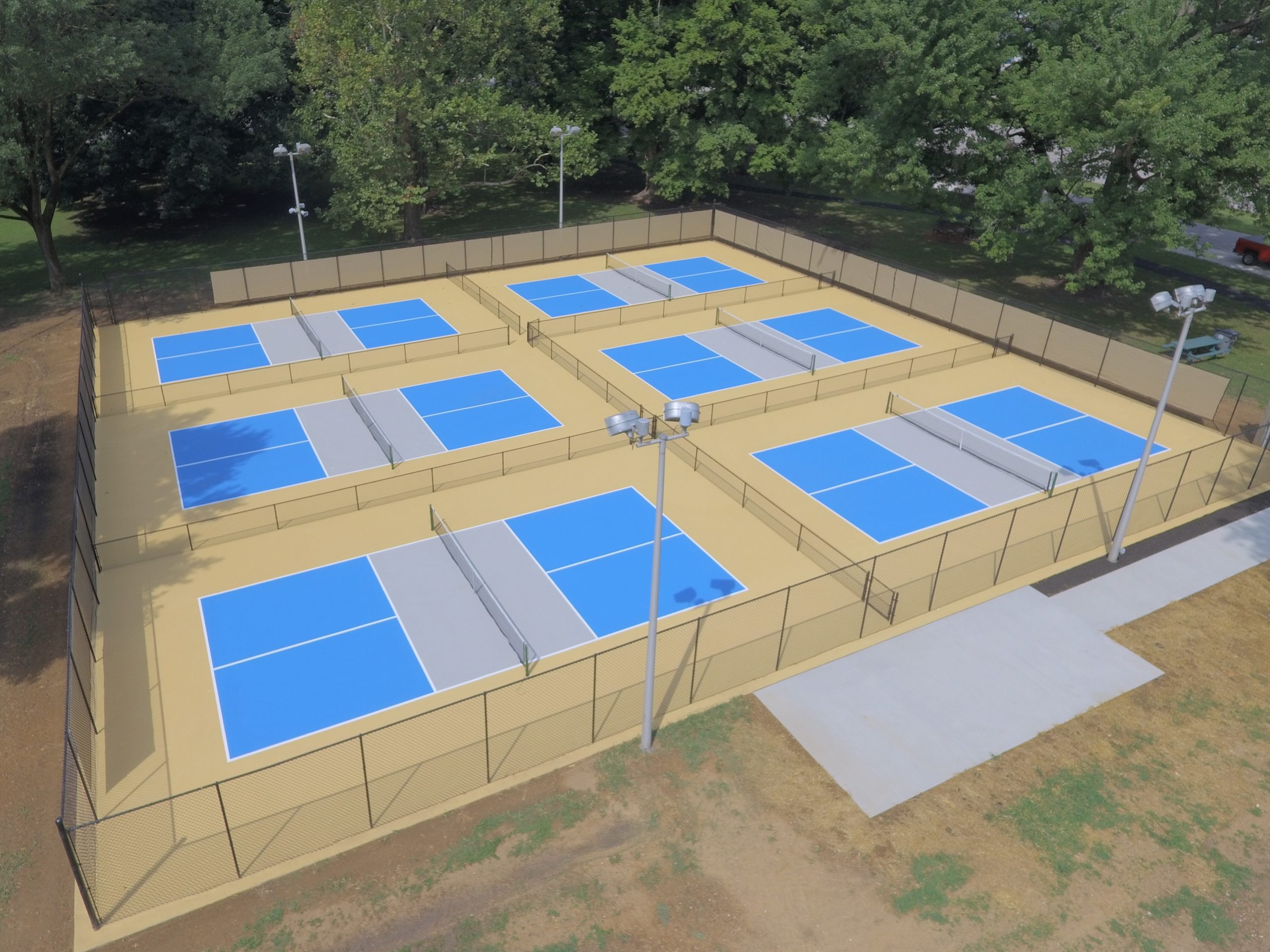
A proper court includes a stable base, a sport surface, painted lines, and durable net posts. The most common full build is concrete or asphalt base plus an acrylic top layer. That combination gives long life and predictable play.
Common materials for outdoor courts
Here are the typical materials when discussing what a pickleball court made of outdoors looks like.
Concrete base
- Pros: Long-lasting and stable. Good for consistent bounce.
- Cons: Can be hard on knees without a cushioned top. Installation costs vary.
Asphalt base
- Pros: Usually cheaper than concrete. Flexible in freeze-thaw areas.
- Cons: Can soften in heat and crack over time.
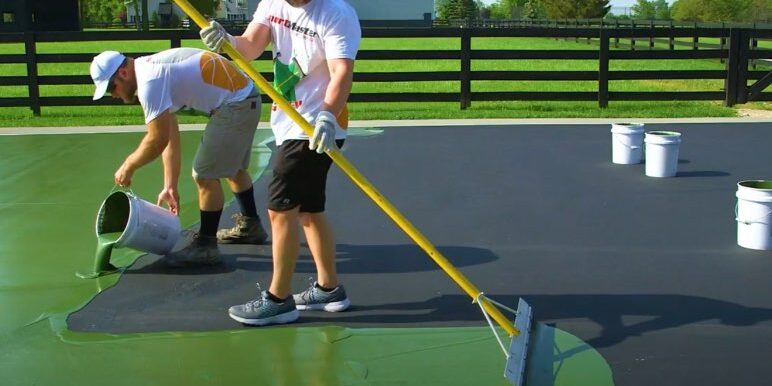
Acrylic surfacing and color coatings
- Pros: Widely used. Provides color, traction, and UV protection. Can include cushioning layers.
- Cons: Needs resurfacing every 4–8 years depending on use and climate.
Modular interlocking tiles
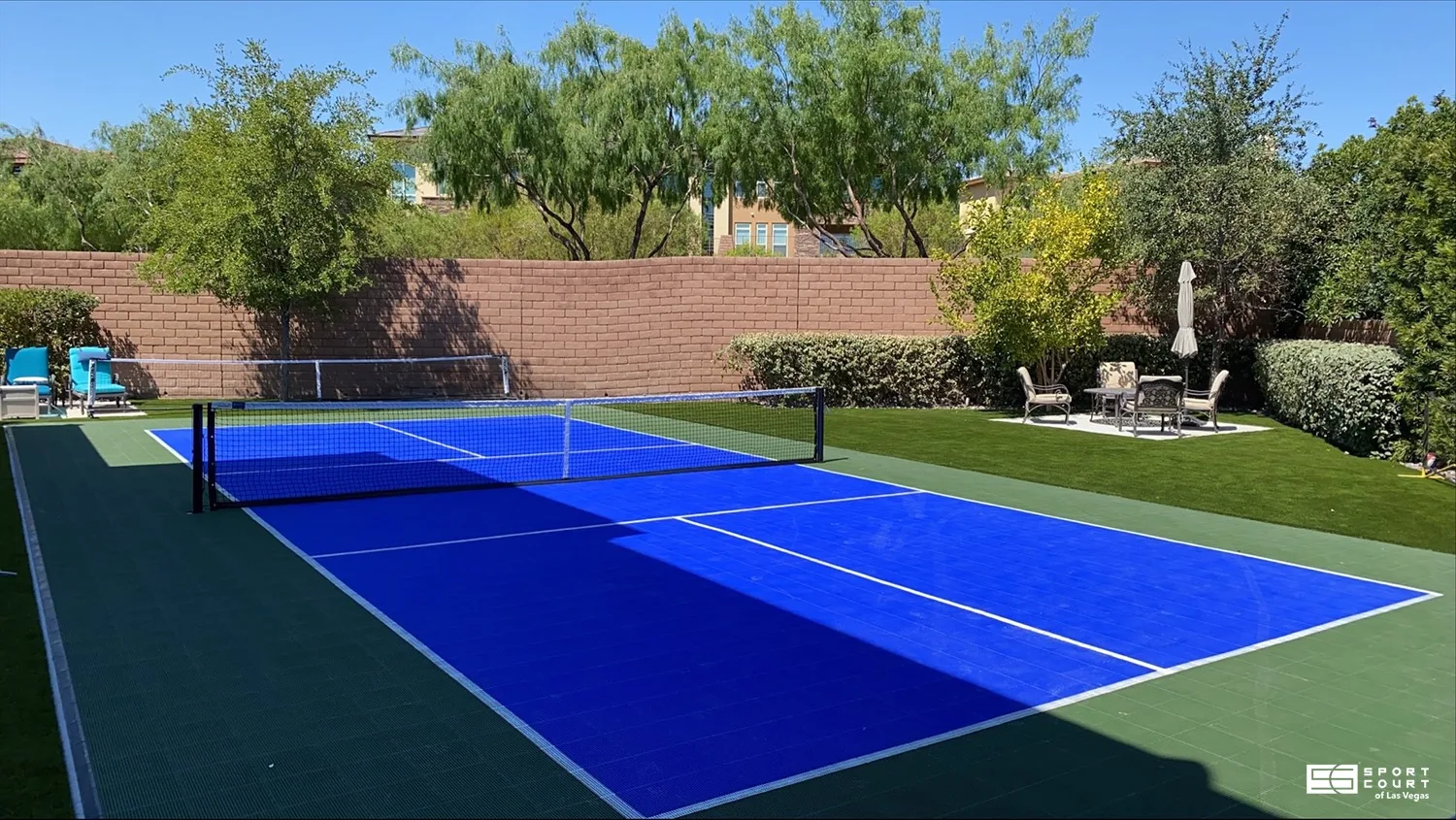
- Pros: Fast install, portable, good drainage, cushioned feel. Great for backyard or community use.
- Cons: Can shift if base is uneven. Higher up-front cost for premium tiles.
Poured polyurethane or synthetic surfaces
- Pros: Excellent shock absorption and traction. Used for multi-purpose courts.
- Cons: More expensive and requires expert installation.
When deciding what your pickleball court made of should be, balance budget, climate, and player needs.
Indoor court materials
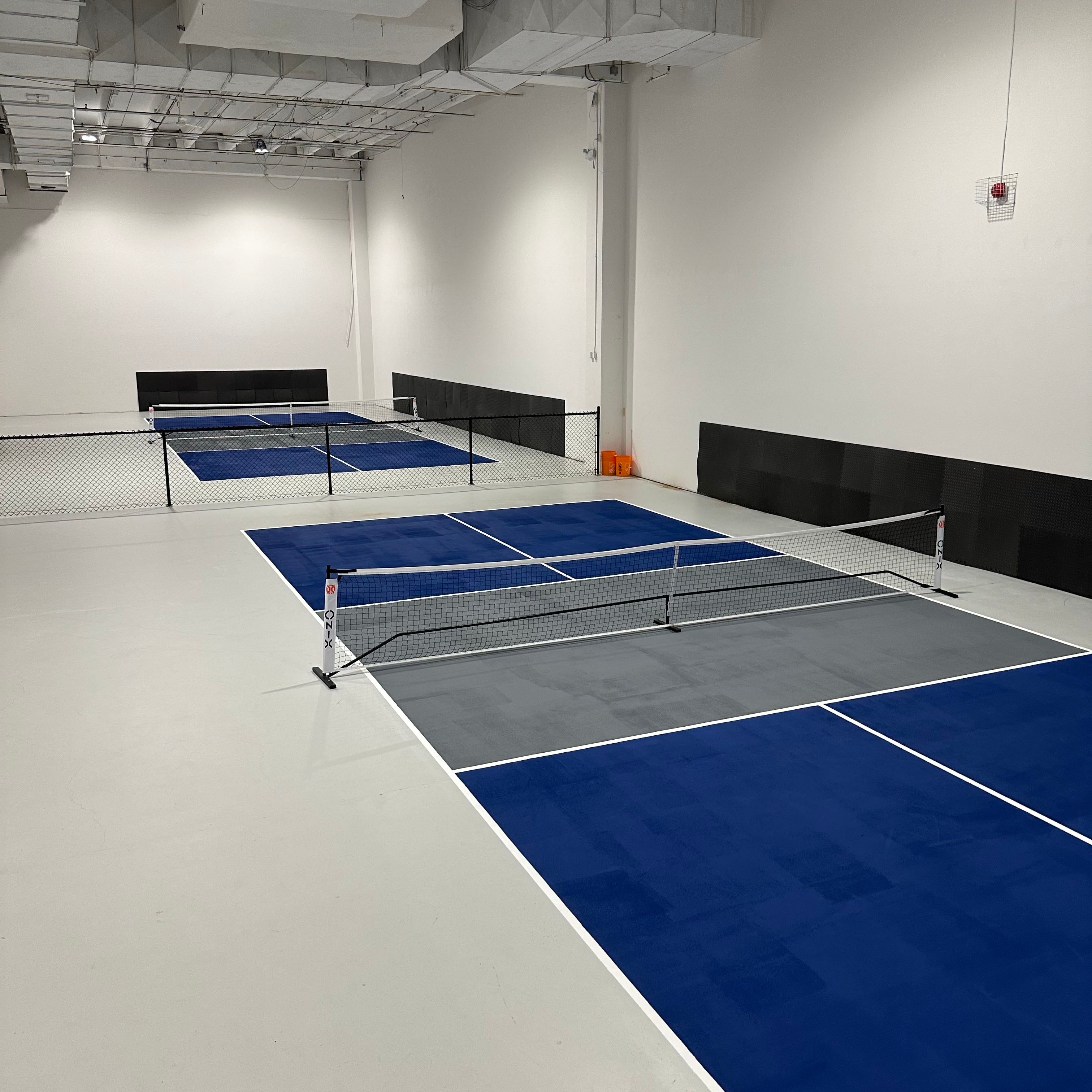
Indoor facilities often choose different materials than outdoor courts. Typical indoor options when considering what a pickleball court made of indoors include:
Maple wood gym floor
- Pros: Familiar feel for players; predictable bounce for dink shots.
- Cons: Can be slippery when dusty; needs climate control.
Cushioned vinyl or rubber sports flooring
- Pros: Good shock absorption and joint protection. Low maintenance.
- Cons: Can affect ball speed and bounce slightly.
Epoxy or PU athletic surfaces
- Pros: Durable and customizable. Good for multi-use buildings.
- Cons: Requires professional installation and good ventilation during install.
Indoor courts let you focus on player comfort first. If you play often or host tournaments, invest in a floor with good cushioning and traction.
How surface affects play: bounce, speed, and safety
The material matters for play. A pickleball court made of a hard acrylic over concrete will feel faster. Tiles or cushioned acrylic slow play and soften impact. Here’s what to expect:
Bounce
- Hard surfaces give a truer, higher bounce.
- Cushioned surfaces absorb energy and reduce bounce height.
Speed
- Smooth acrylic is medium-fast.
- Rougher textures and cushioned layers slow the ball.
Safety and joints
- Hard concrete without cushioning can lead to knee and back strain.
- Cushioned acrylic and tiles reduce joint stress and lower injury risk.
Traction and slip resistance matter too. A good court surface balances grip with the ability to slide safely during quick moves.
Installation and costs
Costs vary by material and region. Below is a basic guide for what a pickleball court made of different materials might cost.
Typical cost ranges (per single court, approximate)
- Asphalt base with acrylic surfacing: $8,000 to $18,000.
- Concrete base with acrylic surfacing: $9,000 to $25,000.
- Modular sport tiles on compacted base: $6,000 to $20,000.
- Indoor maple or PU floor: $12,000 to $40,000.
Installation steps at a glance
- Site preparation and grading.
- Pour asphalt or concrete base, or compact base for tiles.
- Cure and inspect base (for concrete/asphalt).
- Optional cushioning layer or primer.
- Apply acrylic or install tiles.
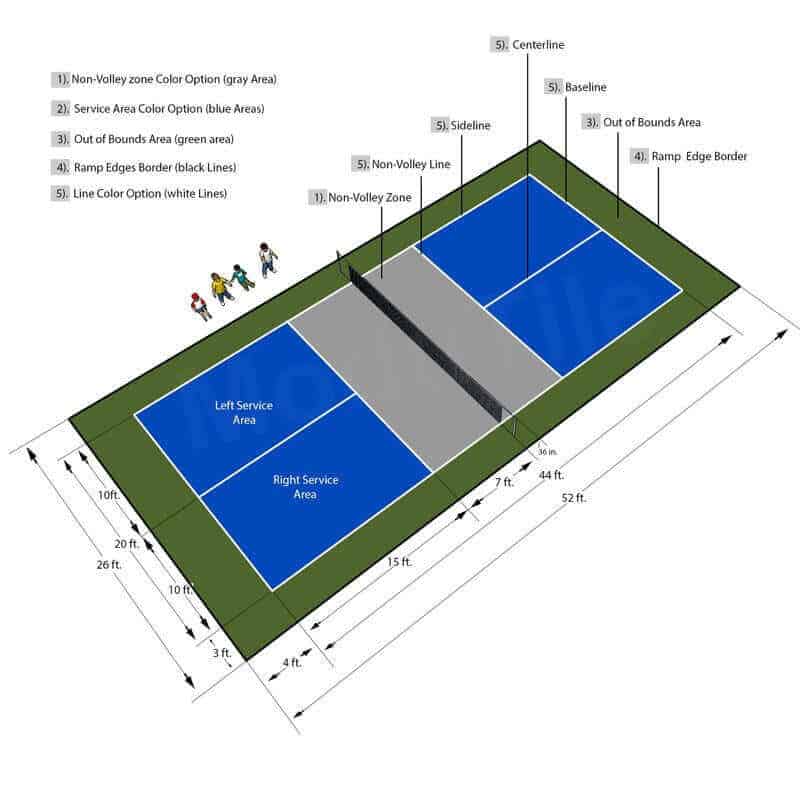
- Paint lines and install net posts.
Plan for permits, drainage work, and fencing. Weather plays a big role in schedule and cost. A good installer will help you choose a court that fits your budget and goals.

Maintenance and lifespan
Maintenance affects longevity. A pickleball court made of quality materials will still need upkeep.
Basic maintenance tasks
- Sweep or blow debris regularly.
- Clean spills and mildew with mild cleaners.
- Recoat acrylic surfaces every 4–8 years.
- Repair cracks in concrete or asphalt promptly.
- Check and tighten net posts and anchors.
Expected lifespans
- Acrylic over concrete: 10–20 years with maintenance.
- Asphalt base: 8–15 years before major repairs.
- Modular tiles: 10–20 years depending on UV exposure.
- Indoor wood floors: 20+ years with care and refinishing.
Proper care saves money and keeps play consistent. I learned this the hard way when skipping a small crack led to larger base repairs later.
Environmental and accessibility considerations
Think beyond just materials when planning what a pickleball court made of should be.
Heat and reflectivity
- Dark asphalt heats up more. Lighter acrylic colors cut surface heat.
- Consider shade and trees to reduce player heat stress.
Drainage and runoff
- Proper slope and drainage prevent pooling.
- Permeable base options reduce runoff and improve stormwater absorption.
Sustainability
- Recycled tiles and low-VOC coatings reduce environmental impact.
- Reuse concrete when possible during renovations.
Accessibility
- Ensure pathways, gates, and surfaces meet ADA guidelines.
- Smooth transitions and proper slope help wheelchair users.
These choices matter for player comfort and community impact. I favor lighter colors and shaded seating for hot climates.
Personal experience and tips
I’ve overseen several court builds for clubs and homes. Here are tips I picked up.
What I recommend
- For public parks: concrete base with cushioned acrylic for durability and player comfort.
- For backyard courts: quality modular tiles if you want quick install and drainage.
- For gyms: cushioned synthetic or hardwood depending on budget and multi-use needs.
Mistakes to avoid
- Don’t skip proper base prep. A bad base ruins a good surface.
- Avoid ultra-dark colors in hot regions.
- Don’t underestimate line painting quality; crisp lines matter to players.
Small upgrades that pay off
- Add a cushioned layer to reduce injuries.
- Use corrosion-resistant net hardware near coasts.
- Install wind screens and shade for better play and player comfort.
I once recommended cushioned acrylic for a senior league. Knee complaints fell by half. That kind of outcome proves surface choice matters.
Frequently Asked Questions of pickleball court made of
What is a pickleball court usually made of?
Most courts are made of concrete or asphalt bases topped with acrylic coatings. Modular tiles and indoor wood are also common choices.
Are modular tiles a good option for backyard courts?
Yes. Modular tiles install quickly, drain well, and provide cushioning. They can be moved or upgraded over time.
How often does an acrylic surface need resurfacing?
Acrylic surfaces usually need recoating every 4–8 years. Heavy play and extreme weather may shorten that timeframe.
Does the surface affect ball bounce a lot?
Yes. Hard surfaces give a truer bounce, while cushioned materials absorb energy and lower bounce height slightly.
What is the best surface for joint health?
Cushioned acrylic or high-quality modular tiles reduce joint stress best. Indoor cushioned floors also protect knees and backs.
Can I convert a tennis court into pickleball?
Yes. A tennis court can host up to four pickleball courts with proper layout and surface adjustments. Ensure lines and net heights are correct.
Conclusion
Choosing what a pickleball court made of comes down to use, budget, climate, and player needs. Concrete or asphalt bases with acrylic tops are the most common and balanced choice. For portable or low-impact needs, modular tiles or cushioned systems may be a better fit. Prioritize base preparation, cushioning, and proper drainage to get the best longevity and play experience.
Take action: assess your site, set a realistic budget, and consult a reputable installer. If you enjoyed this guide, leave a comment with your court goals or subscribe for more tips on building and caring for great courts.