
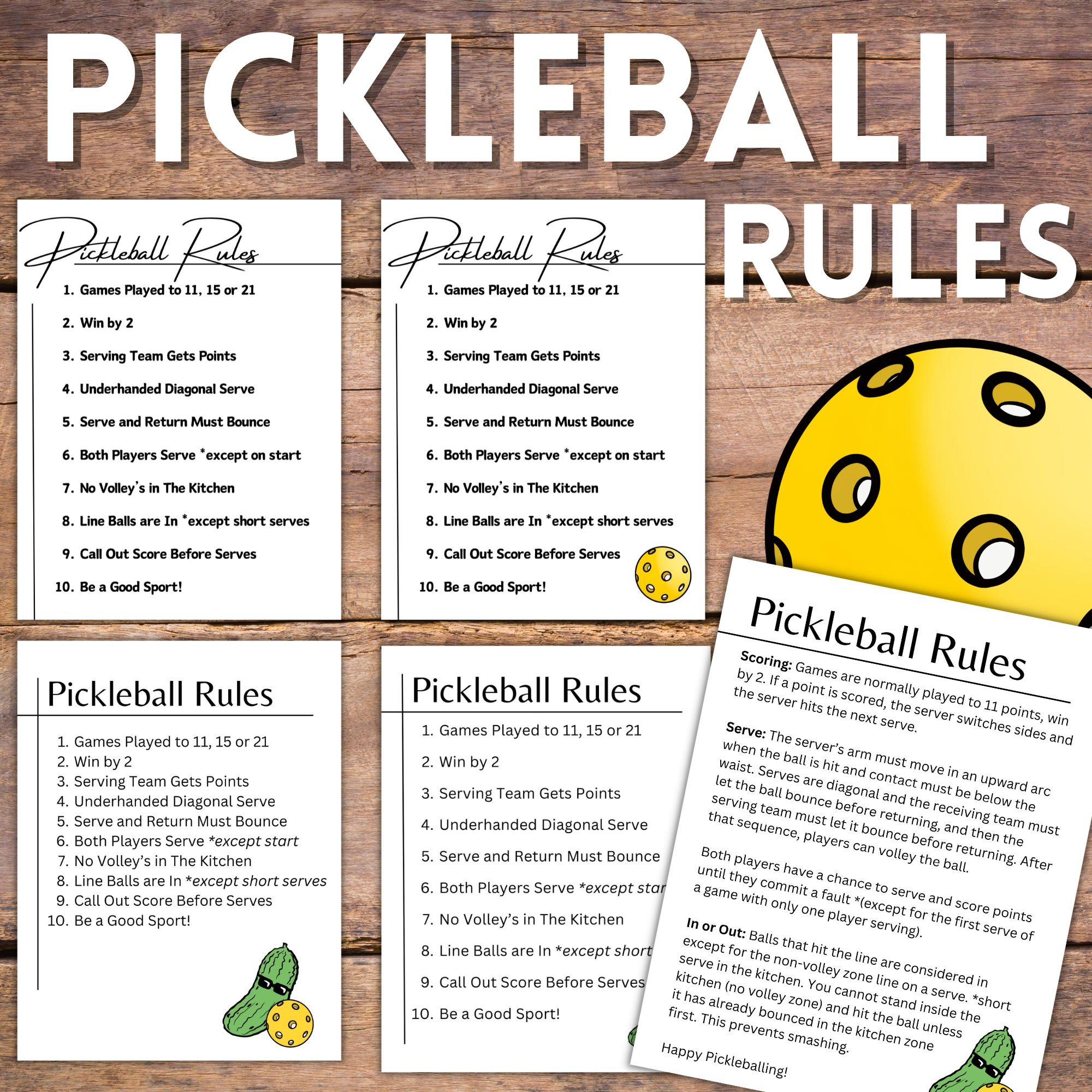
Serve underhand to the diagonal; only servers score; games to 11, win by 2.
If you want to master the rules for serving and scoring in pickle, you’re in the right place. I coach club players and ref league nights, and I’ve seen every mistake in the book. This guide breaks down the rules for serving and scoring in pickle (pickleball) with clear steps, real examples, and simple tips you can use today. Read on to lock in clean serves, correct calls, and confident scoring.

What counts as a legal serve
The rules for serving and scoring in pickle start with a clean, legal serve. A legal serve sets the tone and keeps you from giving away free points.
- Use an underhand motion. The paddle must move in an upward arc at contact.
- Contact the ball below your waist. Waist means at or below your navel.
- Keep the paddle head below your wrist at contact on a volley serve.
- Keep both feet behind the baseline at contact. Do not touch the court or the lines.
- Serve to the diagonal service court. The ball must land past the non-volley zone line.
- Only one serve attempt. There are no let serves. If the serve touches the net and lands in, play on.
You can also use a drop serve. Let the ball fall from your hand without force. Let it bounce once. Then strike it. On a drop serve, the upward arc and paddle-below-wrist rules do not apply, but all other rules do.
As a ref, I see two common faults. Players step on the baseline during contact. Or the serve clips the kitchen line. Both are avoidable with a simple pause before you swing and a higher margin target.
Step-by-step: How to serve in pickleball
Here is a simple routine that fits the rules for serving and scoring in pickle and keeps you calm under pressure.
- Face your diagonal target. Set your feet behind the baseline.
- Call the score. In doubles, say server score, receiver score, server number. In singles, use two numbers.
- Choose your serve type. Volley serve or drop serve. Use the one you can repeat.
- Aim deep to the corner. A deep serve pushes the returner back.
- Swing smooth. Think “toss, turn, tap” for control, not power.
- Get ready. Expect a deep return and let it bounce. The two-bounce rule says the return must bounce before you hit it.
I like a reliable body serve on windy days. It keeps the ball on court and follows the rules for serving and scoring in pickle without drama.

Scoring in singles vs doubles
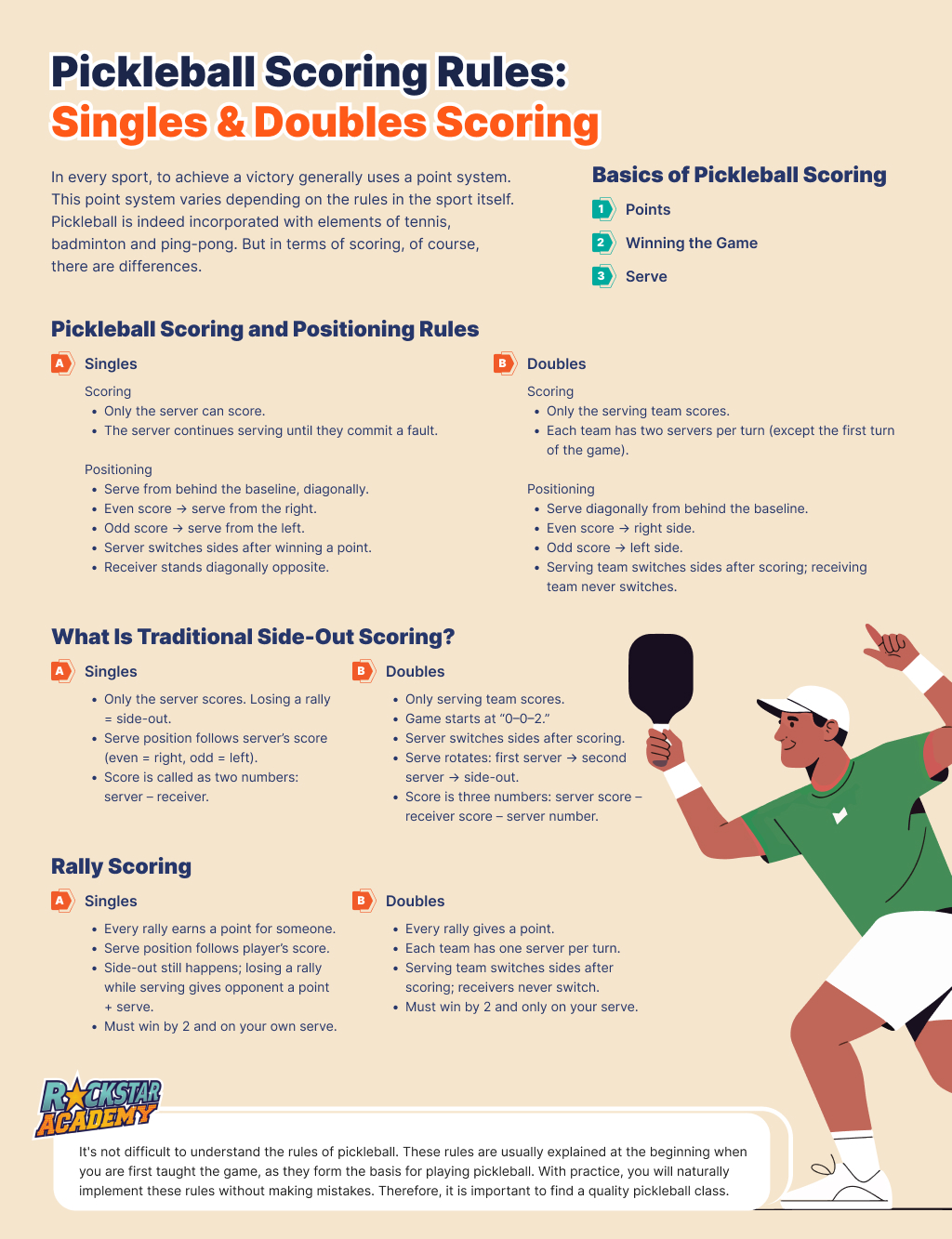
If you learn the rules for serving and scoring in pickle, games feel simple and fun. Start with side-out scoring. Only the serving side can score.
- Standard games go to 11. Win by 2. Some matches go to 15 or 21.
- Singles uses even-odd logic. When your score is even, serve from the right. When odd, serve from the left.
- Doubles uses three numbers. Server score, receiver score, and server number (1 or 2).
- At 0-0 to start a doubles game, the first serving team begins with the second server. You will hear 0-0-2.
- When the serving team wins a point, the same server switches sides and keeps serving.
- When the serving team commits a fault, service moves to the partner (server 2). After that fault, it is a side out.
Quick doubles example. The call is 3-2-1. You serve from the right and win the rally. The new call is 4-2-1. You switch sides and serve again. You lose the next rally. Now your partner serves. The call is 4-2-2.

The serving sequence in doubles explained
Many players get lost on who serves next. The rules for serving and scoring in pickle make it clear once you map it out.
- The player on the right side of the serving team is always the next server at the start of a team’s turn.
- That player becomes server 1 for that turn. Their partner is server 2.
- Server 1 serves and switches sides with each point. Their partner holds their spot.
- When server 1 faults, server 2 serves from wherever they are standing. They also switch sides with each point.
- When server 2 faults, it is a side out. The other team serves. The player on their right becomes server 1.
Tip I give new pairs. Mark the server 1 player with a wristband. It keeps your team aligned with the rules for serving and scoring in pickle, even during long rallies.

Common serving faults and how to avoid them
Cutting faults will win you matches. Here are the errors I see most, plus quick fixes tied to the rules for serving and scoring in pickle.
- Foot fault at contact. Keep your toes behind the baseline. Say “freeze, then swing” in your head.
- Illegal contact point. Keep contact below your navel. Bend knees, not your back.
- Serve lands in the kitchen or on the kitchen line. Aim two feet deeper than the line.
- Wrong court serve. Pick a focal point in the diagonal corner and stay locked on it.
- Serving before the score is called. This is a fault. Breathe, call the score, then serve.
- Out-of-order serving in doubles. Do a quick “right side is server 1” check before you start a turn.
- Returner volleys the return. That is the receiver’s fault. Know the two-bounce rule.
If a ball nicks the net and lands good, keep playing. There are no let serves in the current rules for serving and scoring in pickle. Train for this by practicing reaction returns off net cords.

Advanced tips to win more points on serve and return
Once you know the rules for serving and scoring in pickle, small edges add up fast.
- Vary depth and speed. Mix a deep, firm serve with a soft, short one. Keep returners guessing.
- Target backhands. Most players guard forehand first. Backhand returns tend to be short.
- Use the drop serve in wind. The bounce slows things down and reduces mishits.
- Avoid illegal spin tricks. Some pre-spin serves are restricted. Check the latest rulebook each season.
- On the return, hit deep down the middle. Make the serving team decide who takes ball three.
I track serve locations. When I hit two deep to the same corner, I then go body. Patterns win points while staying within the rules for serving and scoring in pickle.
Terminology and calls: Saying the score right
Clear calls reduce disputes and support the rules for serving and scoring in pickle.
- Doubles call is three numbers. Server score, receiver score, server number.
- Singles call is two numbers. Server score, receiver score.
- Make the call before the serve. You have 10 seconds to serve after the call.
- Only the receiver may stop play for not-ready. If you see a hand up, hold your serve.
- If positions are wrong, stop and fix before the next serve. Use the last scored point to reset sides.
Practice calling the score in a mirror. It sounds odd, but it builds a smooth rhythm that fits the rules for serving and scoring in pickle.

Frequently Asked Questions of rules for serving and scoring in pickle
What is the two-bounce rule?
The serve must bounce in the receiver’s court. The return must also bounce before the serving team can hit it. After those two bounces, volleys are allowed.
Can I score a point when I’m returning serve?
No. Under side-out scoring, only the serving team can score. Win the rally as the receiver to earn the right to serve.
Do let serves exist in pickleball now?
No. If a serve touches the net and lands in the correct service court, the ball is live. Keep playing the point.
How do I know who is server 1 in doubles?
At the start of your team’s service turn, the player on the right side is server 1. That stays true no matter the game score.
What happens if I serve from the wrong side?
If caught before the serve, correct it. If discovered after the rally, outcomes vary by rule set, but the goal is to restore the correct positions and server order as soon as possible.
Is a drop serve easier for beginners?
Often yes. The bounce slows the ball and removes the upward-arc rule. It helps new players follow the rules for serving and scoring in pickle with fewer faults.
What score do I call to start a doubles game?
Call 0-0-2. The first serving team starts with only one server, then it becomes a side out if they fault.
Conclusion
You now have the full picture on the rules for serving and scoring in pickle. Serve underhand to the diagonal, call the score with confidence, and remember that only the serving side scores. Keep your feet behind the line, aim deep, and ride the two-bounce rule to better court position.
Put this into action in your next game. Pick one serve target, one return target, and one score-call habit. If this guide helped, share it with your court crew or leave a question so I can help you dial in the details.