Serves in pickleball must be hit underhand, with contact below the waist, to start the point. As a long-time pickleball player and coach, I've seen firsthand how the serve can transform from a simple way to start the rally into a game-winning weapon. Many players overlook its potential, but mastering the different serves in pickleball is your first step toward controlling the court and dictating the pace of the game. This guide will break down everything you need to know, from the basic rules to advanced strategies, helping you turn your serve into a consistent and powerful asset.
Understanding the Basic Pickleball Serve Rules
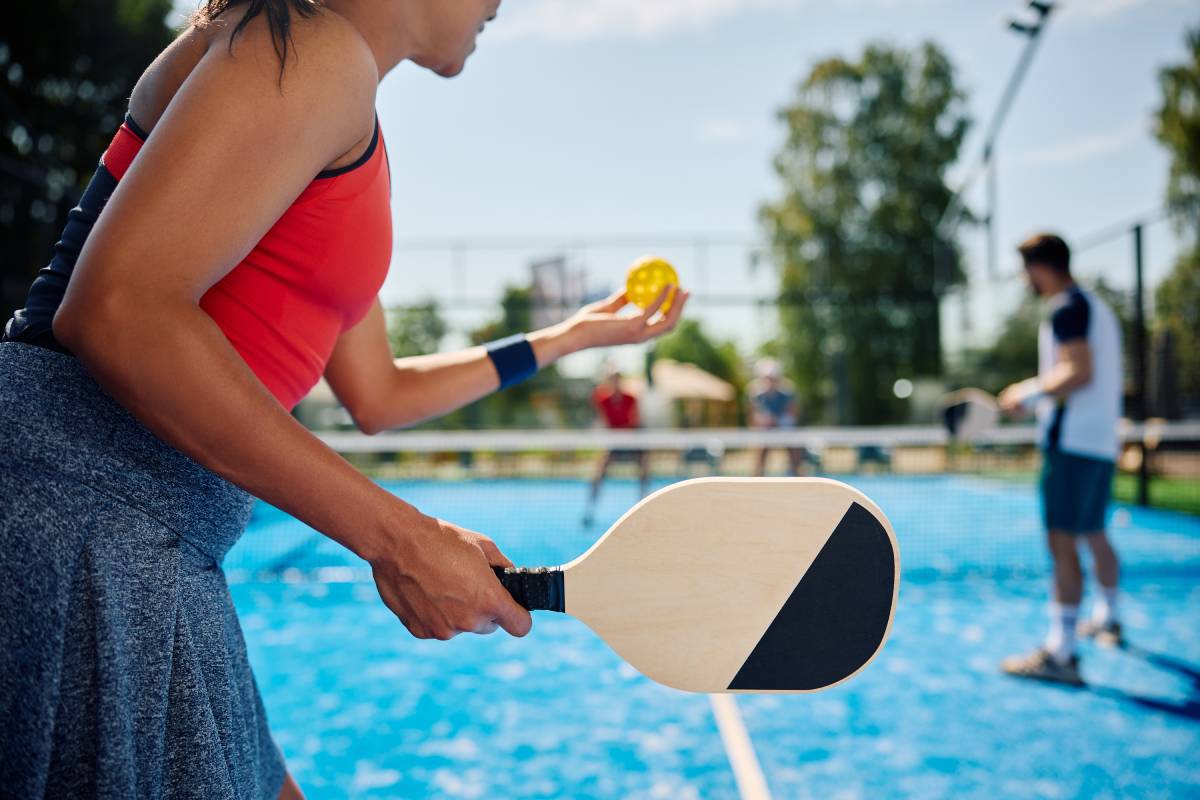
Before we dive into the fun stuff like power and spin, we have to cover the fundamentals. Getting the rules right is non-negotiable, as a fault on the serve immediately ends your turn. Think of these rules as the foundation upon which you'll build all your fancy serves in pickleball.
Here’s what you absolutely need to know:
- Underhand Motion: The serve must be hit with an underhand motion. This means the arm must be moving in an upward arc when you strike the ball.
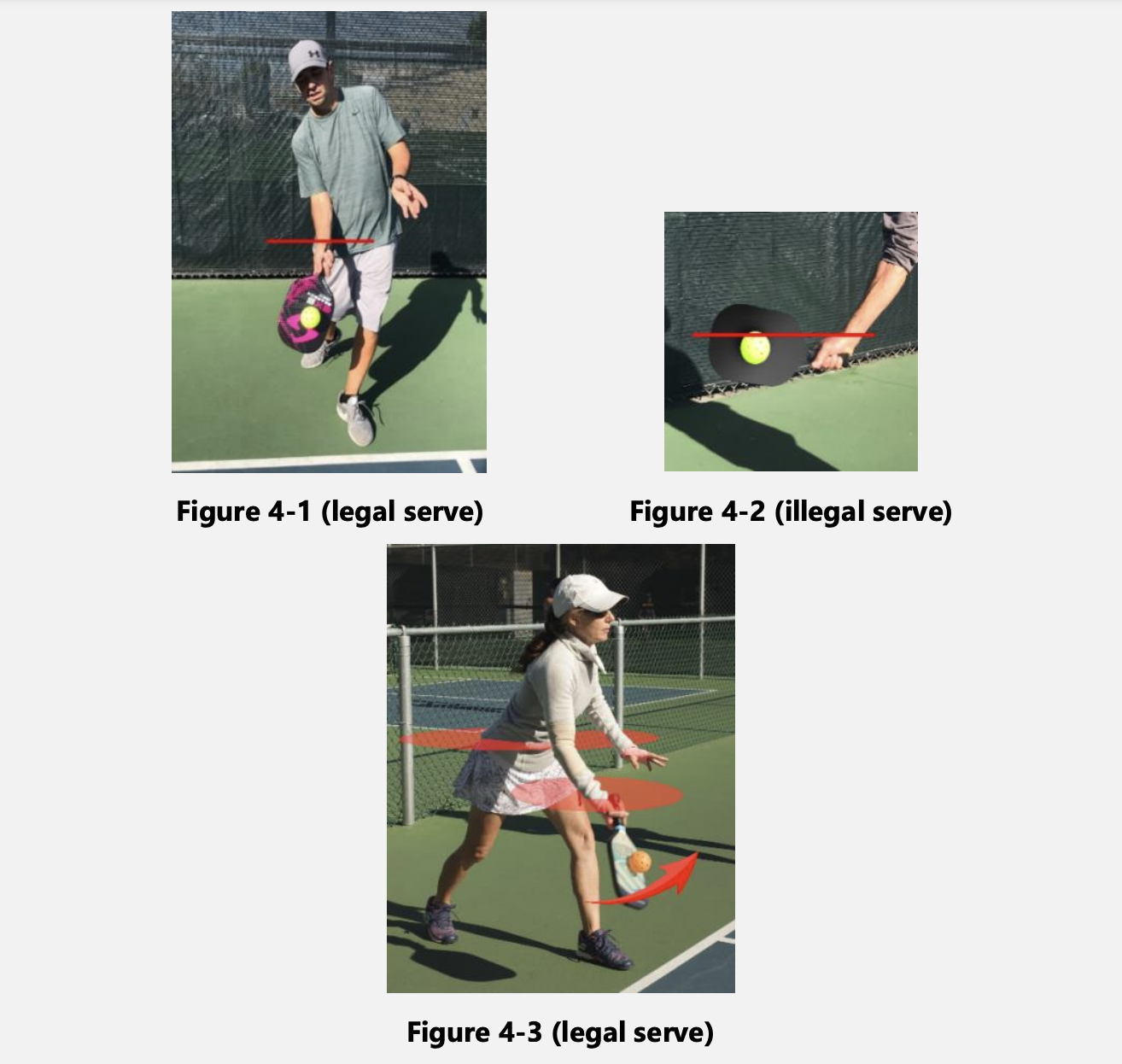
- Contact Below the Waist: When you make contact with the pickleball, it must be below your navel. This prevents players from smashing the ball downwards with an aggressive, tennis-style serve.
- Paddle Head Position: At the moment of contact, the head of your paddle cannot be above your wrist. This is another rule to reinforce the underhand nature of the serve.
- Foot Placement: Both of your feet must be behind the baseline when you serve. One foot is not allowed to touch the line or the court until after you have made contact with the ball.
- Serve Diagonally: You must serve into the service court that is diagonally opposite from where you are standing. If the ball lands anywhere else, including the non-volley zone (the "kitchen"), it’s a fault.
- The Ball Must Bounce: The receiver must let the serve bounce once before returning it. You, the server, must then let their return bounce once before you can hit it. This is called the double-bounce rule.

The Two Legal Serves in Pickleball: Volley vs. Drop Serve
As of recent rule changes, players now have two options for how to legally execute their serves in pickleball. Understanding both is key, as you might find one works better for you or is more effective in certain situations. I've worked with players who swear by the traditional volley serve, while others found new confidence with the introduction of the drop serve.
The Traditional Volley Serve
This is the classic serve that has been around since the sport's inception. For a volley serve, you toss or release the ball and hit it out of the air. You control the toss, the timing, and the placement, giving you a lot of influence over the serve's outcome.
To hit a consistent volley serve, focus on a smooth, simple motion. I always tell my students to think of it like a gentle pendulum swing. A low, controlled toss is much better than a high, unpredictable one. The key is to find a repeatable motion that you can execute under pressure without thinking too much about it.
The Modern Drop Serve
The drop serve was officially made a permanent legal serve to make the game more accessible. It's an excellent option for beginners or players who struggle with the timing of a volley serve. The process is simple: you hold the ball from any height and let it drop. You must let it bounce once on the court before you strike it.
The great thing about the drop serve is that it removes the variable of a bad toss. The bounce is predictable, allowing you to focus solely on your swing and contact. While you might not generate as much power as a volley serve, the consistency it offers can be a huge advantage, especially when you're just trying to get the point started reliably.
Mastering Different Types of Pickleball Serves
Once you're comfortable with the basic rules and the two legal serving motions, you can start experimenting with different types of serves in pickleball. This is where you can really start to gain a strategic edge. A varied serving game keeps your opponents guessing and prevents them from getting into a comfortable rhythm.
The Power Serve
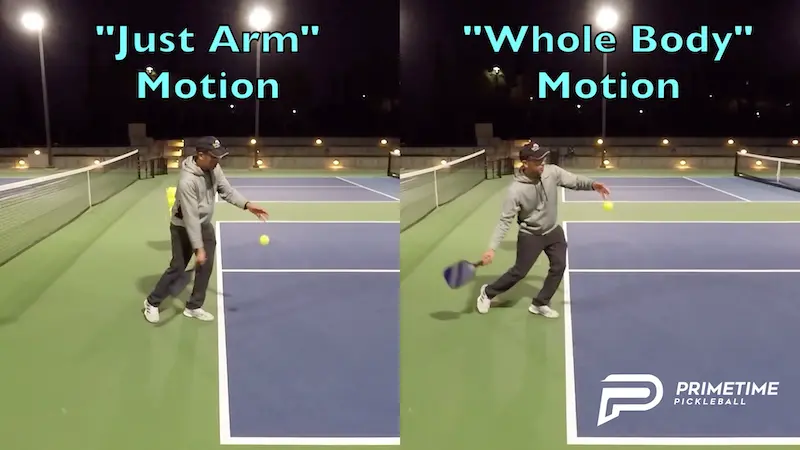
This is all about speed. The goal is to hit the ball hard and deep into the service box, jamming your opponent and forcing a weak return. The key to a good power serve isn't just swinging harder; it's about using your whole body. Rotate your hips and shoulders as you swing, and follow through toward your target. I find that a slightly higher toss on a volley serve can help generate more momentum for a powerful shot.
The Topspin Serve
A topspin serve is a fantastic offensive weapon. By brushing up the back of the ball during your swing, you create forward spin. This causes the ball to dip down into the court and then "kick" or accelerate forward after the bounce. It’s incredibly effective for pushing your opponents back from the baseline and making their return more difficult.
The Slice or Backspin Serve
The opposite of topspin, a slice or backspin serve is achieved by "chopping" or cutting under the ball. This imparts backspin, which causes the ball to stay very low after the bounce. From personal experience, this serve can really frustrate opponents who like to charge the net, as they have to bend down low to dig the ball out, often resulting in a pop-up you can easily put away.
The Lob Serve
The lob serve is a change-of-pace shot designed to catch your opponent off guard. You hit the ball high and deep, aiming for it to land just inside the baseline. A well-executed lob serve can force your opponent to move backward, disrupting their positioning and taking away their ability to hit an aggressive return. It’s a great serve to mix in, especially against players who stand too close to the service line.
Common Serving Faults to Avoid
Nothing is more frustrating than giving away a free point with a serving fault. I've seen it happen at every level, from friendly games to competitive tournaments. Being aware of the most common mistakes is the first step to eliminating them from your game and ensuring your serves in pickleball are always legal.
Here are the most common faults to watch out for:
- Foot Fault: This is the big one. Make sure you start and finish your serving motion with both feet completely behind the baseline. Don't let a toe creep onto the line before you make contact.
- Illegal Motion: Remember the three key rules of the motion: it must be underhand, contact must be below the waist, and the paddle head must be below the wrist. Violating any of these results in a fault.
- Serving into the Wrong Area: Double-check that you are serving from the correct side of the court and aiming for the correct diagonal service box. A common mistake is serving into the kitchen, which is always a fault.
- Hitting the Net: If your serve hits the net and lands in the kitchen or out of bounds, it's a fault. However, if it hits the net and still lands in the correct service box, it's a "let," and you get to re-serve.
Strategy: How to Use Your Serve as a Weapon
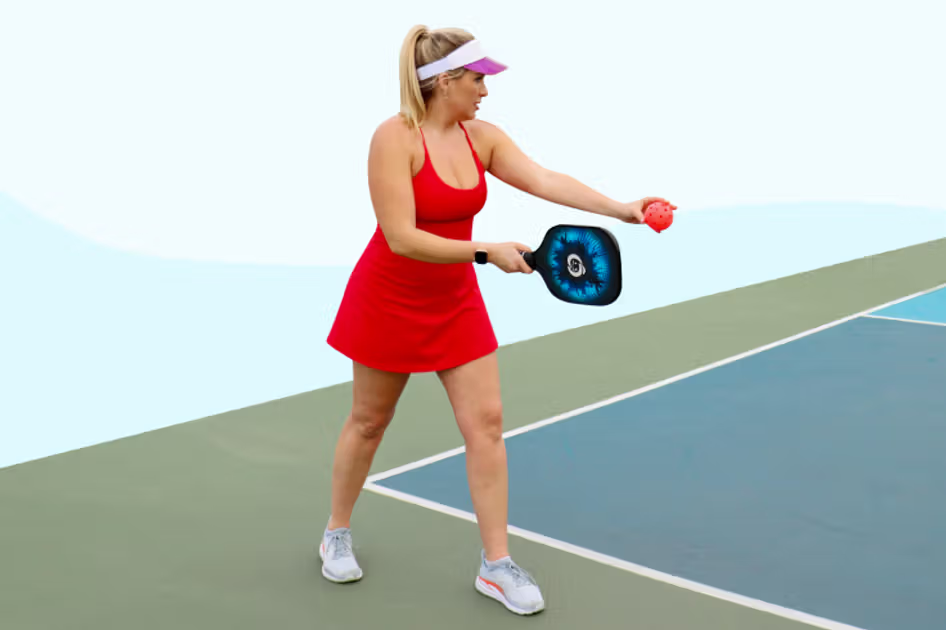
At its core, a serve is simply how you start the point. But strategically, it’s so much more. Your serve is the only shot in pickleball that you have complete control over. You’re not reacting to anything; you are the one initiating the action. This is your chance to immediately put your opponent on the defensive.
One of the best strategies is to target your opponent’s weaker side. Most players have a weaker backhand, so serving to that side can force a less confident return. I remember a specific match where my opponent had a killer forehand return. I started serving exclusively to his backhand, and even though my serves in pickleball weren't incredibly powerful, the placement alone was enough to neutralize his biggest strength and turn the game in my favor.
Varying your serves is just as important. Don’t hit a power serve every time or a slice serve every time. Mix up the speed, spin, depth, and placement. A hard serve to the backhand followed by a soft, short serve to the forehand can completely disrupt an opponent's timing and footwork. The goal is to be unpredictable and make the returner uncomfortable.

Frequently Asked Questions of serves in pickleball
Can you serve overhand in pickleball?
No, you cannot serve overhand. All serves in pickleball must be made with an underhand motion, where the paddle strikes the ball in an upward arc and contact is made below the waist.
What is a drop serve in pickleball?
A drop serve is a legal serving motion where you drop the ball from any height and let it bounce on the court before hitting it. It's a great alternative to the traditional volley serve and is often easier for beginners to master.
Where do you have to stand when serving?
You must stand with both feet completely behind the baseline when serving. You cannot touch the baseline or the court with either foot until after your paddle has made contact with the ball.
Can the serve land in the kitchen?
No, a serve that lands in the non-volley zone (the kitchen) is a fault. The serve must land in the diagonal service court, which is the area between the kitchen line and the baseline.
How many serves do you get in pickleball?
In traditional scoring, each server gets to continue serving until they commit a fault. In doubles, when one partner loses the serve, it goes to the other partner (except for the very first service rotation of the game).
Conclusion
Your journey with serves in pickleball doesn't end here. It begins on the court. We've covered the essential rules, the different types of serves, and the strategies to make them effective, but the real progress comes from practice. Start by mastering a consistent, legal serve, then slowly begin to experiment with spin, power, and placement. Remember, the best serve isn't always the fastest one; it's the one that sets you up to win the point.
Now, grab your paddle, a bucket of balls, and head to the court. Try out a slice serve or a deep lob. See what feels comfortable and what gives your opponents trouble. What's your go-to serve, or which one are you most excited to try? Share your thoughts in the comments below