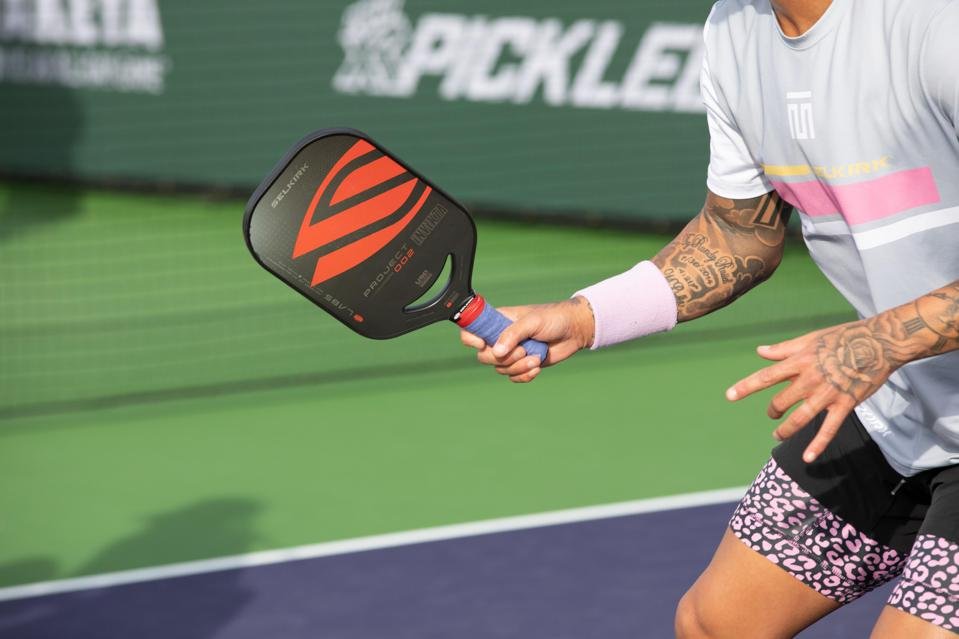
Hold your pickleball paddle like you're shaking hands with it, keeping a relaxed yet firm grip.
As a seasoned player who has spent countless hours on the court, I’ve seen it all. The one thing that separates good players from great ones often comes down to the fundamentals. And there’s no fundamental more important than how you hold your pickleball paddle. It might seem simple, but this single detail affects every shot you make—from powerful drives to delicate dinks. This guide will walk you through everything you need to know about how to hold a pickleball paddle, helping you build a solid foundation for a winning game.
The Foundation: The Continental Grip (aka The "Handshake" Grip)
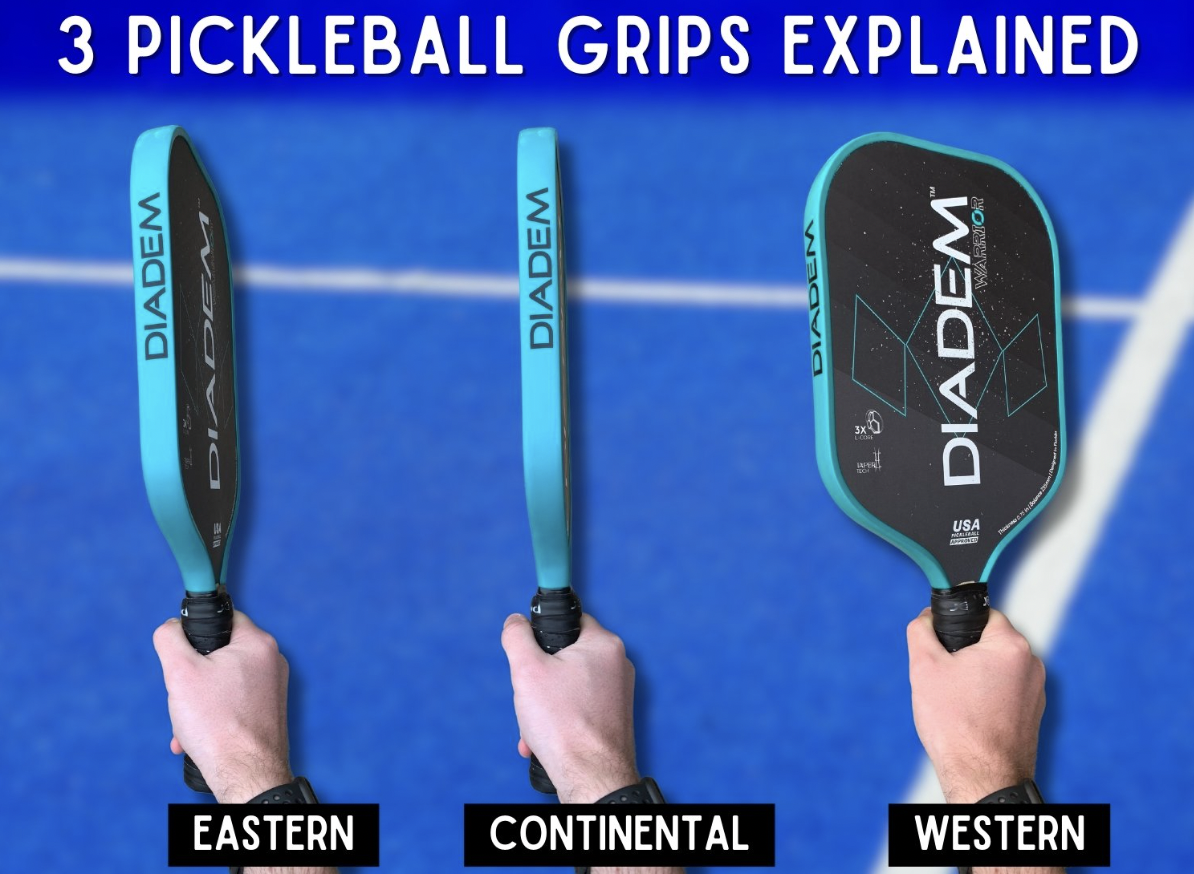
If you only learn one grip, make it this one. The Continental grip is the most versatile and widely recommended grip in pickleball for a reason. It's the jack-of-all-trades, allowing you to hit forehands, backhands, and volleys without needing to change your hand position. This saves you precious seconds during a fast-paced rally.
Think of it as simply shaking hands with your paddle. Here’s how to find it:
- Hold the paddle out in front of you with the edge pointing to the sky.
- Place your palm on the side of the grip, as if you were going to shake its hand.
- Slide your hand down and wrap your fingers around the handle.
- The "V" formed by your thumb and index finger should be on the top-left bevel of the grip (for a right-handed player).
I remember when I first started, I tried all sorts of complicated grips. But coming back to the simple Continental grip was a game-changer. It felt natural and allowed me to focus on my footwork and strategy instead of constantly adjusting my hand. This is the grip that will serve you best in 95% of situations on the court. Mastering this single way to hold a pickleball paddle is your first step to becoming a more consistent player.

Alternative Grips: When and Why to Use Them
While the Continental grip is your trusty go-to, there are a few other ways to hold a pickleball paddle that can be useful in specific situations. Exploring these can add new tools to your arsenal, but remember, they are specialized. Don't feel pressured to use them until you are completely comfortable with the basics.
The Eastern Grip
The Eastern grip is popular with players who come from a tennis background. To find it, lay your palm flat against the strings (or face of the paddle) and slide it down to the handle. This grip puts your hand more behind the paddle, which is great for generating power and topspin on your forehand drives.
However, its biggest drawback is the backhand. You’ll find hitting a backhand with an Eastern grip feels awkward and can lead to weak, misplaced shots. While some players love the power it gives their forehand, the trade-off usually isn't worth it in a fast-paced game like pickleball, where you need to be ready for anything.
The Western Grip
The Western grip takes the Eastern grip a step further. You place your hand even more underneath the paddle handle. This grip is designed almost exclusively for creating extreme topspin, making the ball dip aggressively after it crosses the net. It's a very advanced grip that you might see in professional tennis.
In pickleball, however, the Western grip is rarely a good idea. The game is more about control, placement, and quick volleys than heavy topspin. This grip makes it very difficult to hit flat shots, dinks, and backhands, which are essential parts of pickleball strategy. For nearly every player, this is a grip to avoid.
Two-Handed Backhand Grip
Some players, especially those who struggle with backhand power, find comfort in a two-handed backhand. To do this, you typically hold the paddle with your dominant hand in a Continental grip and place your non-dominant hand above it on the handle.
This grip can provide incredible stability and power on your backhand drives. The downside? You lose a significant amount of reach. A shot hit wide to your backhand side becomes much harder to return with two hands on the paddle. It's a personal preference, but if you find your one-handed backhand is a major weakness, this is an option worth exploring.

Grip Pressure: The "Don't Squeeze the Life Out of It" Rule
One of the biggest mistakes I see new players make is holding the paddle with a "death grip." They squeeze the handle so tightly their knuckles turn white. This is a crucial aspect of learning how to hold a pickleball paddle correctly. Too much pressure creates tension in your arm, reduces your feel for the ball, and will tire you out quickly.
Think of your grip pressure on a scale of 1 to 10, where 1 is barely holding on and 10 is squeezing as hard as you can.
- For soft shots like dinks and drops: Your grip pressure should be a 3 or 4. You need a soft, relaxed hand to absorb the pace of the ball and execute a delicate shot. I like to use the analogy of holding a small bird—firm enough so it can't fly away, but gentle enough not to hurt it.
- For power shots like drives and serves: You can increase your pressure to a 5 or 6. This gives you more stability and power, but you should still avoid a tense, rigid grip.
Learning to adjust your grip pressure was a breakthrough moment for me. My dink game improved overnight because I finally had the soft touch needed to control the ball at the net. Remember, control is more important than power in pickleball. A relaxed grip is the key to that control.

Common Mistakes to Avoid When Holding Your Paddle
Knowing how to hold a pickleball paddle also means knowing what not to do. Avoiding these common mistakes will help you develop good habits from the start and prevent you from hitting a plateau in your game later on.
- The "Frying Pan" Grip: This is when you hold the paddle with your palm facing the sky, like you're about to flip a pancake. This severely limits your wrist movement and makes it almost impossible to hit a proper backhand or add any spin to the ball. Always keep your paddle edge perpendicular to the ground when you're waiting for the ball.
- The "Death Grip": As we just discussed, squeezing the paddle too tightly is a recipe for disaster. It kills your touch, causes fatigue, and can even lead to injuries like tennis elbow. Stay relaxed!
- A "Hammer" Hold: Don’t hold the paddle like a hammer, with your index finger wrapped right next to your other fingers. It’s better to spread your index finger slightly up the grip, almost like a "trigger finger." This provides more stability and control over the paddle face.
- Constantly Changing Grips: When you're new, it can be tempting to switch your grip for every single shot. Resist this urge. Stick with the Continental grip and learn to hit all your shots with it. Building this muscle memory is crucial for developing a consistent, reliable game.
Frequently Asked Questions
What is the best grip for a beginner?
The Continental grip, also known as the "handshake grip," is the best for beginners. It is the most versatile grip, allowing you to hit all types of shots without changing your hand position, which helps build consistency.
How tightly should I hold my pickleball paddle?
You should hold the paddle with a light, relaxed pressure, around a 3 or 4 on a scale of 1 to 10. For power shots, you can increase it to a 5 or 6, but you should never squeeze it with maximum force.
Should my index finger be on the back of the paddle?
While you shouldn't place your index finger directly on the flat paddle face, it's good practice to spread it slightly from your other fingers on the grip. This "trigger finger" position provides better stability and control over the paddle angle.
Can I use a tennis grip for pickleball?
Yes, you can use a tennis grip like the Eastern grip, and many players do. However, the game of pickleball is much faster at the net, and the Continental grip is generally better suited for the quick volleys and varied shots required.
How often should I re-grip my paddle?
You should replace your paddle's overgrip when it starts to feel slippery or loses its tackiness. For frequent players, this could be every few weeks. A fresh grip ensures you maintain proper control and don't have to squeeze the handle too tightly.
Conclusion
Mastering how to hold a pickleball paddle is your first and most important step toward improving your game. By starting with the versatile Continental grip, focusing on relaxed grip pressure, and avoiding common mistakes, you build a powerful foundation. Your grip is the only connection between you and the ball, and getting it right unlocks greater control, consistency, and confidence on the court.
Now, take this knowledge with you to your next game. Focus on that "handshake" feeling and notice how it impacts your dinks, drives, and volleys. Practice makes perfect, and building this fundamental habit will pay off in every point you play. Let me know in the comments how it goes