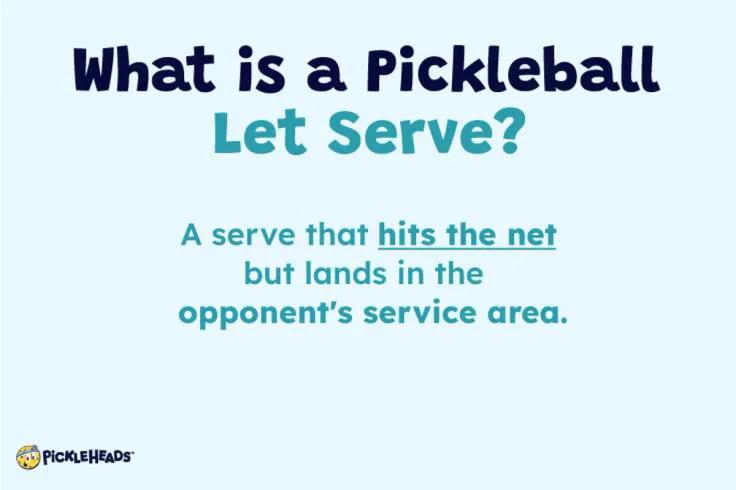
A pickleball let serve is a serve that hits the net and lands in the correct service court.
As a passionate pickleball player and coach, I've seen countless moments of confusion on the court, and few things used to cause more debate than the serve hitting the net. The rules have evolved, and understanding the modern pickleball let serve is no longer optional—it's essential for fair play and keeping the game flowing. Whether you're a seasoned pro or just stepping onto the court, this guide will clear up any confusion, explain why the rule changed, and give you the strategy you need to handle this tricky play like an expert.

The Old Rule: A Quick Trip Down Memory Lane
Not too long ago, the courts echoed with calls of "Let!" whenever a serve ticked the top of the net. If you started playing before 2021, you'll remember this well. The old pickleball let serve rule stated that if a serve hit the net cord and then landed in the correct service box, it was a "let," and the server got to replay the serve. There was no fault and no point scored; it was simply a do-over.
From my experience, this rule, while simple in theory, often created friction during recreational games. Players would frequently debate whether the ball actually grazed the net. This led to pauses in play and occasional disagreements that slowed down the fun. You had to have a good ear and a watchful eye to make the right call, and even then, it was sometimes a judgment call that not everyone agreed on.
The Current Pickleball Let Serve Rule: What You Need to Know
The game has changed, and so has the rule. Today, the pickleball let serve is treated as a live ball. This is the most important takeaway: there are no more re-serves on a let. If the serve hits the net and proceeds to land within the boundaries of the correct service court, the ball is in play, and the receiving team must return it.
Think of it this way: the net is now just another part of the court during a serve. As long as the ball makes it over and lands in the right spot, the rally continues. However, if the pickleball let serve hits the net and lands in the non-volley zone (the kitchen) or out of bounds, it is a fault, just like any other bad serve. The core serving rules still apply; the only thing that has been removed is the replay.

Why Did the Pickleball Let Serve Rule Change?
The official change was made to streamline the game and bring more consistency to matches. I remember when the rule was first proposed, and the community had mixed feelings. However, after playing with the new rule for a while, the benefits became crystal clear. The change has been a huge positive for the sport.
Here are the primary reasons for eliminating the pickleball let serve replay:
- Speeds Up Gameplay: Without the constant pauses for re-serves, matches move along at a much quicker pace. This is especially noticeable in tournaments where time is a factor. The flow of the game feels more continuous and engaging.
- Reduces Conflicts: The new rule eliminates the subjective call of whether the ball touched the net. This has significantly cut down on on-court arguments and allows players to focus on the rally instead of officiating their own game. It simplifies the game for referees and players alike.

How to Handle a Pickleball Let Serve: Strategy for Players
Adapting to the live pickleball let serve is crucial for both sides of the court. A net cord can dramatically alter a ball's speed and trajectory, turning a routine serve into a tricky return. Forgetting the old rule and reacting instinctively is key.
For the Server
Your job is simple: once you serve, be ready for a return. Never assume your serve is a fault if it hits the net. I've seen many players serve, watch the ball hit the net, and then relax, only to be caught off guard when their opponent returns a live ball. Play until you hear the "out" call. A pickleball let serve can sometimes result in a dead ball that just dribbles over the net, giving you an easy advantage, so always stay engaged.
For the Receiver
As the receiver, you must always be prepared to play the ball. The biggest mistake is hesitating. A pickleball let serve often loses its pace and drops quickly, so you may need to rush forward to get it. Stay on your toes, keep your paddle up, and react to where the ball is going, not where you expected it to go. This readiness can turn a potentially difficult shot into a simple, effective return.
Frequently Asked Questions of pickleball let serve
Is a let serve in pickleball a fault?
No, a pickleball let serve is not a fault as long as it lands in the correct service court. It is a live ball and should be played by the receiving team.
Do you get a second serve after a let in pickleball?
There are no second serves in pickleball for any reason. Under the current rules, a pickleball let serve is a live ball, so there are no replays or do-overs.
What happens if a pickleball let serve lands in the kitchen?
If a serve hits the net and lands in the non-volley zone (the kitchen), it is a fault. This rule remains the same as any other serve that lands in the kitchen.
Does the pickleball let serve rule apply in both singles and doubles?
Yes, the rule is the same for all forms of play. Whether you are playing singles or doubles, a pickleball let serve that lands in the proper service area is always a live ball.
When did the pickleball let serve rule change officially?
The rule change eliminating the serve replay was officially implemented by USA Pickleball on January 1, 2021. This change has been adopted in nearly all recreational and tournament play.
Conclusion
The evolution of the pickleball let serve rule is a perfect example of how the sport is growing to become faster, fairer, and more fun. The key takeaway is simple: if a serve hits the net and lands in, play on! There are no more do-overs. Embracing this rule will not only make you a better-informed player but also help keep your games running smoothly and without unnecessary debates.
Now that you're an expert on the pickleball let serve, take this knowledge to the court with confidence. Pay attention during your next match and notice how this rule keeps the action going. We'd love to hear your thoughts or any interesting stories you have about the let serve, so feel free to share them in the comments below