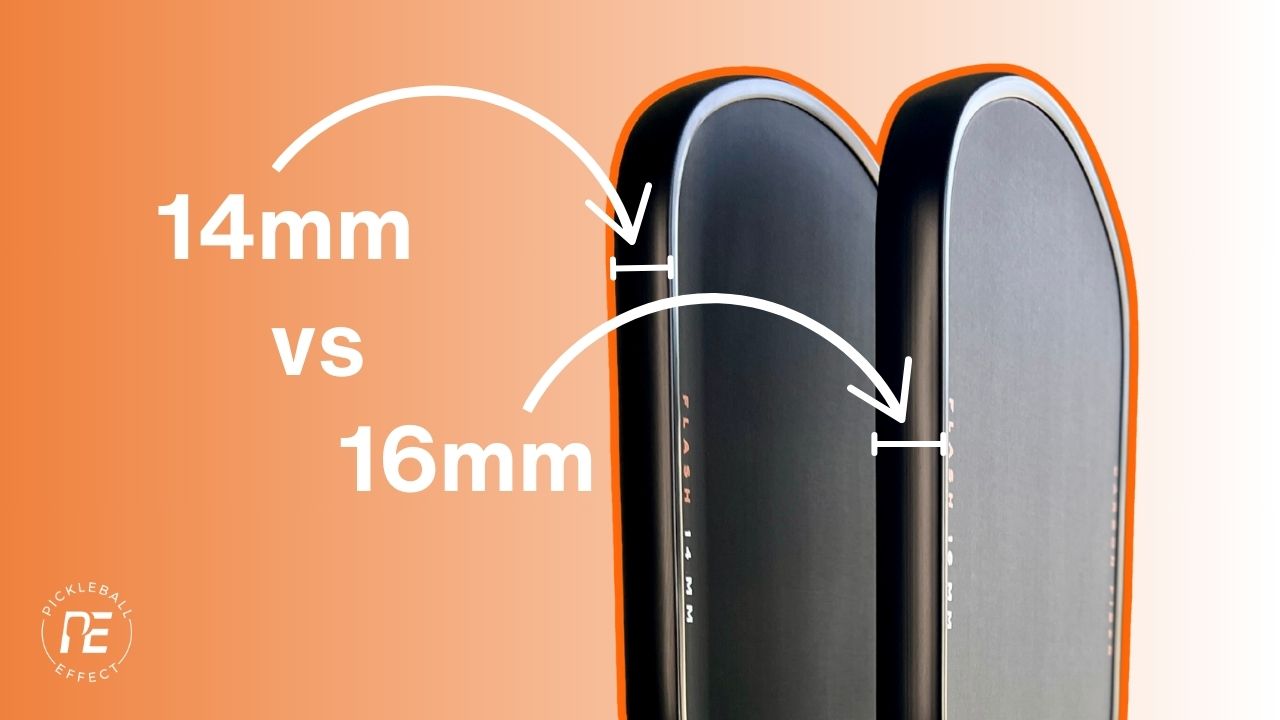
A 16mm paddle offers more control and a soft feel, while a 14mm paddle provides more power and pop.
Stepping onto the pickleball court, you’ve probably noticed the sheer variety of paddles. But beyond the flashy graphics and brand names lies a crucial specification that can completely transform your game: the paddle's thickness. As a long-time player and gear enthusiast, I've seen countless players dramatically improve their game simply by making the right choice in the great debate of the pickleball paddle 16mm vs 14mm. That tiny 2mm difference might not sound like much, but it’s the secret behind a perfectly soft dink versus a powerful, court-crossing drive. This guide will break down everything you need to know, helping you decide which thickness is the perfect match for your style of play.
What Does Paddle Thickness Actually Mean?
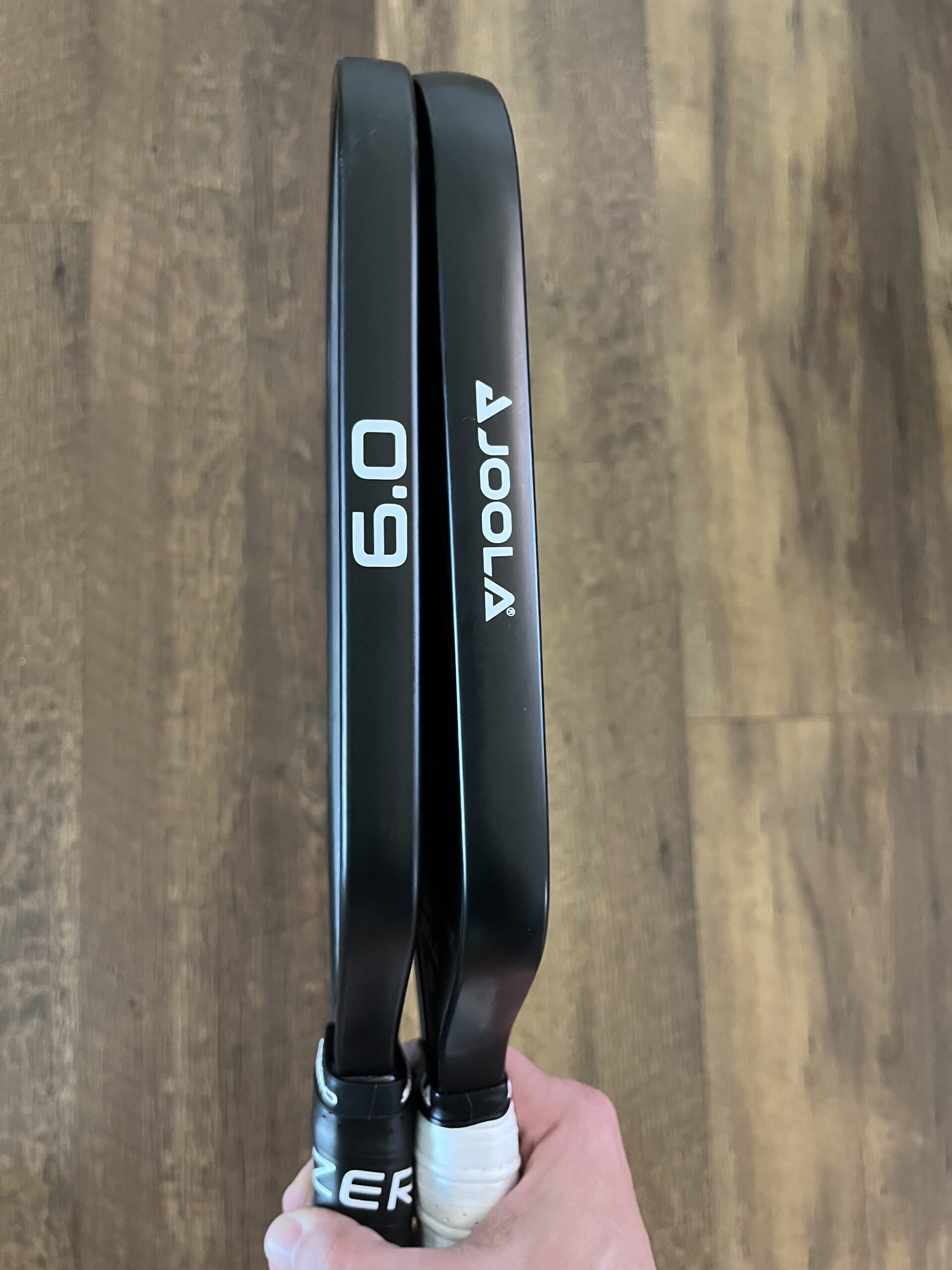
Before we dive into the specifics of a pickleball paddle 16mm vs 14mm, let’s quickly cover what we’re talking about. The thickness of a paddle refers to the depth of its core, which is typically a honeycomb structure made of polymer. Think of it like a mattress. A thicker mattress absorbs more impact and feels softer, while a thinner one feels firmer and gives you a bit more spring.
This core is the engine of your paddle. It’s what absorbs the energy from the ball and then returns it. A thicker core has more material to absorb that impact, which changes how the ball feels and reacts when it leaves the paddle face. This fundamental difference is why choosing between a 16mm and a 14mm paddle is such a critical decision for your game.
The Case for the 16mm Paddle: The Control Master
The 16mm paddle has become incredibly popular for a reason. It is often called the "control" paddle, and for good reason. Its thicker core acts like a cushion, absorbing more of the ball's energy upon impact. This creates a softer feel and gives you more command over your shots, especially the delicate ones.
Unmatched Touch and Feel
The key advantage of a 16mm paddle is its effect on "dwell time." This is the tiny fraction of a second the ball stays on your paddle face. With a thicker core, the dwell time is slightly longer. This gives you more time to influence the ball, making it easier to add spin, direct your shots accurately, and execute perfect drop shots from the baseline. I found that when I switched to a 16mm paddle, my dinking battles became much more consistent because I could feel the ball better.
Forgiveness and a Larger Sweet Spot
That energy-absorbing core also makes the 16mm paddle more forgiving. When you hit the ball off-center, a thicker paddle dampens the vibration and helps the shot feel more stable. This translates to a larger effective sweet spot, meaning your mishits won't be nearly as punishing. This is a huge confidence booster, especially for players who are still developing their stroke consistency.
Who is the 16mm Paddle For?
A 16mm paddle is an excellent choice for a wide range of players. It’s particularly well-suited for:
- Players who prioritize control, dinks, and a strategic soft game.
- Beginners and intermediate players who benefit from a more forgiving paddle.
- Individuals with arm or elbow sensitivity, as the thicker core absorbs more shock.
- Doubles players who spend a lot of time in dink rallies at the net.

The Case for the 14mm Paddle: The Power Player
If the 16mm paddle is the artist's brush, the 14mm paddle is the hammer. This thinner paddle provides a much different playing experience, one that is defined by crispness, feedback, and raw power. The thinner core is denser and doesn't absorb as much energy, meaning more of it is transferred directly back to the ball.
Explosive Pop and Power
The most noticeable characteristic of a 14mm paddle is its "pop." The ball seems to jump off the face with more velocity. This is because the less absorbent core creates a firmer, more responsive hitting surface. For players who love to hit hard drives from the baseline, deliver powerful serves, or end points with a quick volley, the 14mm paddle delivers the power they crave. It gives you that satisfying feedback that you have really connected with the ball.
Enhanced Maneuverability
While not always the case, 14mm paddles can sometimes feel a bit quicker in the hands. With a thinner profile, they can have slightly less wind resistance, allowing for faster hands during quick exchanges at the net. If you love fast-paced battles and rely on quick reflexes, the feel of a 14mm paddle might suit your style perfectly.
Who is the 14mm Paddle For?
A 14mm paddle is a fantastic tool in the right hands. It tends to be favored by:
- Aggressive players who rely on power and driving the ball.
- Intermediate to advanced players who have well-developed strokes and don't need as much forgiveness.
- Singles players who need to generate more of their own power to hit passing shots.
- Players who prefer a crisp, direct feel and lots of feedback from the ball.

Side-by-Side Comparison: Pickleball Paddle 16mm vs 14mm
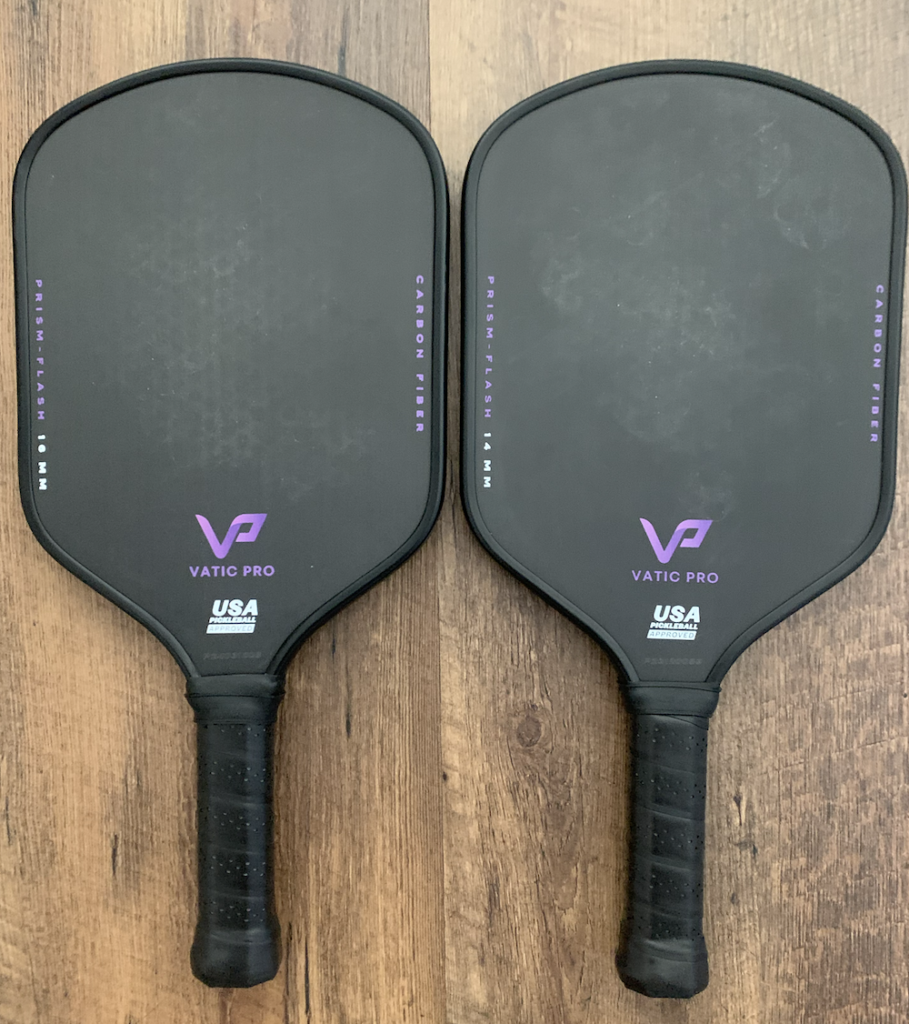
To make the decision easier, let’s put the key attributes head-to-head in the pickleball paddle 16mm vs 14mm showdown.
- Control: The 16mm paddle is the clear winner here. Its softer core and longer dwell time give you superior command over ball placement and the soft game.
- Power: The 14mm paddle takes the crown for power. Its firmer core returns more energy to the ball, resulting in harder, faster shots.
- Feel: This is subjective. The 16mm feels soft, plush, and connected. The 14mm feels crisp, poppy, and responsive.
- Forgiveness: The 16mm paddle is more forgiving due to its thicker, shock-absorbing core, making off-center hits more manageable.
- Player Level: While any level can use either, 16mm is often recommended for beginners due to its forgiveness, while 14mm is often preferred by more advanced players who can control its power.
My Personal Experience: Finding My Perfect Fit
When I first started playing seriously, I was drawn to a 14mm paddle. I loved the feeling of power when I connected perfectly on a drive. It felt amazing to hit winners from the back of the court. However, as I started playing against more advanced players, I realized my soft game was a liability. My dinks were often too high, and my third-shot drops were inconsistent.
Out of curiosity, I tried a friend's 16mm paddle during a practice session. The difference was immediate. My dinks felt softer and were landing exactly where I wanted them to. My resets were more controlled, and I felt much more confident in long rallies. While I did lose a small amount of that raw power, the improvement in my control game more than made up for it. This personal journey highlights the core trade-off in the pickleball paddle 16mm vs 14mm choice.
Frequently Asked Questions of pickleball paddle 16mm vs 14mm
Is a 16mm paddle better for beginners?
Generally, yes. The 16mm paddle's larger sweet spot and forgiving nature help beginners develop consistency and control, making the learning process more enjoyable.
Do 14mm paddles have more power?
Yes, 14mm paddles have a thinner, denser core that returns more energy to the ball. This results in more "pop" and power on your drives and volleys.
Does paddle thickness affect tennis elbow?
It can. A 16mm paddle absorbs more vibration and shock on impact, which can be beneficial for players with tennis elbow or other arm sensitivities.
Can I play a control game with a 14mm paddle?
Absolutely. A skilled player can play a control game with any paddle, but it requires more precise technique with a 14mm paddle as it is less forgiving on dinks and drops.
Which thickness is more popular among pros?
Professional player preferences are split and constantly evolving with technology. However, there has been a significant trend toward 16mm and even thicker paddles as players prioritize control and reset ability at the highest levels.
Conclusion
Choosing between a pickleball paddle 16mm vs 14mm comes down to a simple question: do you want to prioritize control or power? The 16mm paddle is your trusted ally for a game built on precision, touch, and forgiveness. The 14mm paddle is your weapon of choice for a game defined by aggressive drives, powerful serves, and a crisp, poppy feel.
The best advice is to think honestly about your strengths, weaknesses, and what you want to achieve on the court. If possible, try demoing both thicknesses to see which one feels like a natural extension of your arm. Your perfect paddle is out there, and finding it is one of the most rewarding steps in your pickleball journey.
Now I want to hear from you! Which thickness do you prefer and why? Share your experiences in the comments below.